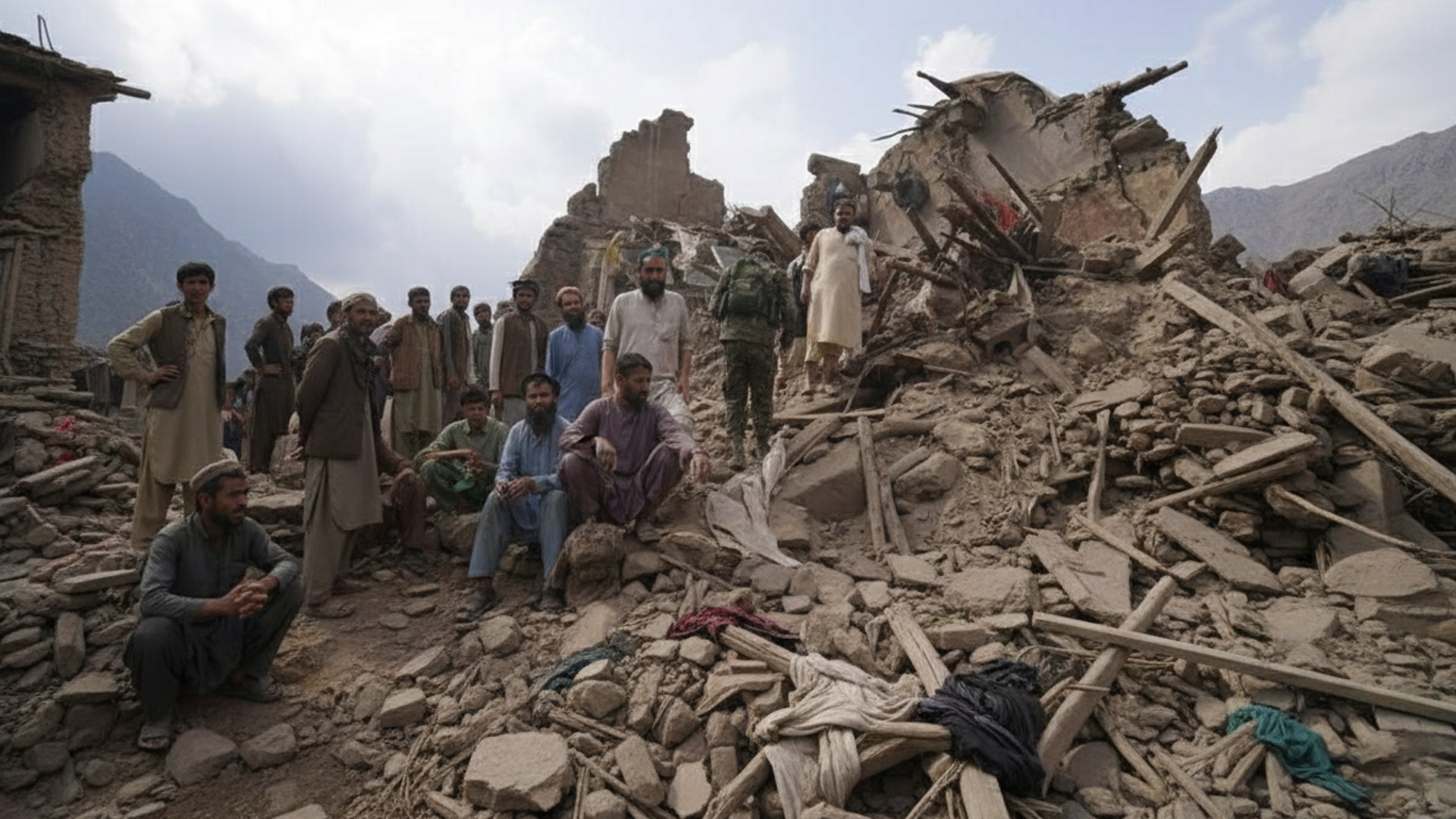
The death toll in the Afghanistan earthquake has risen to more than 900, with thousands more injured, as rescuers continue to search for survivors in the country’s mountainous eastern regions. A 6.0-magnitude quake struck late Sunday night in Kunar province, near the border with Pakistan, destroying entire villages and flattening homes built of mud and stone in steep valleys.
Rescue operations have been hampered by the difficult terrain, landslides, and poor weather conditions, which have cut off many remote areas from immediate aid. Authorities fear the casualty count will rise further as teams reach isolated locations. Local hospitals are overwhelmed, and medical supplies are in short supply. Helicopters and military teams have been deployed to ferry the injured and recover bodies from hard-to-reach areas.
The Taliban have called for international assistance to tackle the scale of the disaster. Countries including India, China, and the United Kingdom have pledged humanitarian aid. India has sent 1,000 family tents to Kabul and is transporting 15 tonnes of food to Kunar, with more relief expected in the coming days. China has offered disaster relief assistance according to Afghanistan’s needs, and the UK has committed emergency funding through humanitarian partners to ensure aid reaches the affected population rather than the Taliban administration. The United States has expressed condolences but has not confirmed direct aid.
Villagers continue to laboriously clear debris by hand, while others carry the injured on makeshift stretchers. Entire communities in Kunar, including the Nurgal district, have been devastated, with children and elderly among those trapped under rubble. Many of the dead were wrapped in white shrouds and buried by their families in accordance with local customs.
The Afghanistan earthquake struck at a shallow depth of just six miles beneath the surface, making it particularly destructive. The region had already experienced heavy rainfall in the 48 hours prior, increasing the risk of landslides and complicating rescue operations. Authorities report that at least 610 people were killed in Kunar and 12 in Nangarhar, with hundreds more feared dead in remote areas.
Humanitarian organizations, including the Red Cross and Red Crescent Societies and the United Nations Office for the Coordination of Humanitarian Affairs, are coordinating relief efforts, delivering medical care, clean water, and food to affected communities. However, access challenges and a lack of infrastructure are slowing aid distribution.
The earthquake comes amid Afghanistan’s ongoing economic crisis, worsened by the withdrawal of international aid since the Taliban’s takeover in 2021. Millions of Afghans are already vulnerable, and the disaster further stretches the country’s limited resources. Sustained international support and coordinated relief efforts are critical to addressing both immediate humanitarian needs and the long-term recovery of affected communities.
The situation remains dire, and authorities have warned that the full scale of destruction may only become clear as rescue teams reach isolated villages and assess the damage.
Also Read: Bitter Brew: U.S. Tariff Hits Indian Tea Exports Amid Falling Prices