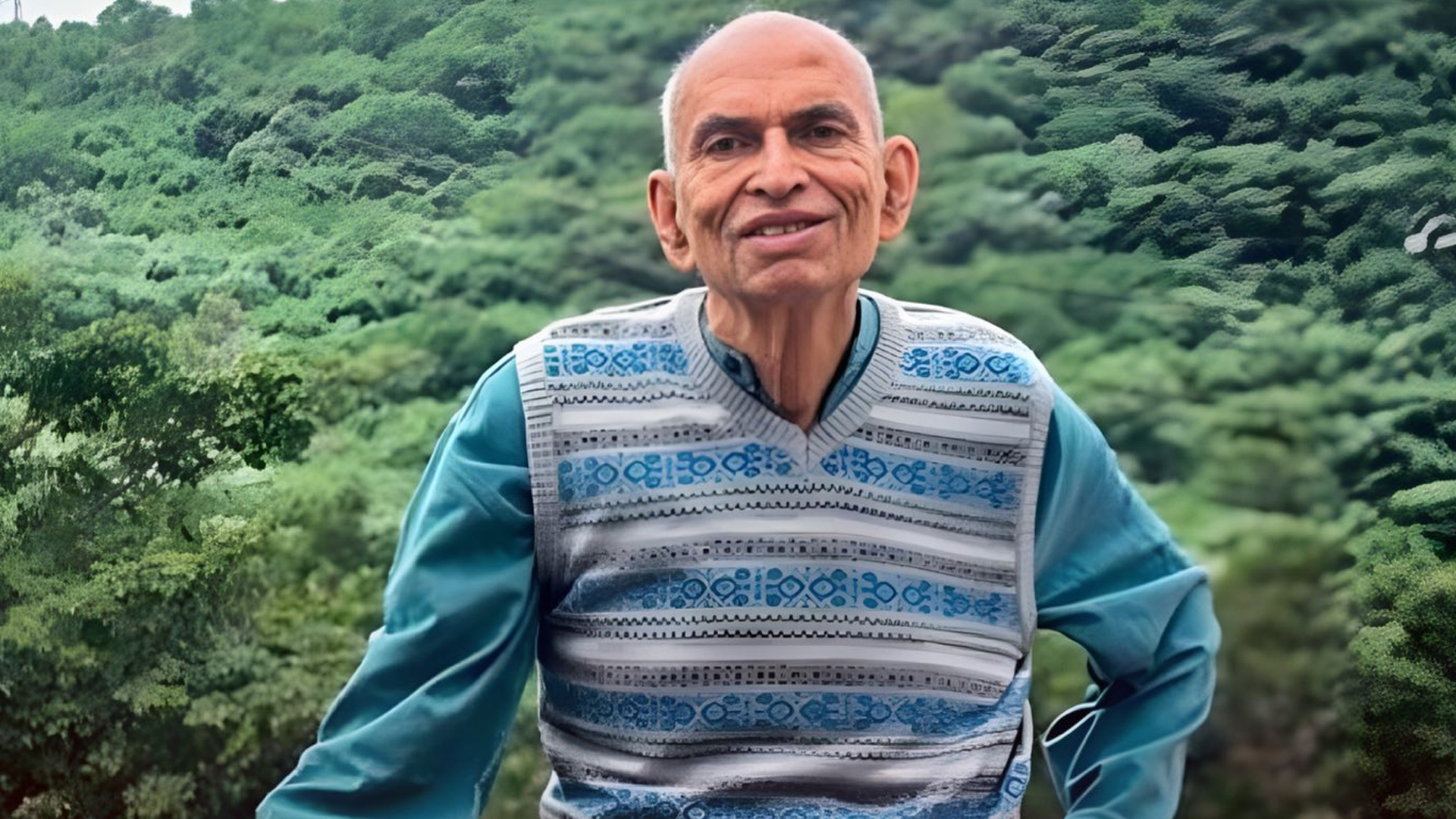
Dr. Madhav D. Gadgil, a legendary ecologist and one of India’s foremost environmental thinkers, passed away on January 7, 2026, in Pune at the age of 83. Known as the “people’s scientist,” Gadgil devoted his life to understanding ecosystems and promoting conservation practices that include local communities.
Born in Pune on May 24, 1942, Gadgil studied biology and earned his PhD from Harvard University before returning to India. He joined the Indian Institute of Science (IISc) in Bengaluru, where he founded the Centre for Ecological Sciences. Over decades, he trained generations of ecologists and carried out pioneering research on India’s forests, biodiversity, and human-nature interactions.
Gadgil believed that humans are an integral part of ecosystems, advocating for conservation strategies that balanced ecological protection with the livelihoods of local communities. This approach often challenged conventional methods that excluded people from decision-making.
In 2010, he chaired the Western Ghats Ecology Expert Panel, widely known as the Gadgil Commission. Its 2011 report recommended classifying large parts of the ecologically sensitive Western Ghats as protected areas. While some recommendations were contested by state governments, the report sparked nationwide discussions on sustainable development and environmental responsibility.
Beyond the Western Ghats, Gadgil played a key role in India’s first biosphere reserve at Nilgiris and contributed to the Biological Diversity Act of 2002. He authored several influential books and research papers that combined science with social awareness, reinforcing the idea that ecological conservation must consider human communities.
Gadgil received numerous awards for his contributions, including India’s Padma Shri and Padma Bhushan, and the UN Environment Programme’s Champions of the Earth award in 2024.
Colleagues and environmentalists remembered him as a visionary who inspired both policymakers and communities to work together to protect nature. His work continues to shape ecological research, policy-making, and grassroots conservation in India.
He is survived by his family. Dr. Gadgil’s legacy endures in India’s forests, rivers, and the countless people whose lives he touched through his science and vision.