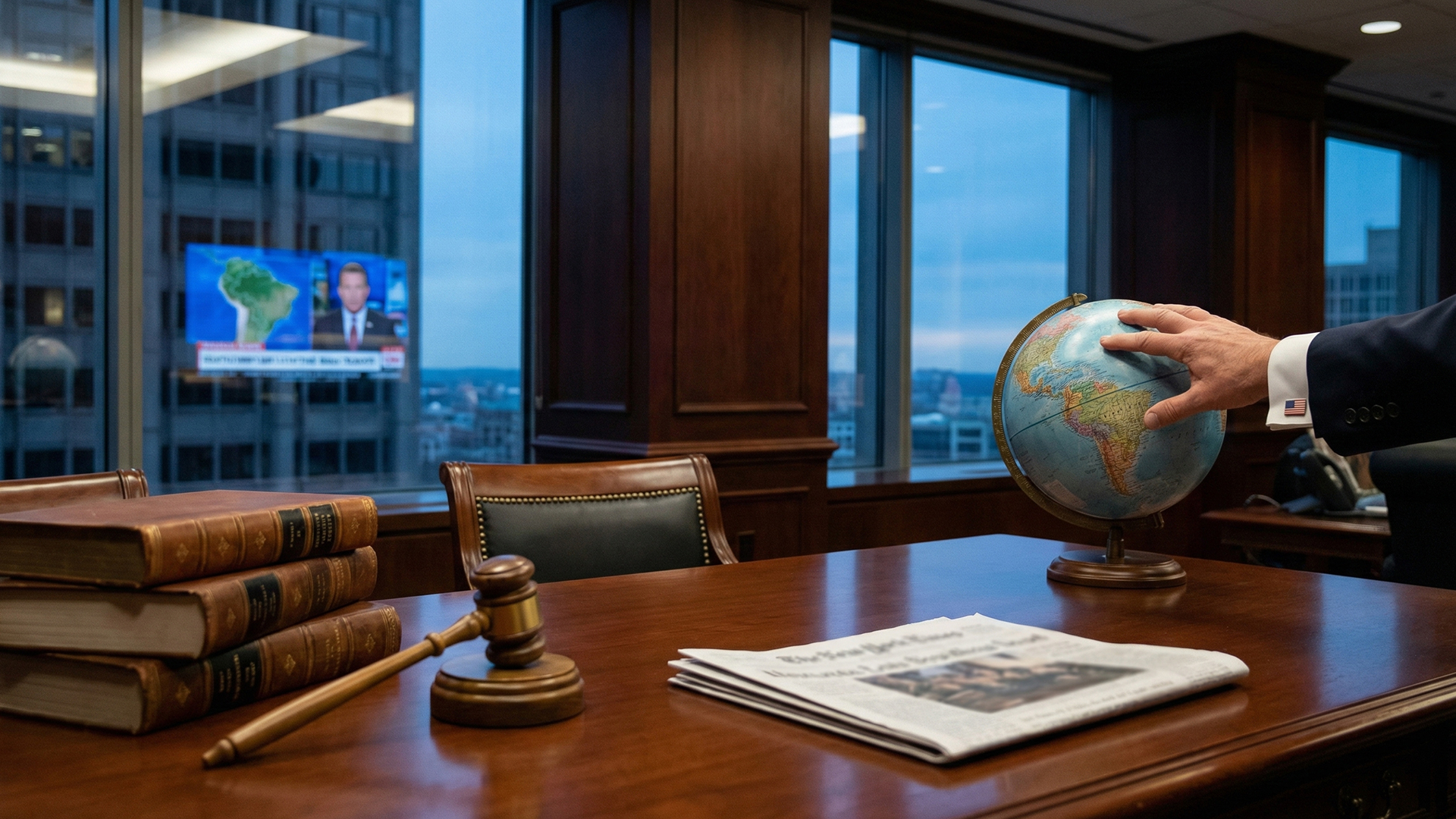
President Donald Trump has stirred international concern by saying that international law does not limit his authority as president. In an interview, Trump stated that the only check on his actions is his own “morality and judgment.”
“I don’t need international law. I’m not looking to hurt people,” Trump told The New York Times. He added that adherence to international law would depend on “what your definition of international law is,” signalling that he sees himself as the ultimate interpreter of the rules for the US.
These remarks come as the US has taken several bold actions overseas. Recently, American forces carried out an operation in Venezuela, capturing President Nicolás Maduro on criminal charges. Experts have criticised the operation as a possible violation of the United Nations Charter, which prohibits the use of force against other nations.
Trump’s administration has also revived its interest in acquiring Greenland, a move that has already caused tensions with European allies. Officials have hinted at potential further military actions in the region, reinforcing the impression of a more assertive US foreign policy.
International law scholars and United Nations officials have warned that such statements could weaken the global rules-based order. One UN expert described the comments as “extremely dangerous,” suggesting that if world leaders follow this example, other nations may feel encouraged to ignore international laws, increasing the risk of conflict.
Critics in the US argue that Trump’s stance reflects a shift from multilateral cooperation to unilateral action, guided solely by national interest and executive authority. They warn that dismissing legal frameworks could undermine global trust and embolden rival powers.
Domestically, the remarks add to debates about the limits of presidential power, executive discretion in foreign affairs, and the broader role of the US in upholding international norms. Observers say this approach could redefine how the US interacts with allies and adversaries in the coming years.