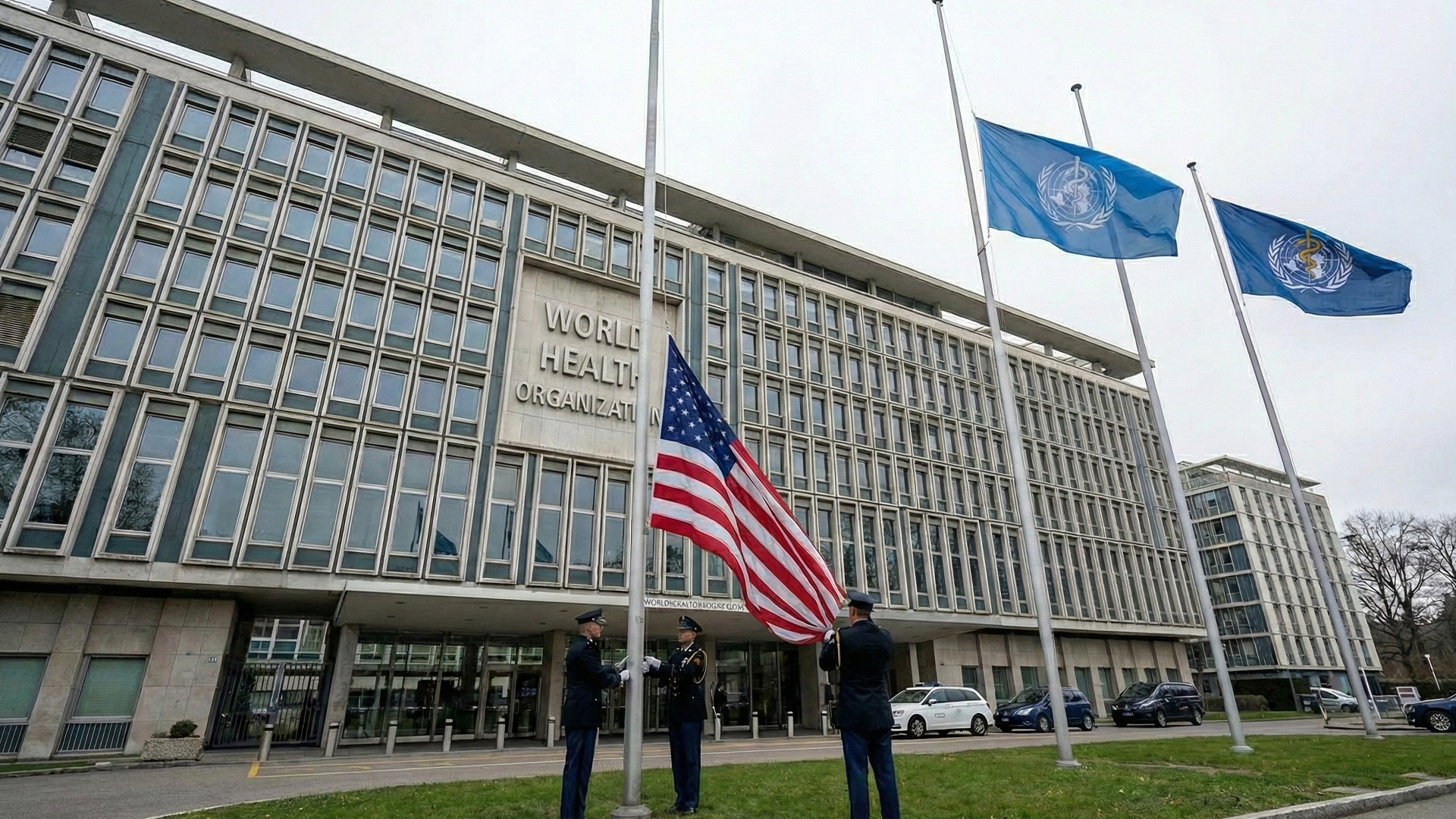
The United States has officially withdrawn from the World Health Organization (WHO), ending nearly eight decades of membership in a move that could reshape global health cooperation. The exit, announced on 22 January 2026, follows a year-long process initiated by former President Donald Trump’s executive order to leave the UN health agency.
US officials, including Health and Human Services Secretary Robert F. Kennedy Jr. and Secretary of State Marco Rubio, said the decision reflects longstanding dissatisfaction with the WHO’s pandemic response. Washington criticised the organization for political influence, delayed warnings during COVID‑19, and insufficient governance reforms. US funding to the WHO has ceased entirely, and officials indicated there are no plans to rejoin, even as observers.
Since its founding in 1948, the US has been a major contributor to the WHO, providing both financial support and technical expertise. Its departure removes one of the agency’s largest donors, forcing WHO to scale back programs and reduce staff. The US also owes unpaid dues, with negotiations ongoing about whether these should be settled as part of the withdrawal.
Experts have warned that the exit could weaken both global and US health preparedness. Without formal access to WHO disease surveillance networks and international cooperation platforms, the U.S. may face delays in detecting and responding to future outbreaks. Key areas such as vaccine strain selection and pandemic reporting could be affected.
Despite the federal exit, some US states and private organizations plan to continue global health initiatives independently. The WHO’s Director-General expressed regret, stressing that international cooperation remains crucial for tackling health crises that cross borders.
Also Read: Trump faces backlash for NATO Afghanistan remarks