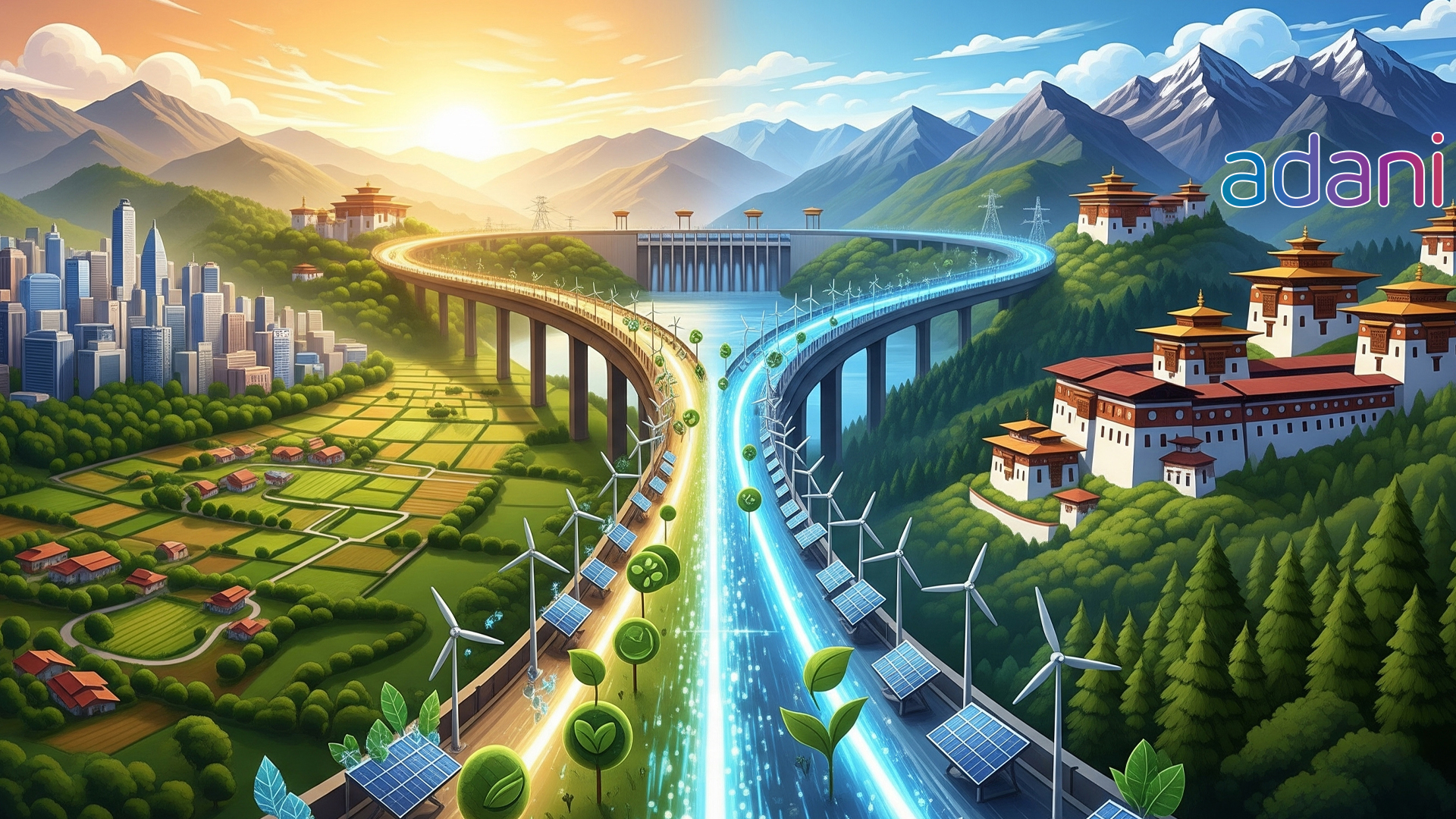
A new chapter in India-Bhutan ties is about to unfold. Adani Power Ltd. and Bhutan’s state-owned Druk Green Power Corp. Ltd. (DGPC) have signed a set of landmark agreements to develop the 570 MW Wangchhu hydroelectric project, a venture that blends engineering ambition with regional cooperation.
The agreements — a Shareholders Agreement, a Concession Agreement with the Royal Government of Bhutan, and an in-principle Power Purchase Agreement — clear the way for construction of the ₹6,000 crore project. It will be developed on a Build, Own, Operate, Transfer (BOOT) model, eventually handing ownership back to Bhutan.
For Bhutan, whose mountain rivers already power much of its economy, the Wangchhu project is expected to ease the crunch of its peak winter demand, when hydropower generation dips. In the summer, the project will channel surplus electricity to India, reinforcing the two neighbours’ energy interdependence.
“The Wangchhu hydroelectric project will critically meet Bhutan’s peak winter demand, when hydro power generation is low. During the summer months, it would export power to India,” said SB Khyalia, CEO, Adani Power.
DGPC’s Managing Director Dasho Chhewang Rinzin pointed to the larger significance of the partnership: “The project, on completion, will not only help ensure Bhutan’s energy security but also help further strengthen grid connectivity between Bhutan and India.”
The Wangchhu venture is not a standalone effort. It is the first project under a memorandum of understanding signed in May this year between the Adani Group and DGPC to jointly develop 5,000 MW of hydropower capacity in Bhutan. Officials on both sides say discussions are already underway for additional projects.
Hydropower has long been the lifeline of Bhutan, contributing significantly to government revenues and exports, most of which flow to India. For India, importing clean power from Bhutan fits neatly into its climate commitments and its drive to expand cross-border electricity trade. The Wangchhu project, therefore, is as much about diplomacy as it is about development.
Construction is expected to begin in the first half of 2026, with completion targeted within five years. If timelines hold, the project could emerge as a symbol of how private players like the Adani Group are increasingly shaping the contours of regional energy cooperation.
Beyond the numbers and agreements, however, lies a story of two neighbours turning natural resources into shared opportunity. The Wangchhu’s fast-flowing waters will soon power homes, businesses, and industries on both sides of the border — a reminder that in South Asia, energy is not just an economic asset but also a bridge of friendship.
Also Read: IPL Ticket Prices to Rise Sharply as GST Hiked to 40% Under New Tax Regime