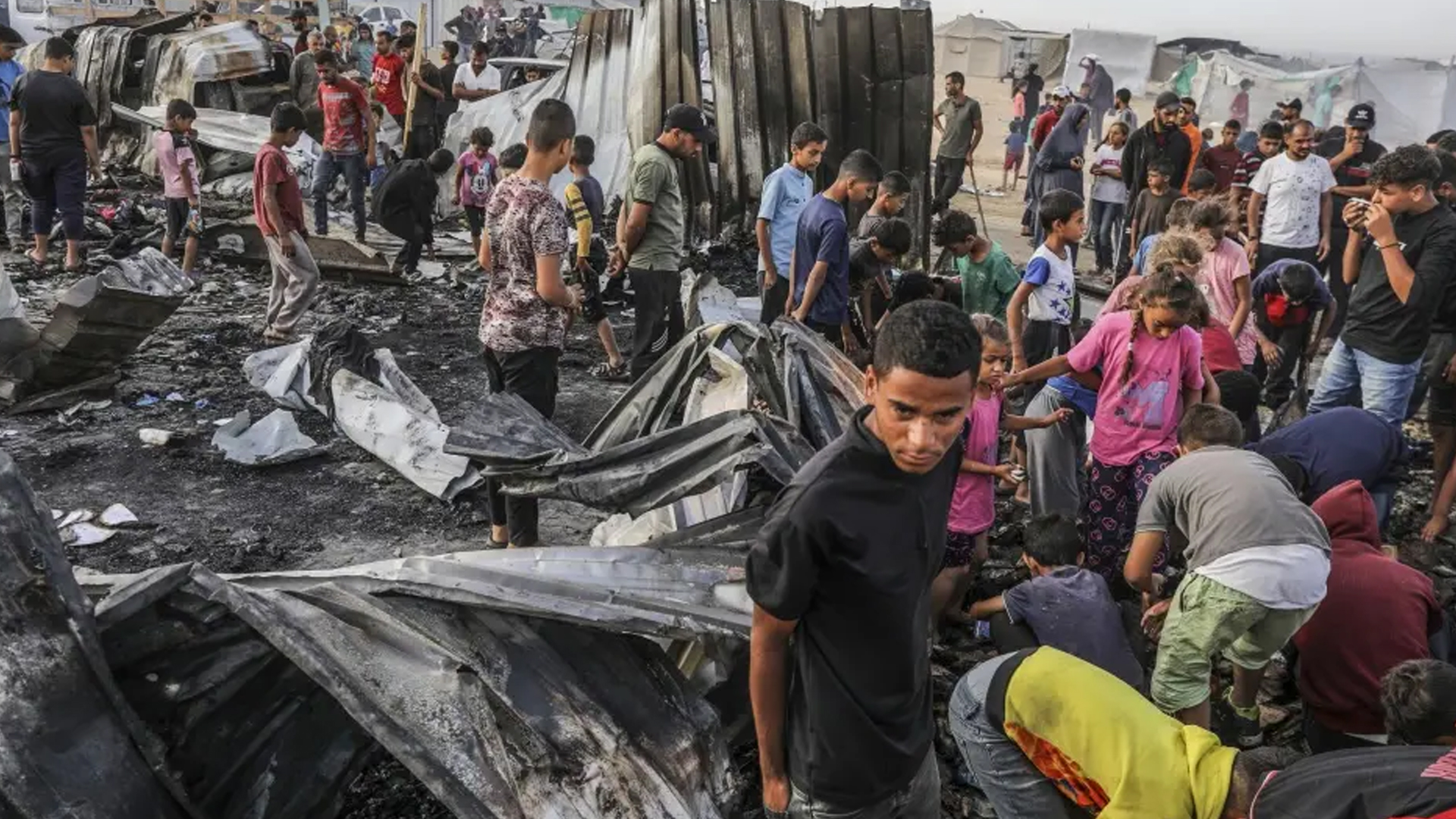
More than 100 international NGOs have accused Israel of weaponising humanitarian aid in Gaza, saying most major agencies have been unable to deliver a single truck of supplies since early March. Despite Israeli authorities insisting there are no limits on humanitarian aid entering the territory, the groups report that dozens of requests to bring in food, medicine, water, and shelter items have been rejected on the grounds that the organisations are “not authorised to deliver aid.”
In July alone, more than 60 requests were denied. The resulting backlog has left millions of dollars’ worth of goods stranded in warehouses in Jordan and Egypt, while hospitals run short of basic supplies and civilians face death from hunger and preventable illnesses. Many of the organisations affected have worked in Gaza for decades.
The NGOs link the obstruction to new registration rules introduced in March, which allow Israeli authorities to reject applications based on vague criteria such as alleged “delegitimisation” of the state. Aid agencies say the process is being used to control independent organisations and censor humanitarian reporting.
Jolien Veldwijk, CARE’s country director, said the group has been unable to deliver any of its $1.5 million worth of pre-positioned supplies into Gaza since the full siege was imposed on 2 March. Oxfam reports over $2.5 million worth of goods blocked from entering.
The signatories have called on governments and donors to pressure Israel to end the restrictions, open all land crossings, and ensure agencies can operate without compromising independence or staff safety.
The World Health Organization (WHO), in a statement carried by the United Nations Office for the Coordination of Humanitarian Affairs (OCHA), described the entry of medical supplies into Gaza as “difficult and ever changing,” despite the delivery of 80 trucks of supplies since June 25. Many critical items, including ICU beds, anaesthesia machines, and cold chain medicines, have been denied entry, while clearance processes for goods arriving via Ben Gurion Airport remain slow.
WHO said it has delivered 6,000 blood units to Al Shifa and Nasser hospitals, but these cover only a fraction of the urgent needs as health facilities face mass casualty incidents and rising cases of infectious disease. Fuel shortages for generators and the lack of spare parts are further crippling the 230 health points still partially functional across Gaza.
The UN agency for Palestinian refugees (UNRWA) has also sounded the alarm over extreme heat, with temperatures now exceeding 40°C. Limited access to water has led to increasing dehydration, while bombardments and forced displacement continue. With electricity and fuel supplies dwindling, there is “no relief from the extreme heat,” UNRWA said, reiterating its call for an immediate ceasefire.
In parallel, tensions are escalating in the occupied West Bank, where Israeli advocacy group Peace Now has condemned new settlement expansion plans announced by Israel’s far-right finance minister Bezalel Smotrich. The plans include tenders for more than 3,000 housing units in the controversial E1 settlement project between Jerusalem and Ma’ale Adumim — a project frozen for decades due to strong international opposition.
Smotrich declared that the approval “buries the idea of a Palestinian state” and continues his government’s de facto sovereignty plan, connecting Ma’ale Adumim to Jerusalem. Peace Now warned that the E1 plan would divide the West Bank into northern and southern regions, undermining the possibility of a Palestinian urban area linking East Jerusalem with Bethlehem and Ramallah.
“This is deadly for the future of Israel and for any chance of achieving a peaceful two-state solution,” the group said. “We are standing at the edge of an abyss, and the government is driving us forward at full speed.”