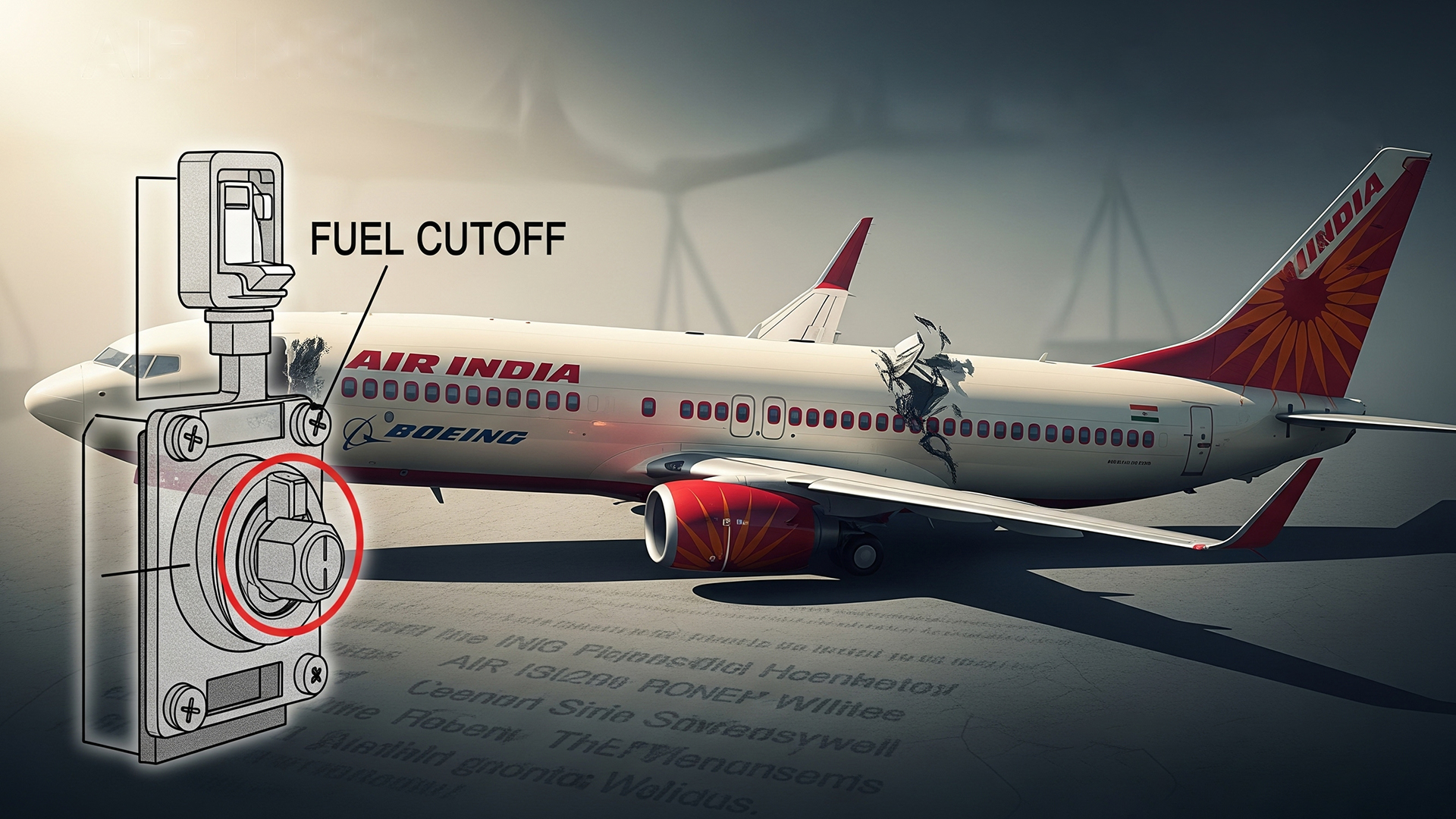
Families of victims of the Air India crash in Ahmedabad last year have filed a lawsuit in the United States against aviation giants Boeing and Honeywell, alleging that a defective fuel cutoff switch led to the tragic accident that killed 106 people.
The crash occurred on June 12, 2024, when Air India Flight AI171, a Boeing 737 aircraft, took off from Ahmedabad en route to London. Moments after takeoff, both engines lost power, and the aircraft crashed into a nearby building just 32 seconds later. Only one passenger survived.
The lawsuit, filed in Delaware on behalf of four victims’ families, claims that the Honeywell-manufactured fuel cutoff switches, approved by the U.S. Federal Aviation Administration (FAA), were poorly placed and easily triggered accidentally. Positioned directly beneath the thrust levers, the switches allegedly allowed for inadvertent contact during routine cockpit procedures.
According to preliminary findings from India’s Aircraft Accident Investigation Bureau (AAIB), cockpit voice recordings revealed that the pilots were unaware of having moved the switches to the “CUTOFF” position. Although they reset them within 14 seconds, the engines failed to regain sufficient thrust in time.
The families’ legal team argues that both Boeing and Honeywell were aware of the design vulnerability but failed to take corrective action or issue safety modifications. The complaint further alleges that the FAA’s certification does not absolve manufacturers of responsibility for known safety risks.
Maintenance records show that the aircraft had undergone component replacements in 2019 and 2023 and complied with all regulatory safety protocols at the time of the crash.
Neither Boeing nor Honeywell has responded publicly to the lawsuit. Aviation experts say the switches are designed to resist accidental activation but acknowledge that their location may pose a risk under certain conditions.
The case may have wider implications for aviation safety regulations and manufacturer liability, particularly when FAA-approved components are involved in fatal accidents.
Also Read: 19 Dead as Brain-Eating Amoeba Spikes in Kerala; Health Authorities on Alert