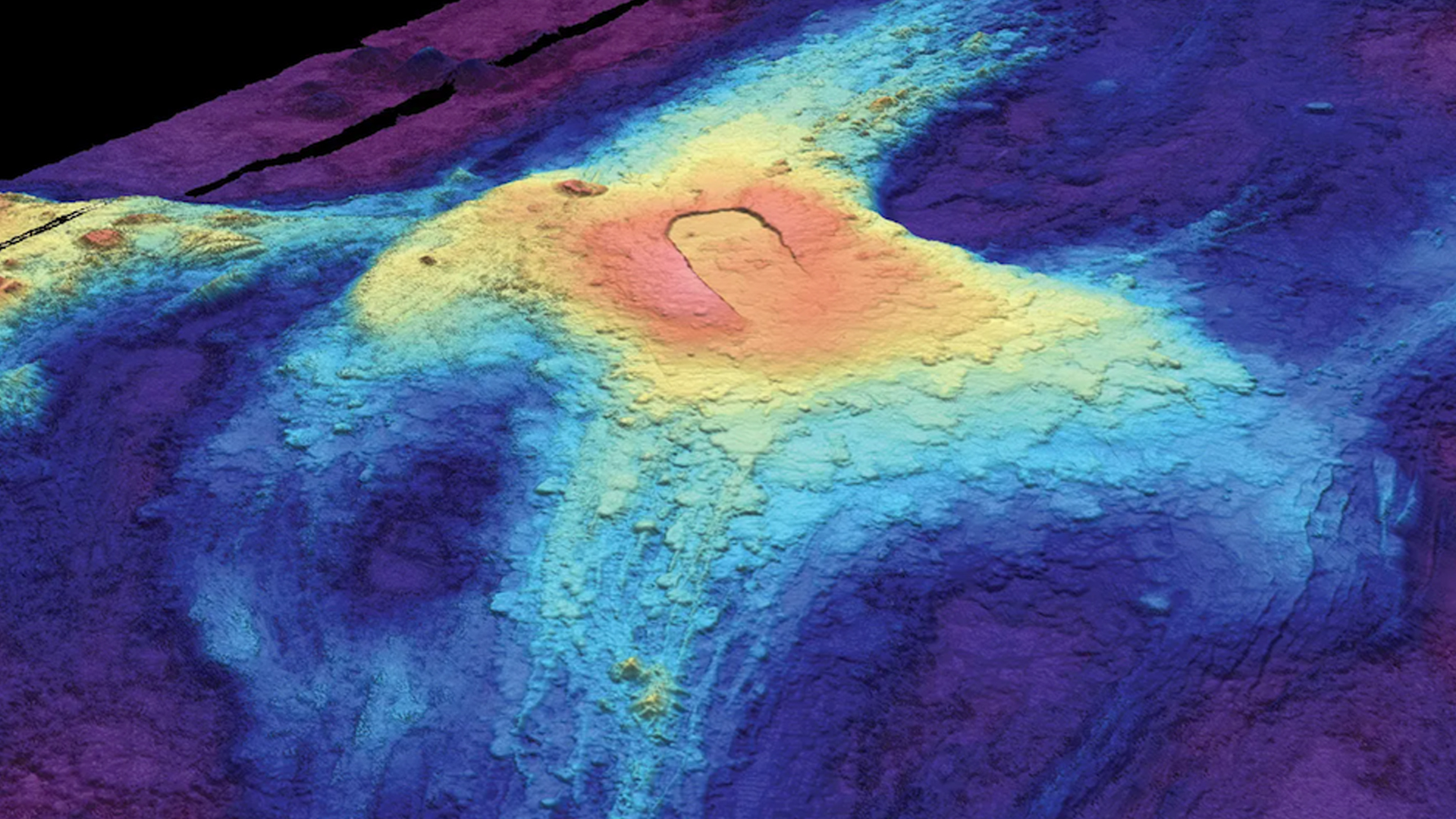
Deep down in the waves of the Pacific Ocean, about 300 miles off Oregon’s coast, a hidden giant is all set to rise and imprint its presence. It’s called the Axial Seamount, an enormous underwater shield volcano that lies a mile beneath the surface. Recent reports say that it is releasing 1000 tremors every day, and this shows that the big day is coming soon. Even though it stays out of sight, this volcano has always had an uneasy and unpredictable history. It had erupted in 1998, 2011, and 2015; scientists now believe it’s gearing up for another dramatic outburst in 2025 as well, in the coming months.
What makes Axial so fascinating isn’t just its size or location along the Juan de Fuca Ridge, where tectonic plates slowly pull apart. It’s the fact that this volcano is one of the best-watched spots on the entire seafloor. There is a network of fiber-optic cables known as the Regional Cabled Array through which researchers can track its every move, listening to tremors, watching the seafloor rise, and even capturing real-time images from a place humans cannot reach.
Signs of an Impending Eruption
The clues are hard to miss as experts are very confident because of their visible patterns.
The Seafloor is Swelling: Just as a balloon expands when air fills it, the ground around Axial is bulging with pressure from rising magma.
Quakes are Constant: Over 1,000 tiny quakes a day now ripple through the area, a clear signal that molten rock is on the move.
For scientists, this isn’t a cause for panic; instead calls for excitement and exploration. Unlike volcanoes on land, Axial poses no direct danger to people because there will be no tsunamis or destructive earthquakes. Instead, it offers a priceless opportunity for the world to witness a deep-sea eruption in real time and for the researchers to unlock new secrets about how volcanoes behave.
As one researcher described it, “Axial is like a natural laboratory where every time it erupts, it teaches us something new about the planet we live on.”
When Axial erupts, it transforms the seafloor. The lava that flows smothers the hydrothermal vents, which are home to bizarre creatures and thriving microbial life. Yet, nature is surprisingly resilient—within months, life begins to return, rebuilding entire ecosystems from scratch. Watching this cycle of destruction and renewal not only satisfies scientific curiosity but could also inform how humans approach deep-sea exploration and mining in the future.
The ocean may keep this fiery giant hidden, but its heartbeat is loud and clear. While the world now waits to see when Axial will rise again, Mother Nature is ready to take care of this situation with grace and grit.