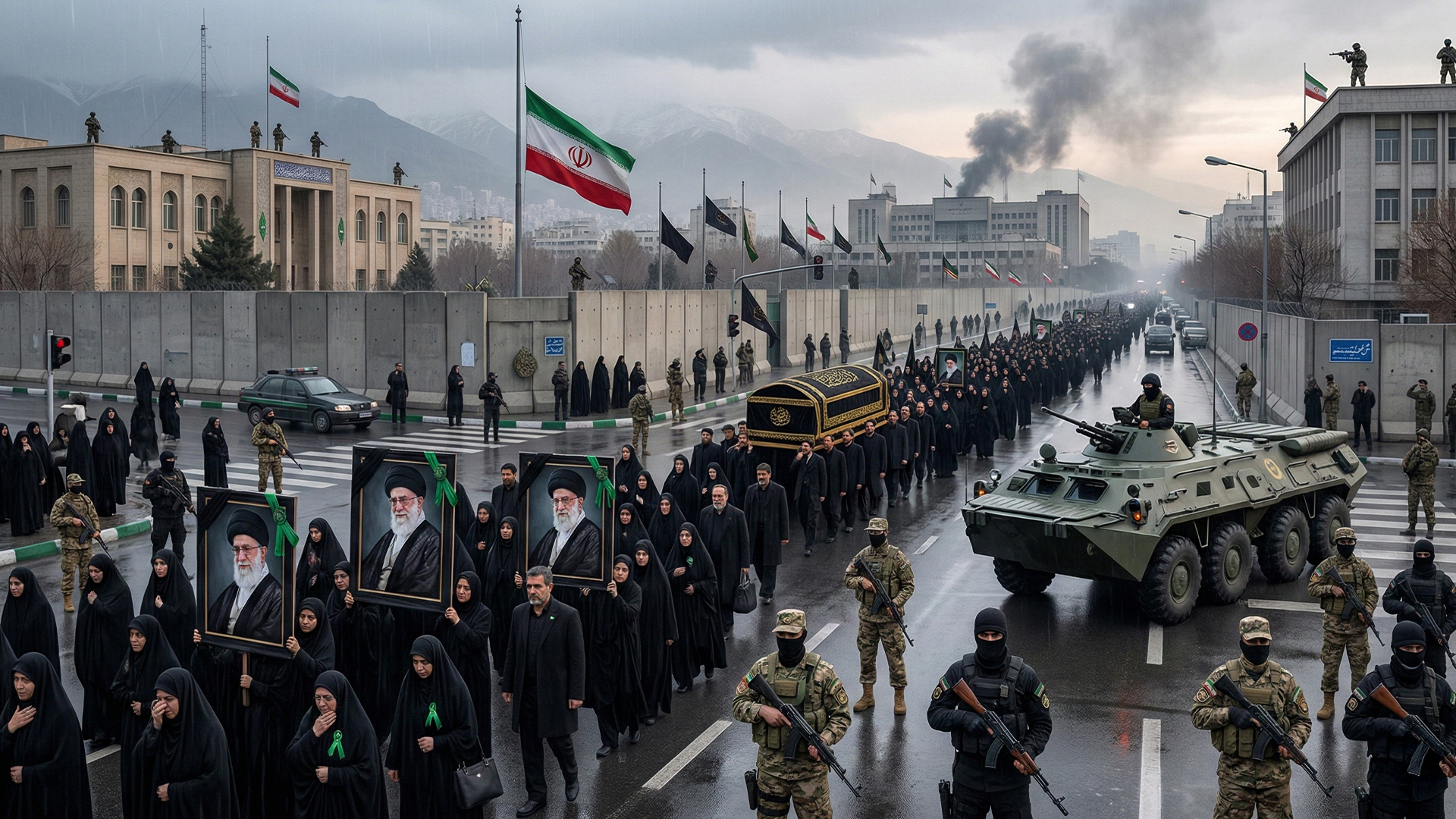
Khamenei had been Iran’s highest authority for more than three decades, succeeding Ruhollah Khomeini after the 1979 Islamic Revolution. He shaped Iran’s foreign policy, oversaw its nuclear programme and maintained a firm stance against the West. Supporters saw him as a guardian of Iran’s sovereignty while critics viewed him as a hardline leader who suppressed dissent.
US President Donald Trump confirmed the operation, calling it a decisive move against what he described as “a long-standing threat to regional stability.” Israeli Prime Minister Benjamin Netanyahu said the strike was carried out to protect Israel’s security and warned that his country would respond strongly to any retaliation.
Iran’s President Masoud Pezeshkian condemned the attack as an act of aggression and vowed revenge. Senior cleric Alireza Arafi has joined a temporary leadership council formed to manage the transition until a new supreme leader is chosen.
Global leaders responded swiftly. Russia’s President Vladimir Putin described the killing as “dangerous and destabilising,” urging restraint. China’s President Xi Jinping called for calm and respect for sovereignty. European leaders, including France’s President Emmanuel Macron and UK Prime Minister Keir Starmer, appealed for immediate de-escalation to prevent a wider war.
Meanwhile, oil prices surged and stock markets fell amid fears of prolonged conflict. Across the Middle East, airspaces were briefly shut and security tightened.
The killing of Khamenei marks a historic turning point for Iran and the Middle East, raising serious questions about succession, stability and the risk of prolonged conflict.
Also Read: US‑Israel strikes Iran, Gulf tensions swell