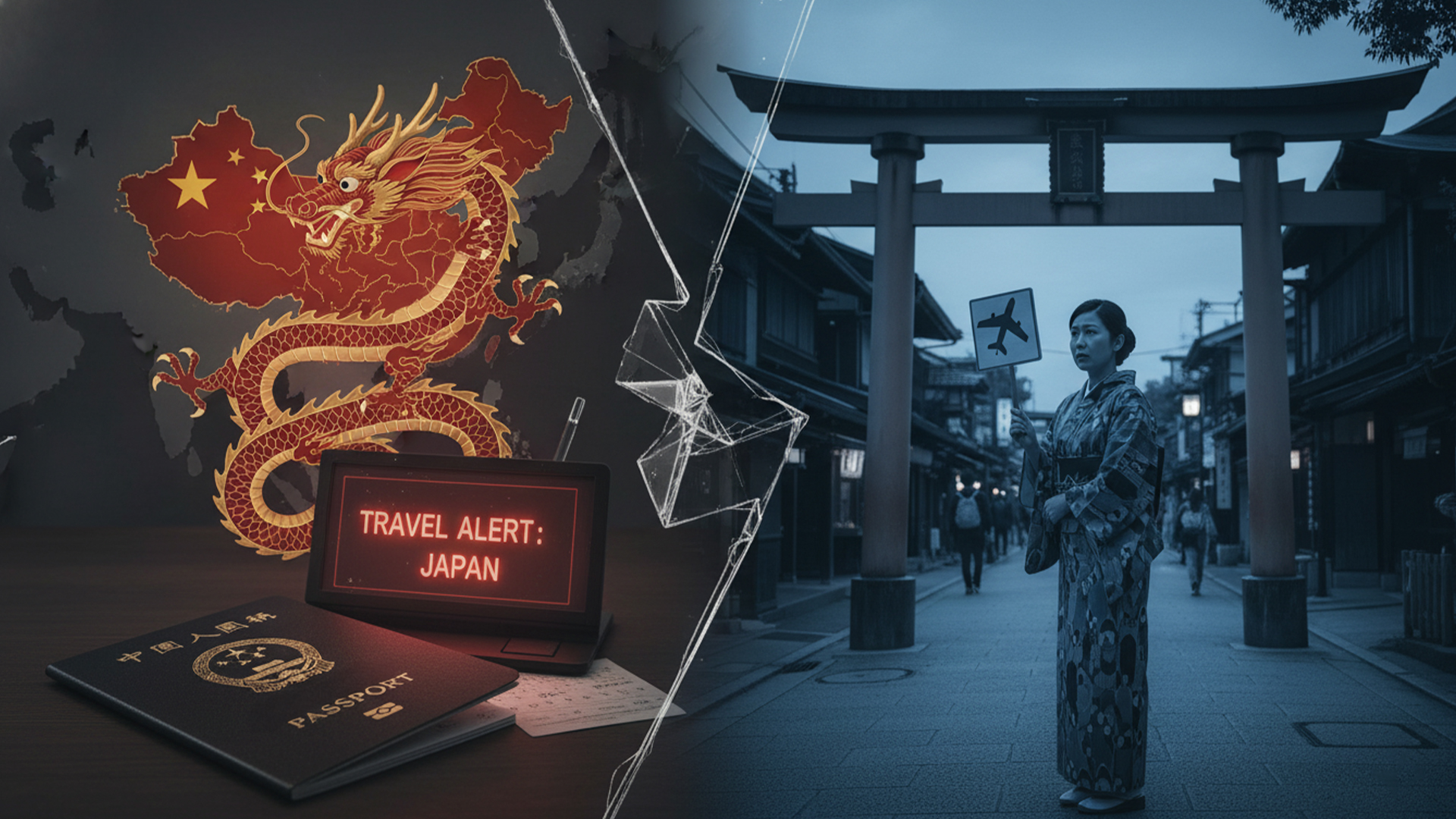
China has urged its citizens to postpone or avoid travel to Japan, deepening a diplomatic rift that has widened rapidly over comments made by Japan’s prime minister regarding a potential conflict in Taiwan. The advisory marks one of Beijing’s strongest public signals of displeasure toward Tokyo in recent years, adding a new layer of strain to an already sensitive regional environment.
The travel alert, published through China’s foreign ministry and its diplomatic missions in Japan, expressed concern about what it called a “heightened security risk” for Chinese nationals. It advised travelers to reconsider trips, remain cautious if already in Japan, and keep close communication with diplomatic offices in case of emergencies. Although the notice did not cite specific incidents, officials linked the warning to what they described as an increasingly “hostile atmosphere” following political statements in Tokyo.
The immediate trigger for the tension was a declaration by Japan’s Prime Minister, Sanae Takaichi, who told lawmakers that any use of force by China against Taiwan could be treated as a threat to Japan’s own security. Under Japan’s defence laws, a “survival-threatening situation” could pave the way for military involvement in support of an ally. Her remarks were interpreted in Beijing as an unacceptable interference in China’s internal affairs.
Chinese officials responded sharply, demanding that the comments be withdrawn and accusing Japan of escalating regional insecurity. The dispute intensified further when a Chinese diplomat posted inflammatory remarks on social media directed at the Japanese leader, drawing strong protests from Tokyo. Japan summoned China’s ambassador, while Beijing issued its own summons to Japan’s envoy shortly after, signalling a rapid escalation in diplomatic pushback on both sides.
Despite the exchange of warnings and protests, Japan’s government maintains that its overall policy toward Taiwan has not changed and that its statements reflect long-standing security interpretations. Nonetheless, the affair has rattled diplomatic channels at a time when both nations are trying to manage competing strategic priorities while preserving economic ties.
Also Read: Delhi air turns toxic at 386 AQI