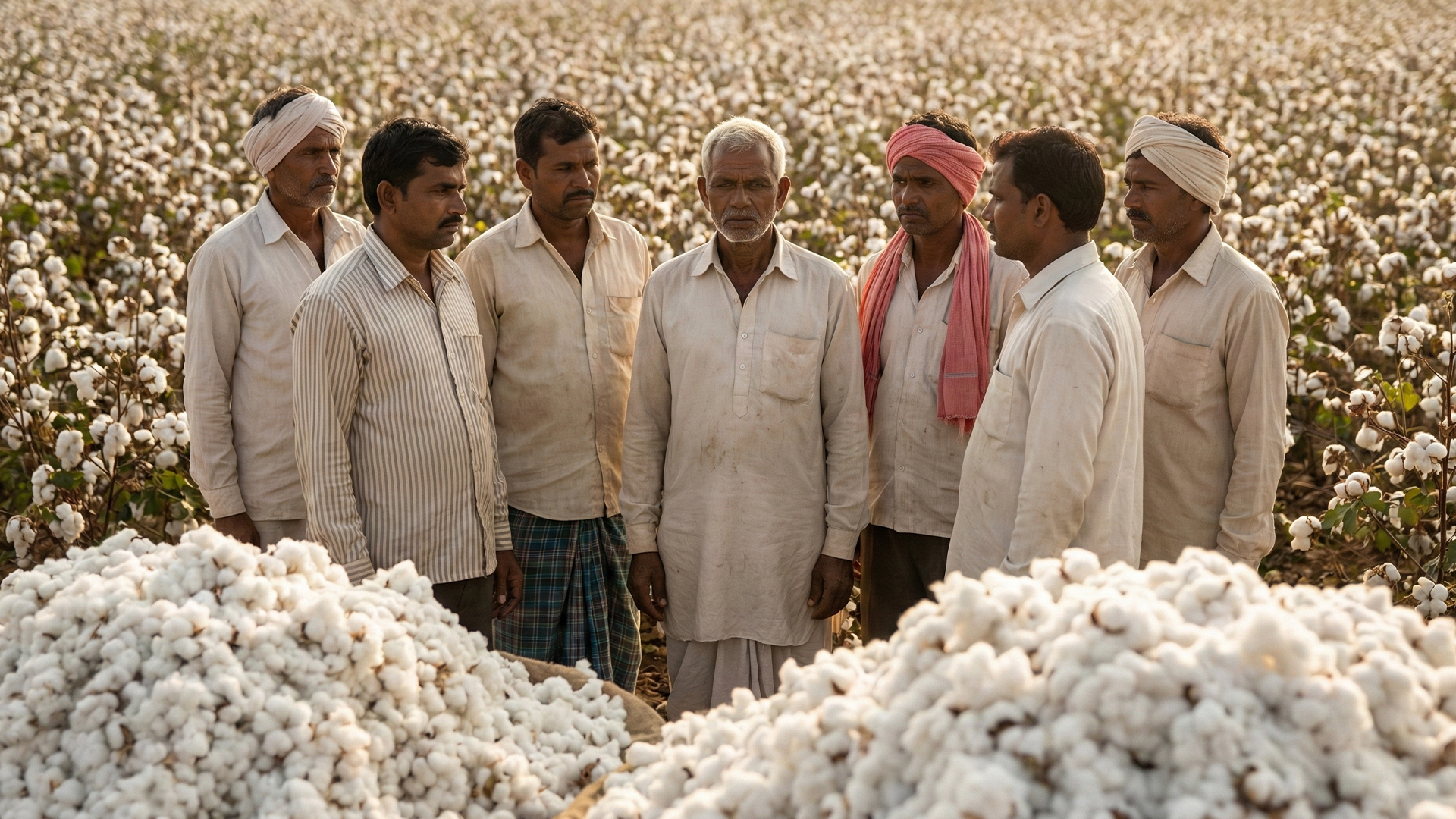
Cotton farmers and textile industry stakeholders in India have raised concerns over the recent India‑US trade framework, fearing it could negatively impact domestic growers and exporters. The deal has sparked debate across political and farming circles, prompting calls for greater transparency from the government.
Congress leader Rahul Gandhi criticised the pact, saying it “cheats cotton farmers and textile exporters.” He highlighted that Indian garments face an 18% tariff in the U.S., while Bangladesh enjoys duty-free access, putting Indian producers at a disadvantage. Gandhi added that importing U.S. cotton could either harm local farmers or weaken India’s textile sector, threatening millions of livelihoods.
Farmer unions have echoed these worries, staging gatherings in states such as Bihar, Haryana, Odisha, Karnataka, and Tamil Nadu. While the demonstrations have been peaceful, organisers emphasised the risks of allowing duty-free imports of subsidised U.S. cotton, which they say could depress domestic prices and reduce rural incomes.
Industry groups also voiced apprehensions about the long-term impact on the textile export sector, calling for a review of the agreement to safeguard Indian manufacturers. Many stressed that even a limited increase in imports could affect the delicate balance of supply and demand in the domestic market.
The government, through Commerce Minister Piyush Goyal, has defended the deal, stating that 90–95% of Indian agricultural products are excluded and that farmers’ interests remain protected. Officials highlighted that the framework aims to expand export opportunities for Indian goods while ensuring sensitive sectors are not adversely affected.
Despite these assurances, opposition parties and farmer groups continue to urge the government to release full details of the pact, particularly regarding its implications for agriculture, pricing, and rural livelihoods.
Also Read: Assam seeks more emergency landing strips