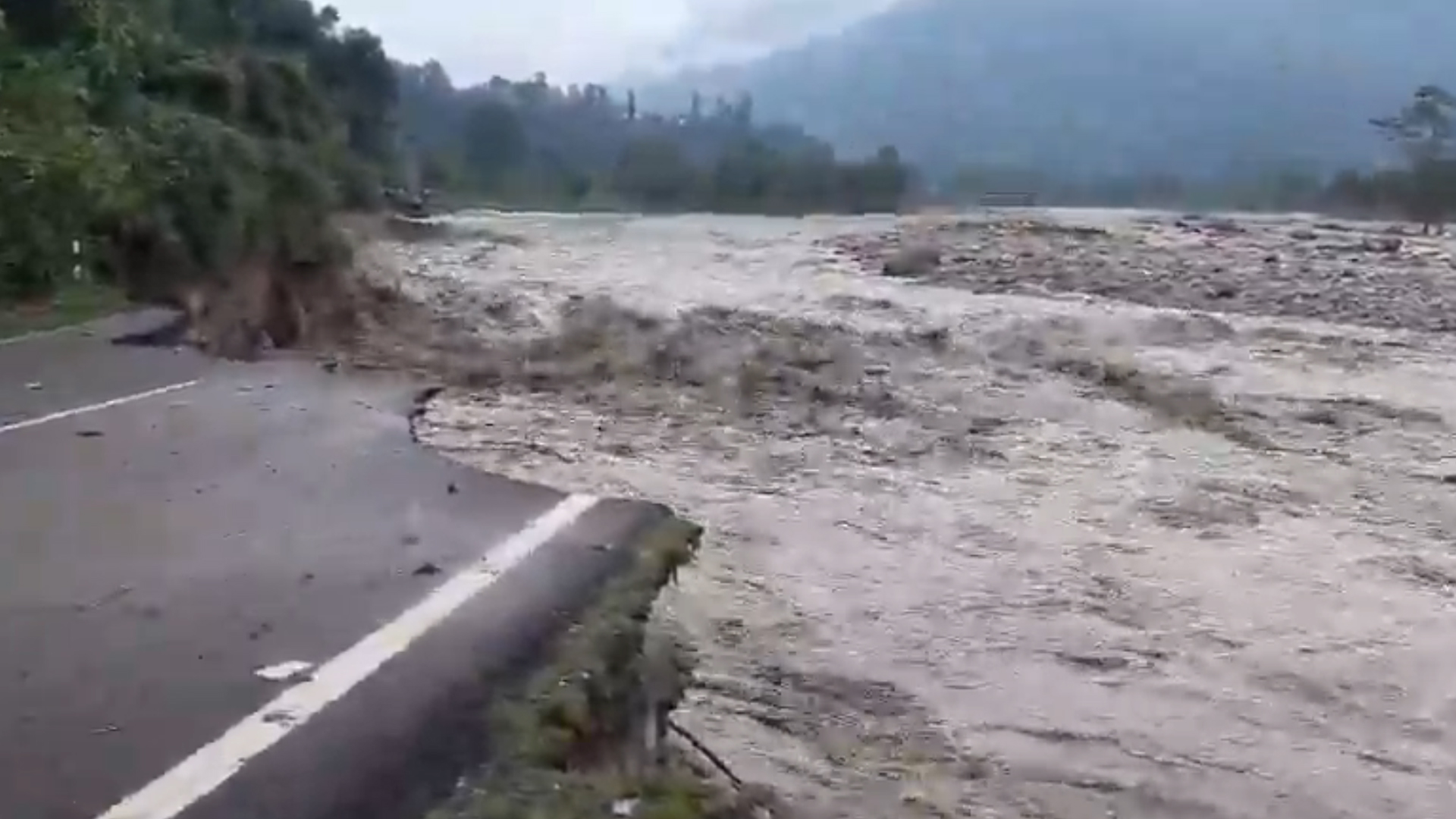
Uttarakhand is grappling with the worst monsoon fury in over a century as relentless heavy rains, including a catastrophic cloudburst near Sahastradhara in Dehradun, have caused widespread flooding, landslides, and loss of life. The city of Dehradun shattered a 101-year-old single-day September rainfall record, receiving 264 mm of rain within 24 hours, breaking the previous record of 212.6 mm set in 1924.
The cloudburst early Tuesday caused the Tamsa River to swell rapidly, flooding nearby areas and damaging key infrastructure, including the Maldevta road and the Dehradun–Mussoorie route. Rescue teams rushed to save people trapped by rising waters, including five individuals rescued near Sahastradhara. Across Uttarakhand, at least 15 people have died, with 16 others missing and over 900 stranded due to blocked roads and landslides.
Neighboring Himachal Pradesh has also been severely affected by the ongoing rains. In Kangra district alone, the toll stands at 55 deaths, with damages exceeding ₹603 crore. A landslide in Mandi caused a house to collapse, trapping three residents.
The floods reached sacred sites such as the Tapkeshwar Mahadev temple along the Tons River, where water levels rose to 10–12 feet inside the cave, nearly submerging the Hanuman statue. Thankfully, the temple’s sanctum sanctorum remained unharmed.
Besides Dehradun, several other towns, including Narendra Nagar, Kathgodam, Nainital, Mussoorie, Rishikesh, and Uttarkashi, have reported heavy rainfall ranging from 66 mm to 200 mm. These regions have experienced floods, landslides, road blockages, and structural damage, with Dehradun’s IT Park and Rajpur Road suffering extensive waterlogging and business disruptions.
The India Meteorological Department (IMD) has issued a red alert for Dehradun, Haridwar, Tehri, and nearby districts, warning of continued heavy rain and the risk of further floods and landslides. With a 21% surplus in seasonal rainfall this year, the region’s soil is saturated and highly vulnerable.
Chief Minister Pushkar Singh Dhami visited the hardest-hit areas of Maldevta and Kesarwala, calling the situation a “big disaster.” The state government has activated emergency control rooms and is coordinating rescue and relief operations. Prime Minister Narendra Modi toured affected areas in Dehradun and announced a ₹1,200 crore relief package, praising the efforts of rescue teams.
Rescue operations are ongoing with the National Disaster Response Force (NDRF), State Disaster Response Force (SDRF), police, and public works teams working together. Authorities have urged people to avoid traveling in areas prone to flooding and landslides. Schools in Dehradun and Rishikesh remain closed, and several highways, including routes to Mussoorie and Yamunotri, are blocked.
Environmental experts have expressed alarm over Uttarakhand’s vulnerable ecosystem, highlighting that deforestation, unchecked urban growth, and inadequate drainage systems have exacerbated the flooding. They caution that without adopting sustainable development practices, such extreme weather events are likely to become more frequent and severe.
With heavy rains expected to continue for at least the next two days, Uttarakhand remains on high alert. Authorities urge residents to stay informed about official advisories and prioritize their safety.
Also Read: Severe Flooding and Rescue Operations in Dehradun Amidst Red Alert