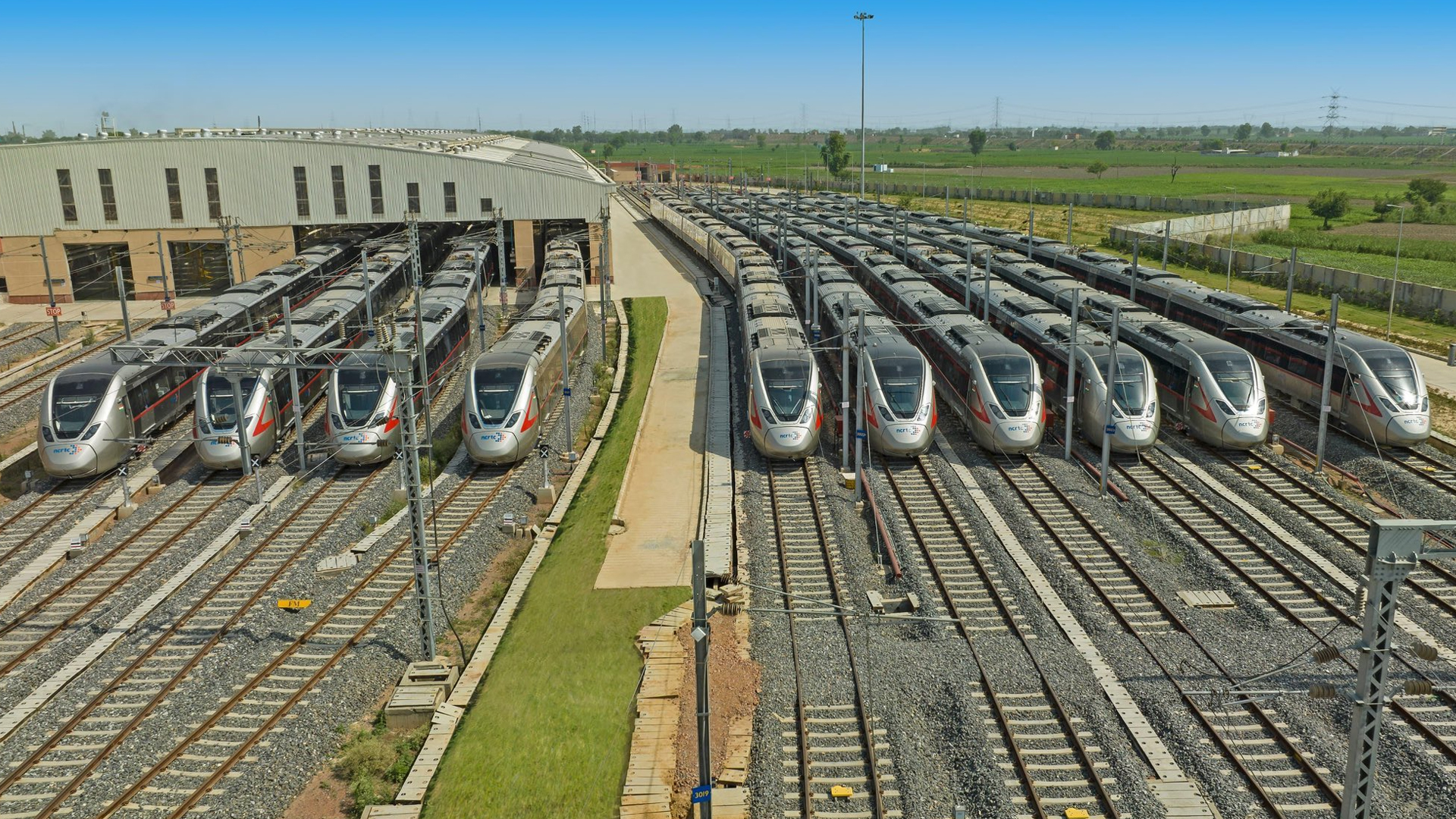
The full commissioning of the Delhi–Meerut Regional Rapid Transit System (RRTS) has brought high-speed regional travel to the National Capital Region, reducing the journey between the two cities to less than an hour. The 82-km corridor, now operational from Sarai Kale Khan in Delhi to Modipuram in Meerut, is India’s first rapid rail line and is expected to significantly ease daily commuting.
Namo Bharat trains on the route run at high operational speeds and cover the distance in around 55–60 minutes, compared with the earlier travel time of over two hours by road. The faster, reliable service is set to benefit office-goers, students and business travellers while improving connectivity across Delhi, Ghaziabad and Meerut.
A major highlight of the project is the development of Sarai Kale Khan as a mega multimodal transport hub. The station seamlessly connects with the Delhi Metro, Hazrat Nizamuddin railway station and the Inter-State Bus Terminal, allowing passengers to change between different modes of transport within a single complex. It will also act as the central interchange for the upcoming Delhi–Panipat and Delhi–Alwar RRTS corridors, making it the core of the region’s future rapid rail network.
Designed for high commuter volumes, the hub features smooth pedestrian movement, dedicated pick-up and drop-off areas and modern passenger amenities. The trains offer facilities such as reserved sections for women, premium coaches, CCTV surveillance and space for luggage, aligning the system with global standards of regional transit.
Officials say the corridor will encourage a shift from private vehicles to public transport, helping reduce congestion and pollution across the NCR. The improved connectivity is also expected to influence housing and employment patterns by making long-distance daily travel faster and more predictable.
Also Read: Shikhar Dhawan begins new innings with Sophie Shine