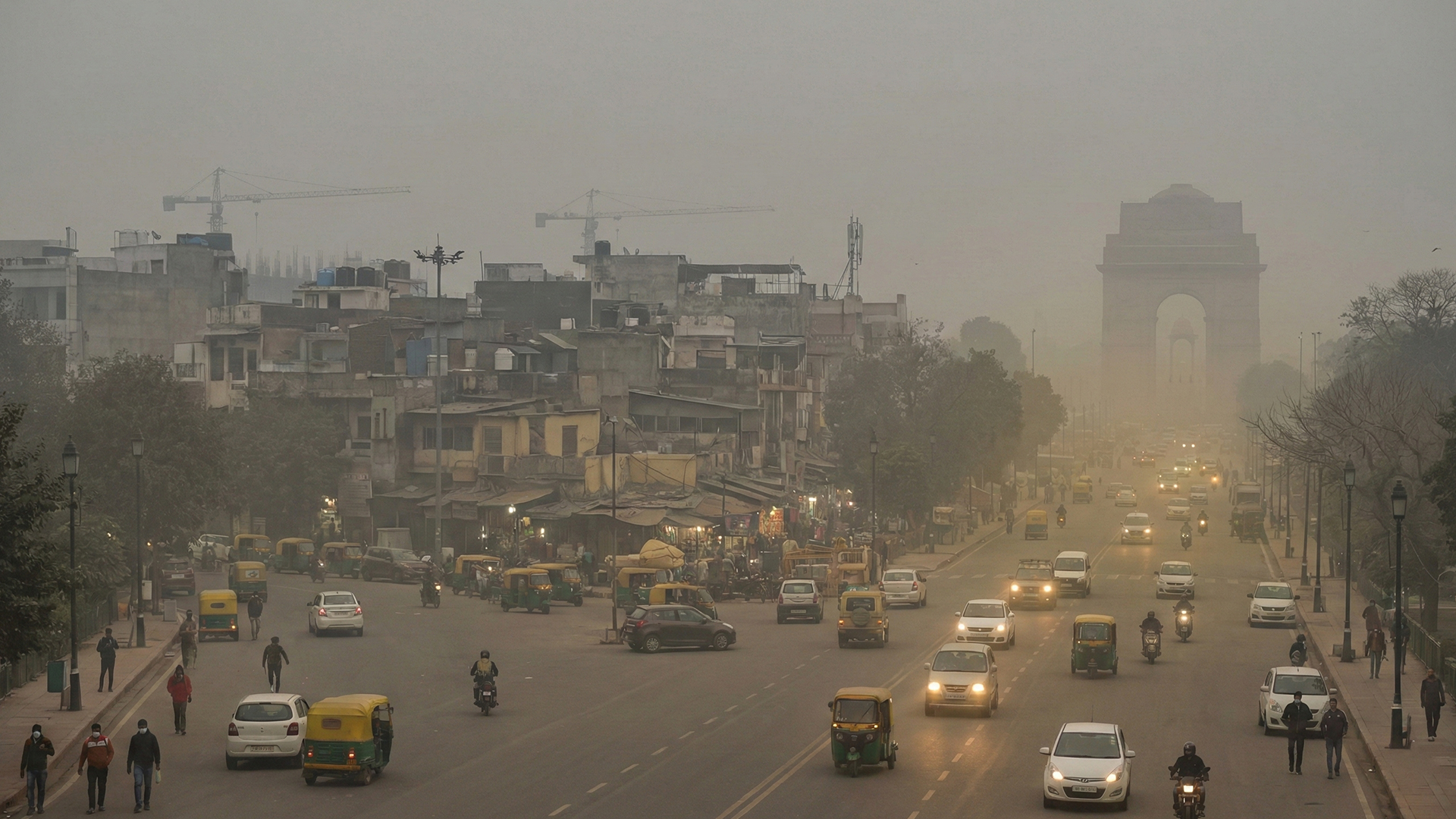
Delhi’s air quality deteriorated sharply on Wednesday as a dense haze blanketed the city, pushing pollution levels dangerously close to the “severe” category. The Central Pollution Control Board (CPCB) reported that the city’s overall Air Quality Index (AQI) hovered around 376, placing it firmly in the “very poor” range.
Certain areas recorded even higher pollution readings, exceeding 400 AQI. Chandni Chowk recorded an alarming 431, while Jahangirpuri and the vicinity of JLN Stadium saw 406 and 405, respectively. Experts say these levels can pose serious health risks, particularly for children, the elderly, and people suffering from respiratory conditions such as asthma or chronic bronchitis.
The thick smog, reducing visibility across several parts of the capital, comes after a brief period of improved air quality over the weekend. Winds had temporarily cleared the atmosphere, but the respite was short-lived. Weather experts have warned that stagnant conditions combined with continued emissions from vehicles, industries, and construction are contributing to the rise in pollution.
Authorities have advised residents to limit outdoor activities and use protective measures such as masks when venturing outside. Schools and health institutions have been urged to take extra precautions for vulnerable groups. Meanwhile, the government has deployed additional monitoring to track AQI variations across the city and issue timely warnings.
Environmentalists say that while short-term measures like reducing vehicular traffic and construction work can help, long-term solutions are needed to address Delhi’s recurring pollution crisis. They call for stricter regulation of industrial emissions, promotion of public transport, and wider green cover to improve air quality.
As the capital braces for several more days of poor air quality, the city’s residents are once again reminded of the urgent need for both preventive measures and policy interventions to curb the annual surge in pollution. Until then, staying indoors, wearing masks, and avoiding strenuous outdoor activities remain the most effective steps to safeguard health against the hazardous smog engulfing Delhi.
Also Read: Defence, trade, energy top agenda at Modi-Putin meet