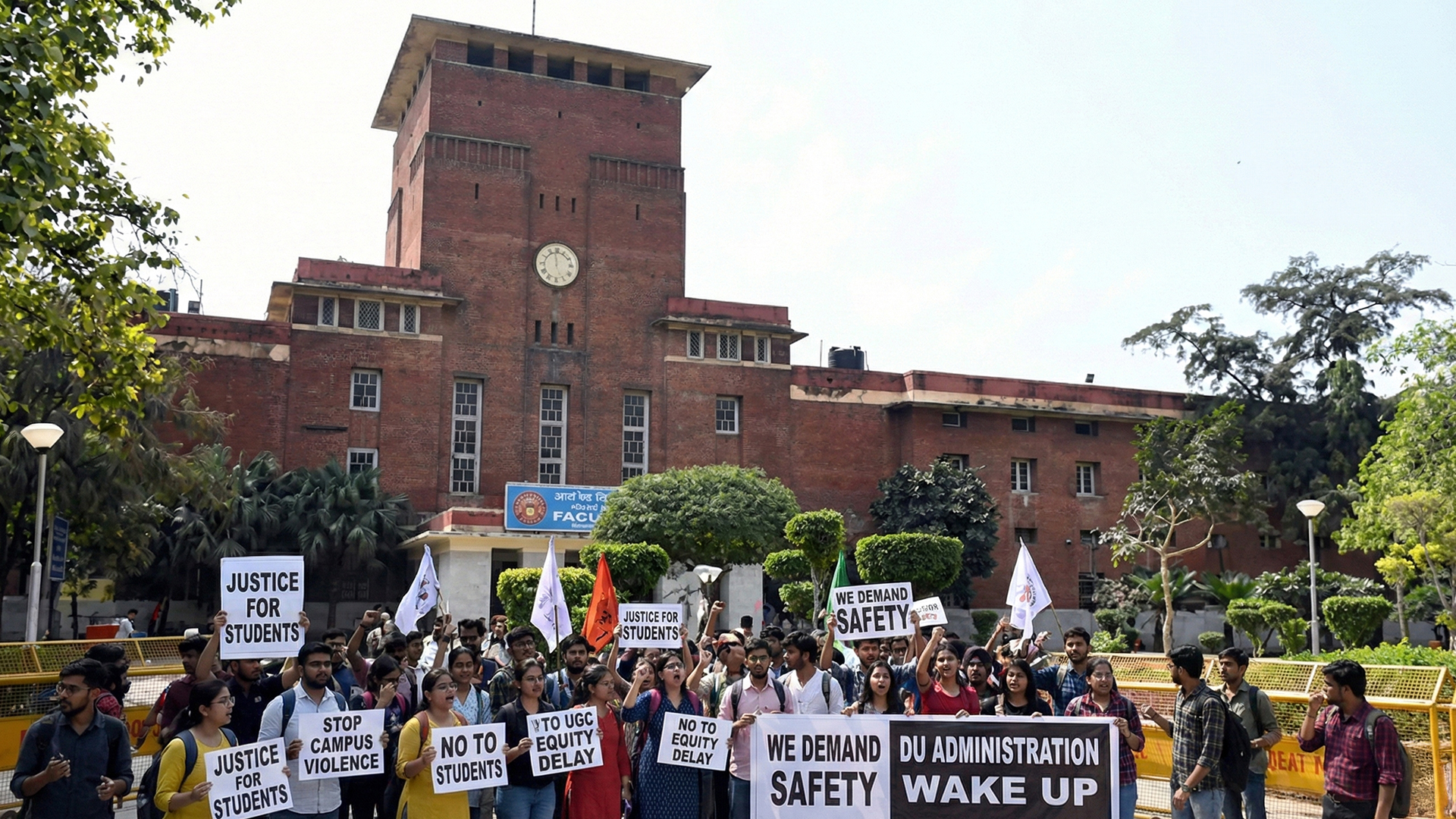
Delhi University has imposed a one‑month ban on all protests, rallies, and public gatherings on its campus, effective February 17, 2026, citing concerns over safety, law and order, and academic disruption. The decision follows a series of violent incidents during demonstrations against the University Grants Commission (UGC) Equity Regulations, 2026.
The proctor’s office clarified that under the restrictions, any assembly of five or more people, public meetings, dharnas, slogan‑shouting, processions, or carrying torches and other potentially hazardous items is strictly prohibited. Public speeches or any activity that could disrupt normal campus functioning or threaten safety are also banned.
The directive references warnings from the Assistant Commissioner of Police (Civil Lines) that large gatherings on campus could obstruct traffic, disturb public peace, or endanger participants. University authorities said the ban aims to prevent further clashes and ensure the safety of students, faculty, and staff.
The decision comes after escalating tension over the UGC Equity Regulations, designed to strengthen anti-discrimination measures in higher education. The regulations are currently stayed by the Supreme Court due to legal challenges. Recent campus protests have seen confrontations between student groups, including incidents of physical aggression and property damage. On February 12, historian Irfan Habib was reportedly attacked with a bucket of water during a public programme, intensifying security concerns.
While the administration defends the ban as a preventive measure, it has drawn criticism from faculty members and student leaders. Critics argue that it curtails democratic expression and peaceful dissent, extending beyond protests against the UGC rules to other campus issues such as faculty appointments, policy implementation, and teacher suspensions. Executive Council member Mithuraj Dhusiya called the move an overreach that risks stifling free speech.
The restriction is set to remain in place for one month, though university officials may review or lift it earlier depending on the situation on campus. Students and staff have been advised to adhere strictly to the order to avoid legal or disciplinary action.
Also Read: Sergio Gor highlights Indo-US defence ties