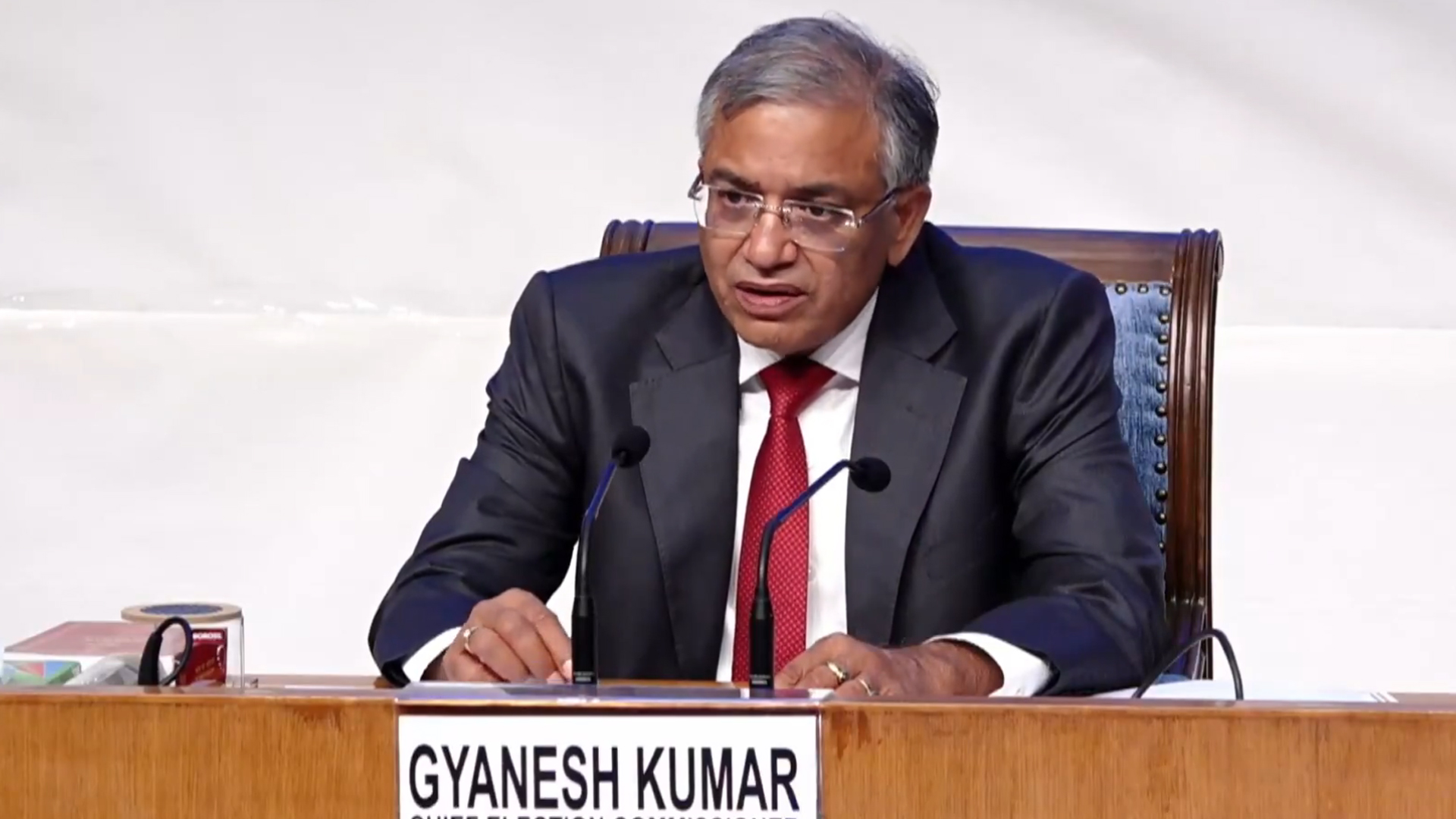
A pivotal meeting is currently underway at the Election Commission of India (ECI) where senior officials are engaging with State election officers to review preparations for implementing the Special Intensive Revision (SIR) of electoral rolls across the country.
During the full-day session, top ECI representatives are expected to present the policy framework and operational strategy for SIR, while the Chief Electoral Officer of Bihar will share insights from the State’s experience in executing the process. This marks the third meeting of its kind since Gyanesh Kumar assumed office as Chief Election Commissioner in February, but the discussion gains added weight as it centers on a nationwide rollout.
The Commission has confirmed that following the exercise in Bihar, the revision will be extended to cover all states. Officials are hinting that the initiative could be launched later this year, ahead of the 2026 Assembly elections in Assam, Kerala, Puducherry, Tamil Nadu, and West Bengal.
The primary objective of the revision is to identify and exclude illegal foreign migrants from electoral rolls by verifying their birthplace and other eligibility criteria. This development is particularly significant amid intensified crackdowns across multiple states on undocumented migrants, including those from Bangladesh and Myanmar.
The ECI has stressed that the exercise is essential to fulfill its constitutional duty of maintaining the integrity of voter lists. As part of the process, election officials will conduct door-to-door verification to ensure accurate and error-free voter data.
In light of allegations from opposition parties claiming that voter data manipulation favours the ruling party, the Commission has introduced additional safeguards. A new declaration form will be required for individuals applying to enroll as voters or shifting from another state. Applicants must affirm that they were born in India before July 1, 1987, and submit documents verifying their birth details or those of their parents. Another option allows applicants to claim birth in India between July 1, 1987, and December 2, 2004, with supporting evidence.
However, the process has drawn criticism, particularly in Bihar, where opponents argue that many eligible voters risk being disenfranchised due to stringent documentation requirements. The Supreme Court has directed the ECI to ensure that no eligible citizen is excluded during the revision.
Meanwhile, some states have begun publishing past voter lists as references for the current exercise. For example, the Delhi CEO’s website hosts the 2008 electoral roll, from when the last SIR was conducted in the capital, while Uttarakhand’s 2006 roll is now accessible online. Bihar’s revision is using the 2003 voters’ list as its reference point, with most states having carried out roll revisions between 2002 and 2004.
With these developments, the Election Commission aims to balance constitutional obligations, electoral integrity, and public trust as it prepares for a rigorous and expansive voter roll revision across India.
Also Read: C.P. Radhakrishnan Elected as India’s 15th Vice President in Resounding NDA Victory