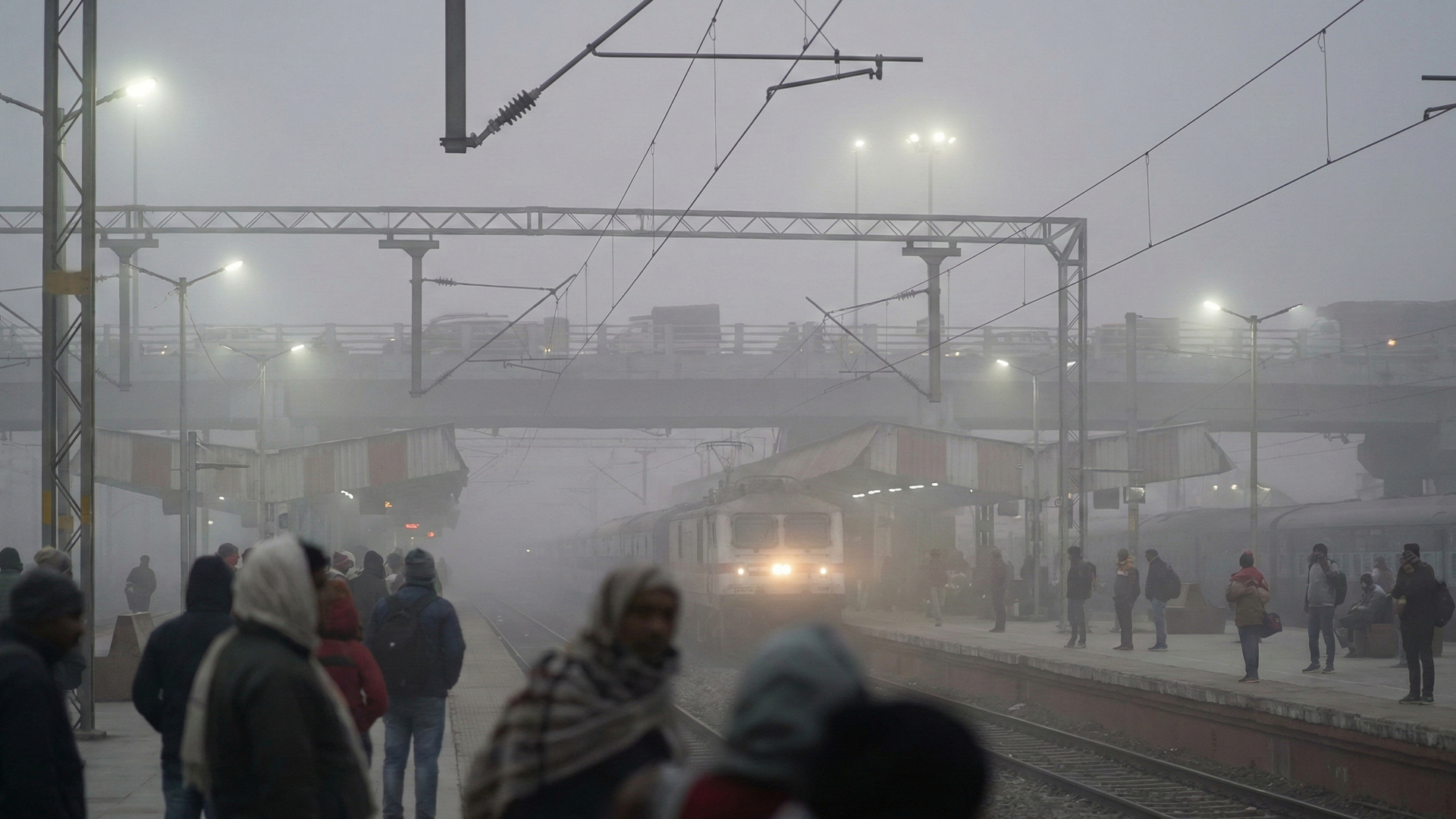
Delhi continued to face severe disruption on Sunday as dense fog and haze blanketed the city for the seventh straight day, affecting air, rail and road transport. The India Meteorological Department (IMD) has warned that foggy and hazy conditions are likely to persist for at least two more days, offering little immediate relief to residents and travellers.
Poor visibility at Indira Gandhi International Airport led to widespread flight disruptions. Over 100 flights were cancelled, while more than 500 others were delayed due to low visibility during early morning hours. Airlines issued repeated advisories, asking passengers to check flight schedules before leaving for the airport. Over the past week, thousands of flights have been affected as fog continues to grip the national capital.
Rail services were also impacted. Several long-distance trains operated by Northern Railway ran behind schedule, with delays ranging from 30 minutes to a few hours. Fog along major rail routes reduced visibility for loco pilots, forcing trains to run at slower speeds for safety reasons.
According to the IMD, the persistent fog is the result of a western disturbance influencing weather patterns across north India. The system has brought snowfall to higher reaches of Jammu and Kashmir, Himachal Pradesh and Ladakh, while plains like Delhi continue to experience calm winds and high moisture levels, ideal conditions for dense fog and haze. A gradual improvement in visibility is expected only after midweek.
Adding to the problem, Delhi’s air quality remained in the “very poor” category, with pollution levels trapped close to the ground due to stagnant weather conditions. The combination of fog and pollution has intensified smog, raising health concerns, especially for children, the elderly and those with respiratory illnesses.
Authorities have advised commuters to plan travel with caution, allow extra time, and follow road safety norms. Health experts have urged residents to limit outdoor exposure until weather conditions improve.
Also Read: WHO partners India on traditional medicine