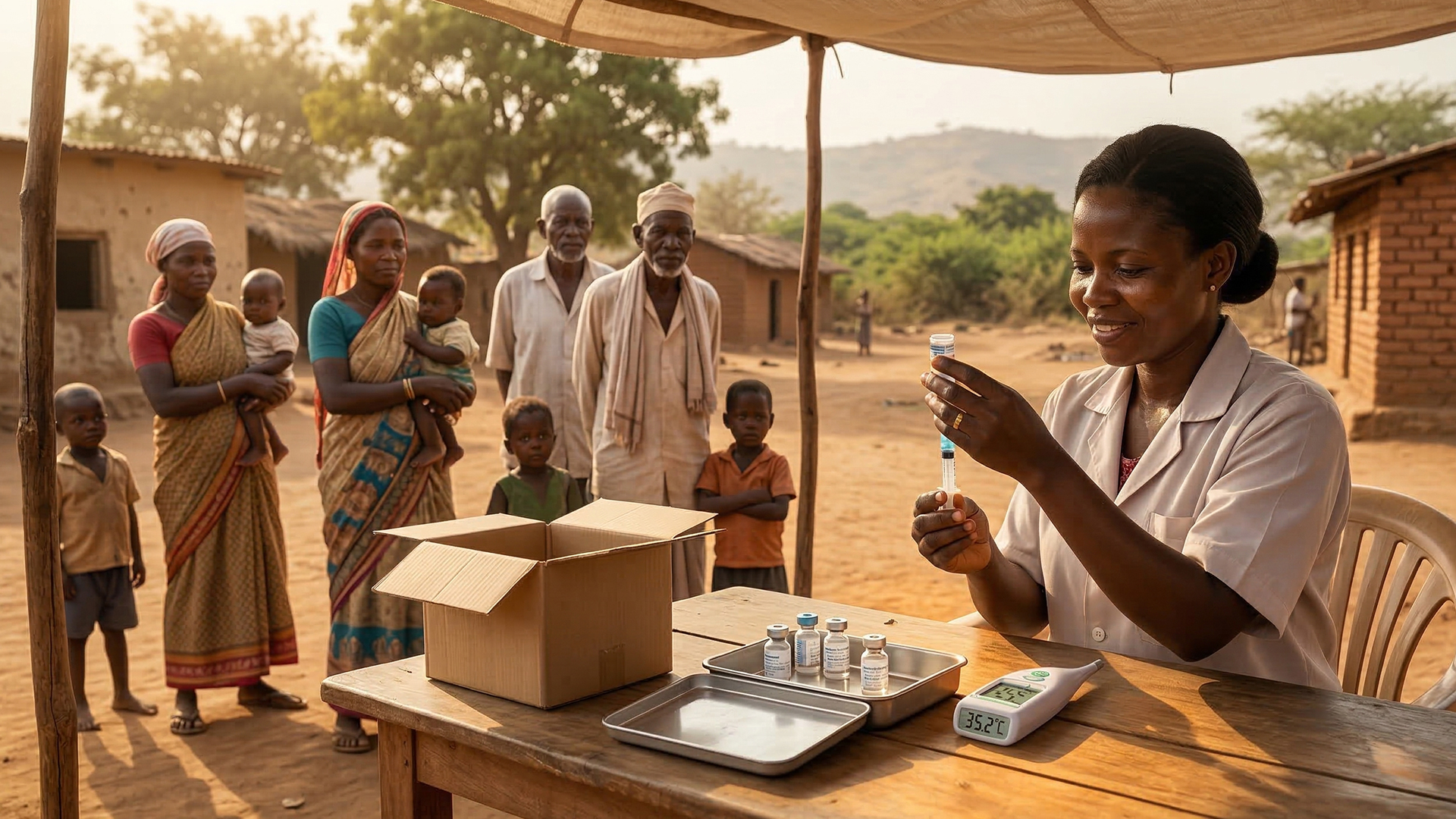
Imagine a vaccine you don’t have to keep cold, no bulky refrigerators, no ice packs, no electricity needed. That’s exactly what scientists are working on, and early results suggest it could be a game-changer for global health.
Most vaccines today must stay in a narrow temperature range, usually in a refrigerator, from the moment they are made until they’re given. In many parts of the world, maintaining this “cold chain” is a major challenge. Without reliable cooling, vaccines can spoil, leaving millions of people unprotected and wasting countless doses.
The new vaccine, called SPVX02, has been designed to be thermostable, meaning it stays effective even at higher temperatures. In early human trials, it protected volunteers against tetanus and diphtheria, two serious diseases that still threaten millions worldwide. Remarkably, the vaccine remained stable for up to two years at about 30 °C (86 °F), a feat that would have been impossible for traditional vaccines.
Health experts say this innovation could revolutionize immunisation campaigns, especially in rural villages, conflict zones, and regions with unreliable electricity. By removing the cold storage requirement, vaccines could reach far more people safely and efficiently, reducing waste, cutting costs, and saving lives.
The project was developed with support from the UK Health Security Agency and the biotech company Stablepharma. Researchers are optimistic that, if larger trials confirm these results, fridge-free vaccines could pave the way for other vaccines to be made similarly resilient, transforming global healthcare.
Also Read: Israel claims strikes killed top Iranian officials