The Palestinian death toll in the ongoing Israel-Hamas conflict has surpassed 65,000, according to Gaza’s Health Ministry, as Israeli forces intensify their ground offensive in Gaza City and civilians continue to flee the embattled enclave. The Ministry reported 165,697 injured since the conflict escalated following Hamas’ October 7, 2023, attack on southern Israel.
Israel’s military has carried out over 150 air and artillery strikes in recent days ahead of its ground advance, toppling high-rise buildings in densely populated areas. The military claims these towers were used by Hamas to monitor troop movements.
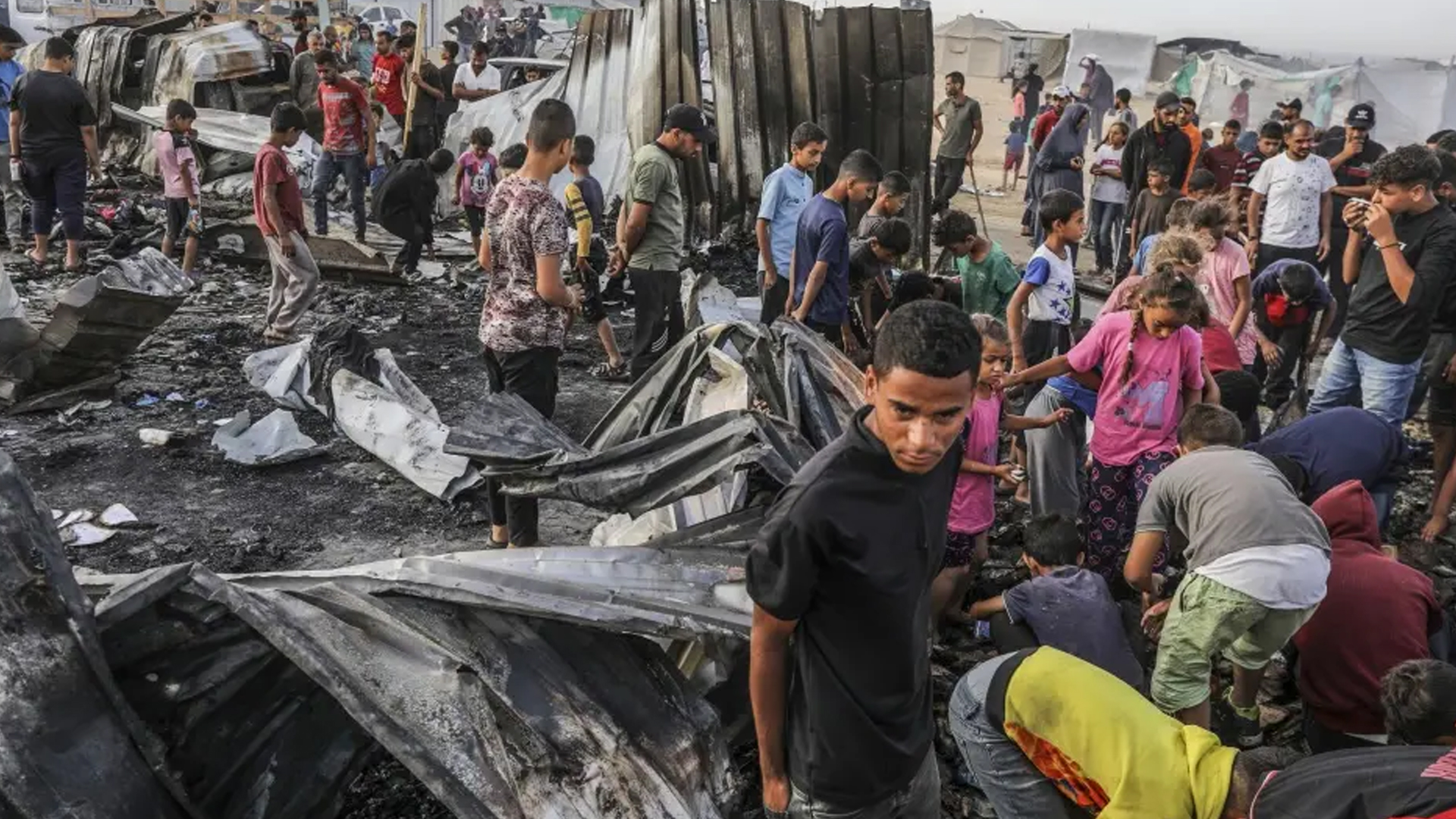
Overnight strikes killed at least 16 people, including women and children, with fatalities reported across famine-stricken Gaza City, particularly in refugee camps such as Shati, Nuseirat, and Muwasi.
Hospitals are under severe strain. Multiple Israeli strikes hit Gaza City’s Rantisi Hospital for children, forcing roughly half of the 80 patients to evacuate. About 40 patients, including four children in intensive care and eight premature babies, remain under the care of 30 medical staff.
Aid groups condemned the strikes, warning that no location, including hospitals, is safe in the escalating offensive.
Amid the destruction, Israel has opened temporary evacuation corridors south of Gaza City. While an estimated 350,000 residents have reportedly left the area, northern Gaza remains largely cut off. Israeli strikes on key telecommunications infrastructure have collapsed internet and phone services, leaving many unable to communicate or access information.
The UN estimates that over 238,000 Palestinians have fled northern Gaza, while hundreds of thousands remain behind.
Humanitarian agencies have called the situation in Gaza a catastrophe. Over 20 aid organizations, including the Norwegian Refugee Council, Anera, and Save the Children, urged the international community to take decisive action to halt Israel’s offensive.
“What we are witnessing in Gaza is not only an unprecedented humanitarian catastrophe, but what the UN Commission of Inquiry has now concluded is genocide,” the coalition said in a statement.
Qatar’s Ministry of Foreign Affairs also condemned the Israeli operation, describing it as an “extension of the war of genocide” against Palestinians, and criticized an Israeli strike last week that killed five Hamas members and a local security official.
Israel aims to take full control of Gaza City, with military officials estimating 2,000 to 3,000 Hamas fighters remain in the area, along with tunnels used for guerrilla operations.
Despite repeated raids, militants continue small-scale attacks, planting explosives or targeting military outposts before dispersing.
The humanitarian crisis is compounded by widespread famine. Gaza City, in particular, is experiencing severe food shortages, with large areas of the city destroyed. Displacement, destruction of infrastructure, and limited access to medical care have left the population vulnerable, particularly children and the elderly.
The war, which began on October 7, 2023, following a Hamas-led incursion into southern Israel that killed around 1,200 people and abducted 251 others, has now entered a critical phase. Israel has pledged to regain control over Gaza City, with repeated ground incursions aimed at neutralizing remaining militants.
Forty-eight hostages, fewer than half believed to be alive, remain in Gaza, adding to the conflict’s human toll.
As the offensive continues, the international community faces mounting pressure to respond to both the humanitarian crisis and the allegations of war crimes. Aid groups stress the need for political, economic, and legal measures to protect civilians, prevent further displacement, and ensure access to essential services.
With Gaza’s infrastructure collapsing and the civilian population under siege, the region faces one of the most severe humanitarian emergencies in recent history, raising urgent calls for intervention as the conflict shows no signs of abating