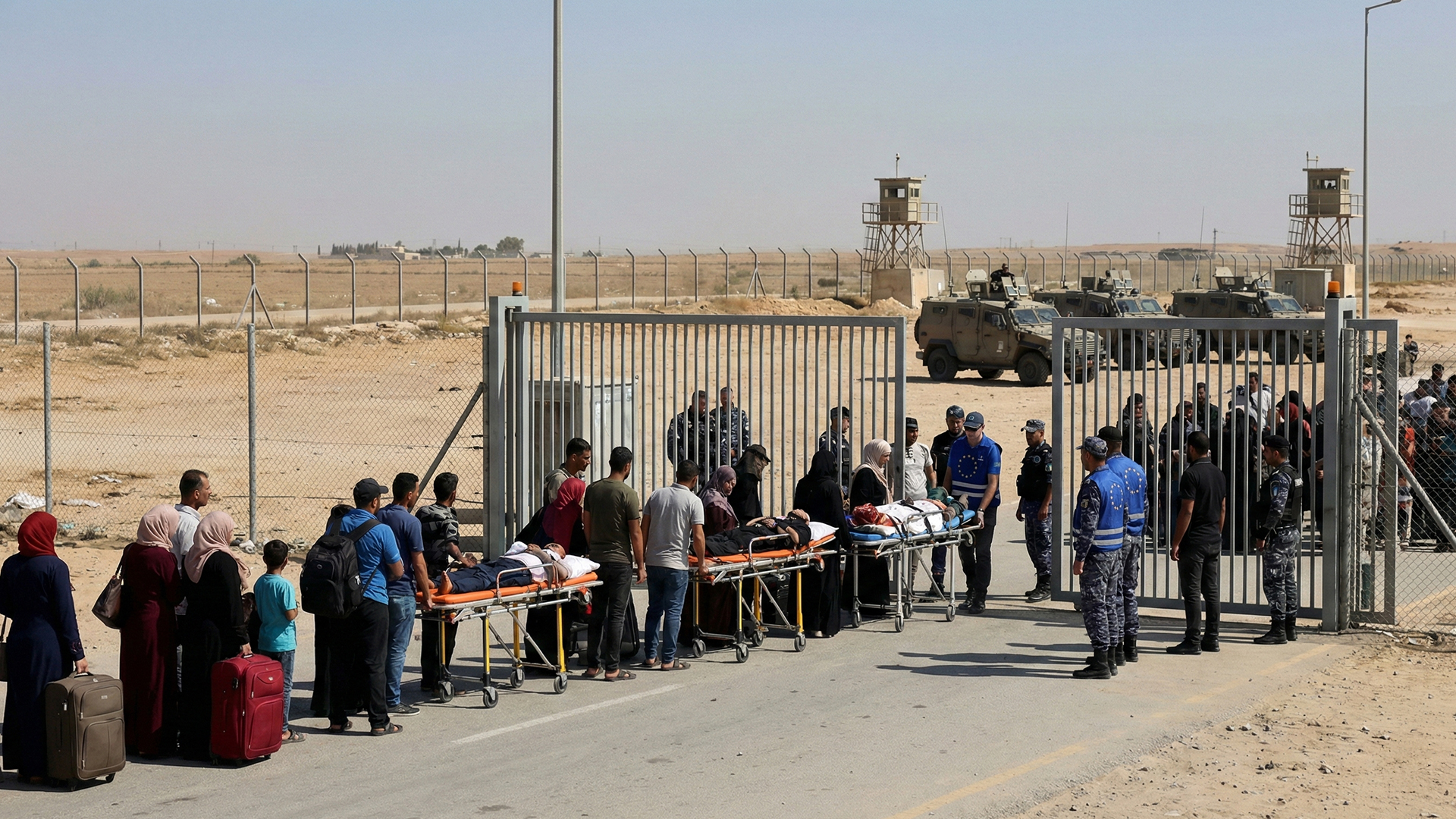
After nearly two years of closure, the Rafah border crossing between Gaza and Egypt reopened on 2 February 2026, allowing a small number of Palestinians to cross for the first time since May 2024, when Israel shut the border during its conflict with Hamas. The crossing, Gaza’s only exit to a neighboring country besides Israel, had been a crucial route for medical evacuations and humanitarian aid.
The reopening was coordinated by Egypt and monitored by the European Union Border Assistance Mission as part of the first phase of a ceasefire and peace plan. On the first day, only five seriously ill or wounded Palestinians, each accompanied by relatives, were allowed to leave Gaza for medical treatment in Egypt. A few others re-entered the enclave.
While authorities had planned for up to 50 crossings per day, strict Israeli security screenings, paperwork requirements, and limited quotas have kept actual movement very low. Humanitarian groups stress that thousands of patients in Gaza still urgently need permission to travel for care.
Currently, the crossing is restricted to pedestrians only, and commercial goods or large-scale aid are not yet allowed. Security checks and approvals by both Israeli and Egyptian authorities remain mandatory, keeping the movement tightly controlled.
The reopening, though limited, is a symbolic step toward easing Gaza’s isolation and addressing some urgent humanitarian needs. Residents of Gaza, which houses more than two million people, continue to face shortages of essential medical supplies, restricted movement, and the ongoing psychological strain of conflict.
Also Read: Sunetra Pawar consoles late security officer’s family