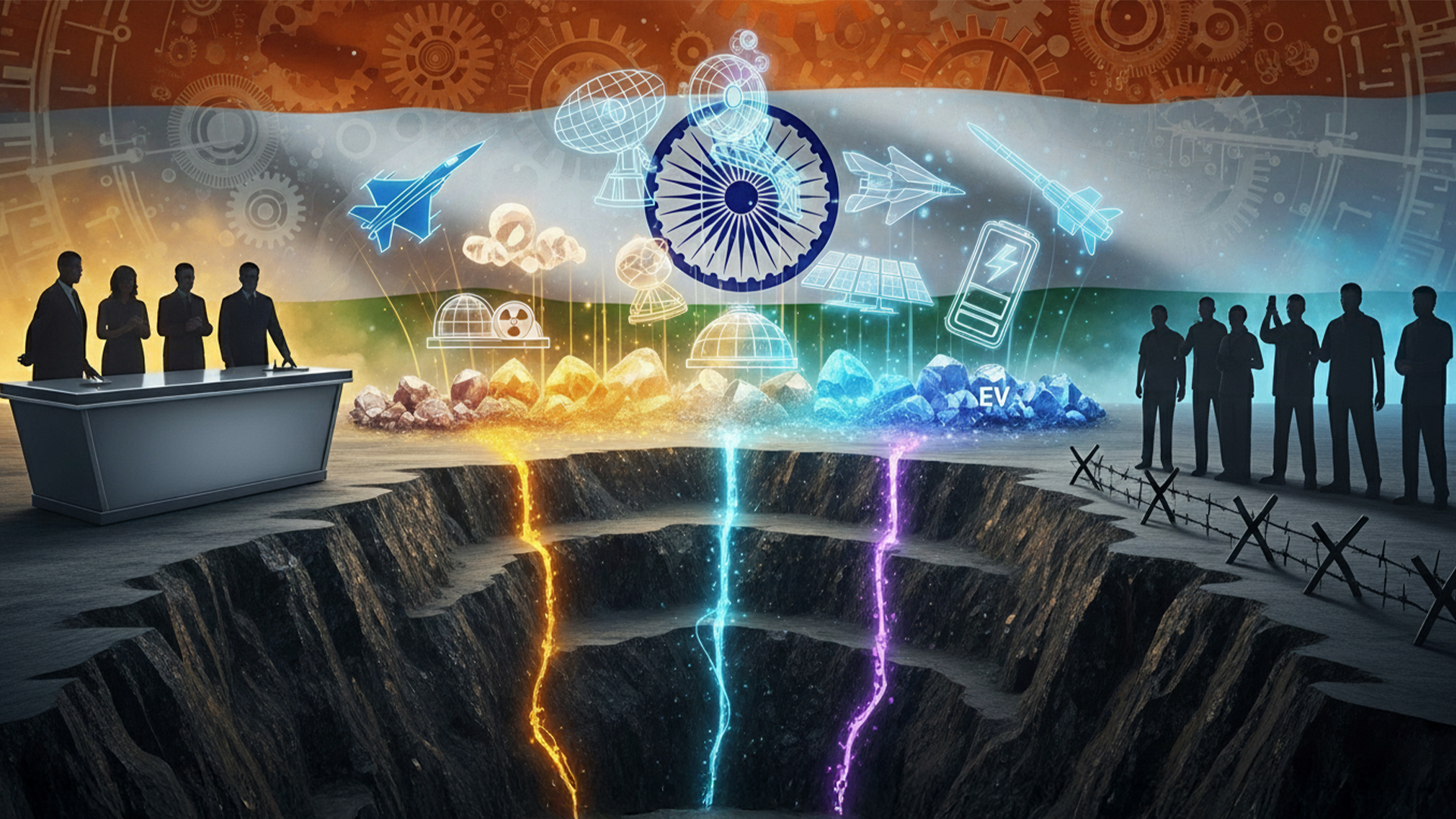
The Indian government has announced a major policy shift, exempting mining projects involving critical, strategic, and atomic minerals from the requirement of public consultations under the Environmental Impact Assessment (EIA) process. The decision is aimed at fast-tracking mining approvals to bolster national security, defence preparedness, and energy self-reliance.
The Ministry of Environment, Forest and Climate Change (MoEFCC) issued an office memorandum on September 8, implementing the exemption following requests from the Ministry of Defence and the Department of Atomic Energy (DAE). The exemption applies to minerals classified under Part B (atomic) and Part D (critical and strategic) of the Mines and Minerals (Development and Regulation) Act, 1957.
Minerals Covered
The move impacts the mining of atomic minerals such as uranium, thorium, monazite, and zircon, as well as critical and strategic minerals including lithium, cobalt, rare earth elements (REEs), vanadium, graphite, titanium, tungsten, and tantalum. These minerals are essential for sectors like nuclear energy, defence systems, clean energy, and electronics.
While public hearings will no longer be required for such mining projects, they will still be subject to central-level appraisal by expert environmental committees.
Strategic Justification
In its August 4 request, the Defence Ministry stressed the strategic importance of rare earths and other critical minerals in military technologies like radar, sonar, avionics, and precision weapons, warning against over-reliance on imports. The DAE, in a letter dated August 29, highlighted the urgency of increasing thorium and uranium production to support India’s nuclear energy roadmap, especially the third-stage thorium reactor program.
Part of Broader Reform
The exemption is part of broader efforts to streamline clearances. The MoEFCC has recently created a separate category for critical minerals on its Parivesh portal and revised forest clearance rules to facilitate defence and strategic projects.
This is meant to accelerate domestic mineral production, reduce import dependence, and support India’s energy transition and defence goals. However, it has sparked concern among environmentalists and civil society groups, who warn that removing public participation could weaken environmental oversight and marginalize affected communities.
Also Read : US Firm Signs $500 Million Deal with Pakistan to Unlock Trillion-Dollar Mineral Treasure