The Government of India has rolled out GST 2.0 reforms today, introducing wide-ranging reductions in GST rates on numerous goods and services. The move, aimed at easing costs for consumers and boosting economic growth, was approved by the GST Council and is expected to add nearly ₹2 lakh crore to the economy.
Key Changes for Consumers
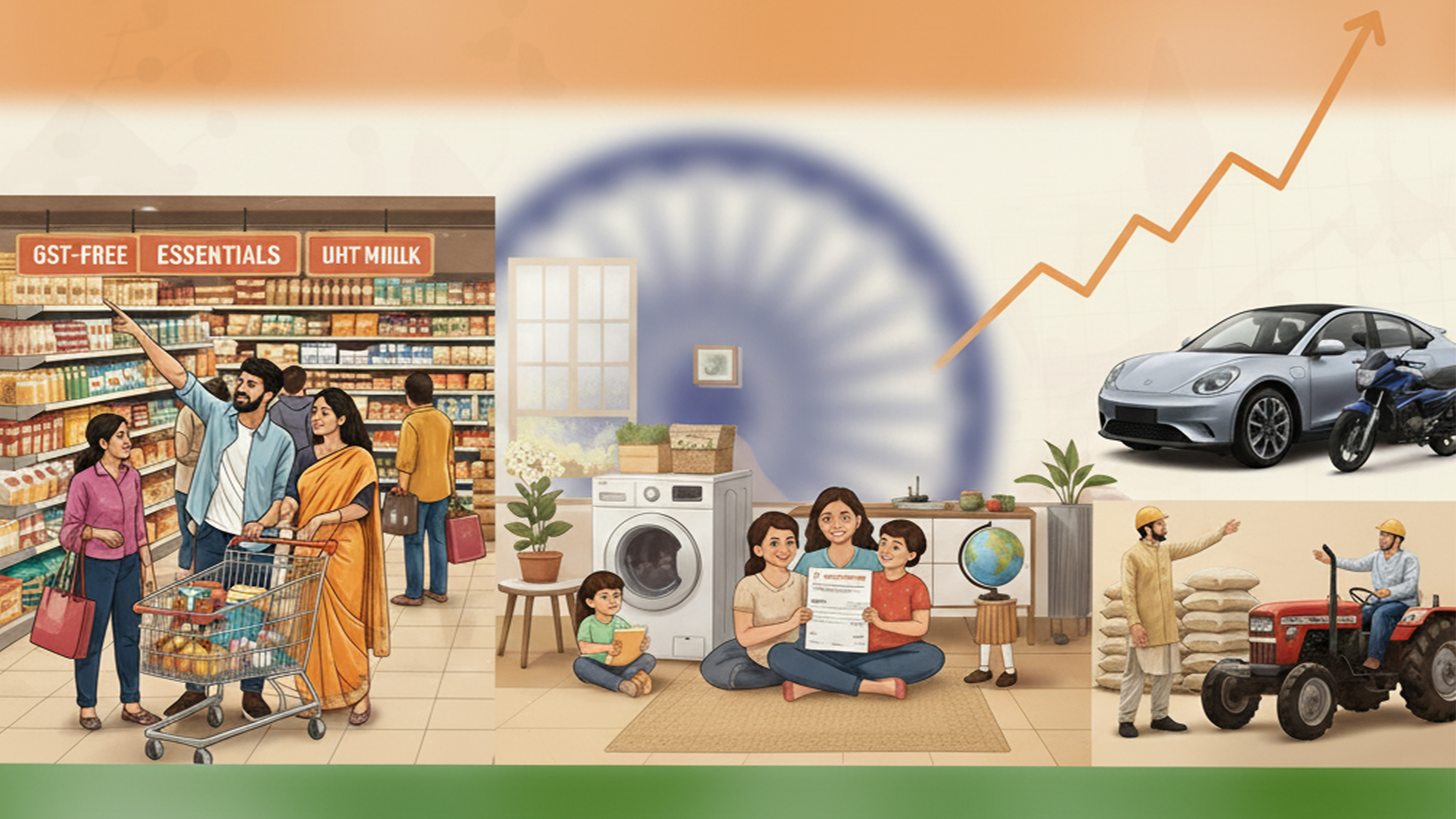
Staple foods like chapati, paranthas, UHT milk, and paneer are now exempt from GST. Other items, including butter, ghee, dry fruits, cheese, jams, breakfast cereals, and ice cream, have been lowered to a 5% tax rate, reducing household grocery expenses.
Life and health insurance premiums are exempted from GST. Life-saving medicines, medical devices, and diagnostic kits have been placed under a 5% GST slab, helping reduce medical costs.
Electric vehicles (EVs) attract a reduced 5% GST rate to promote clean transport. Small cars and motorcycles (up to 350cc) now have an 18% tax, down from 28%, while larger vehicles remain taxed at 28%.
Tax on TVs, refrigerators, washing machines, dishwashers, and air conditioners has been cut from 28% to 18%, making these appliances more affordable.
Essential school supplies such as pencils, sharpeners, exercise books, and globes are GST-free, with footwear and textiles taxed at 5%.
Items like toothpaste, soaps, talcum powder, hair oil, kitchen utensils, umbrellas, bicycles, and bamboo furniture now come under a 5% GST bracket.
Spas, salons, gyms, yoga centres, and health clubs now attract 5% GST instead of 18%, although input tax credit benefits have been removed for these services.
The cement tax has been cut from 28% to 18%. Agricultural machinery, fertilisers, tractor parts, and sewing machines are taxed at 5%, aiding the rural and farm sectors.
Economy flight tickets and hotel rooms up to ₹7,500 per night now attract a 5% GST, lowering travel costs for many. Third-party insurance for goods vehicles has also been reduced.
Finance Minister Nirmala Sitharaman highlighted that these reforms will reduce the tax burden on consumers, boost affordability, and drive consumption. By rationalizing GST rates while adjusting input tax credits, the government aims to balance revenue needs with public benefit.
The GST 2.0 overhaul is expected to spur demand in sectors like automobiles, consumer durables, and housing, supporting job creation and sustainable economic growth.