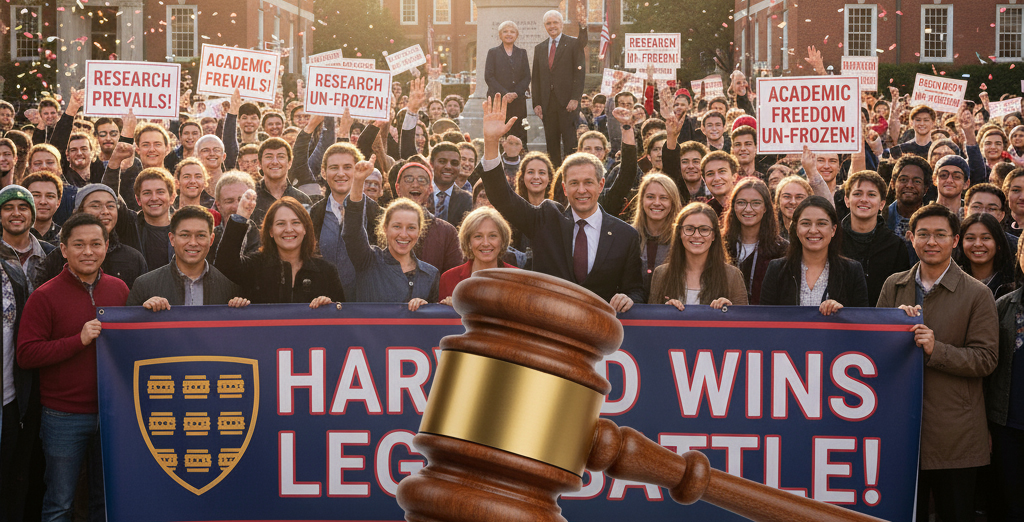
Harvard University has secured a major legal victory after a U.S. federal judge struck down the Trump administration’s freeze of more than $2.6 billion in research funding, calling the move unconstitutional and politically motivated.
The ruling, issued by U.S. District Judge Allison Burroughs, found that the funding cuts were not based on legitimate policy concerns but were instead an attempt to punish Harvard for refusing to comply with political demands from the administration.
“The government cannot use its spending power to silence or coerce institutions into conformity with its views,” Judge Burroughs wrote in her decision.
The Background
The Trump-era funding freeze was initiated following public criticism of Harvard’s handling of campus protests and allegations of antisemitism. Federal officials accused the university of failing to act and used that as a basis to suspend billions in research support. However, internal records revealed that the freeze followed failed efforts by the administration to influence Harvard’s internal governance and campus policies.
Harvard filed a lawsuit in response, arguing that the move violated its First Amendment rights and threatened the foundation of academic freedom.
Impact of the Ruling
The court’s decision orders an immediate restoration of funding, which affects hundreds of research projects across science, medicine, and technology. It also restricts future administrations from using federal funding as leverage to influence university operations without due legal process.
Legal experts say the ruling reinforces a critical boundary between federal authority and institutional independence.
“This isn’t just a win for Harvard, it’s a win for academic institutions across the country,” said Harvard President Alan Garber in a statement. “The court has reaffirmed that research and inquiry must remain free from political interference.”
Reactions to the ruling were sharply divided.
The Trump campaign called the decision “judicial overreach,” claiming that no institution has a guaranteed right to taxpayer funding and vowing to appeal the ruling.
On the other hand, civil liberties organizations and academic leaders hailed the verdict as a key defense of higher education.
“Public universities and private institutions alike now have a stronger legal footing to resist politically motivated funding threats,” said a spokesperson for the American Council on Education.
With the appeals process expected to begin soon, legal observers predict the case could reach higher courts, possibly even the U.S. Supreme Court. In the meantime, Harvard will regain access to the blocked funds, and its research programs will resume full operations.