The next time a horse whinnies, listen carefully for there’s more happening than meets the ear. Scientists have found that horses can produce a deep rumble and a high-pitched whistle at the same time. This clever combination makes their calls richer and more expressive than anyone realized.
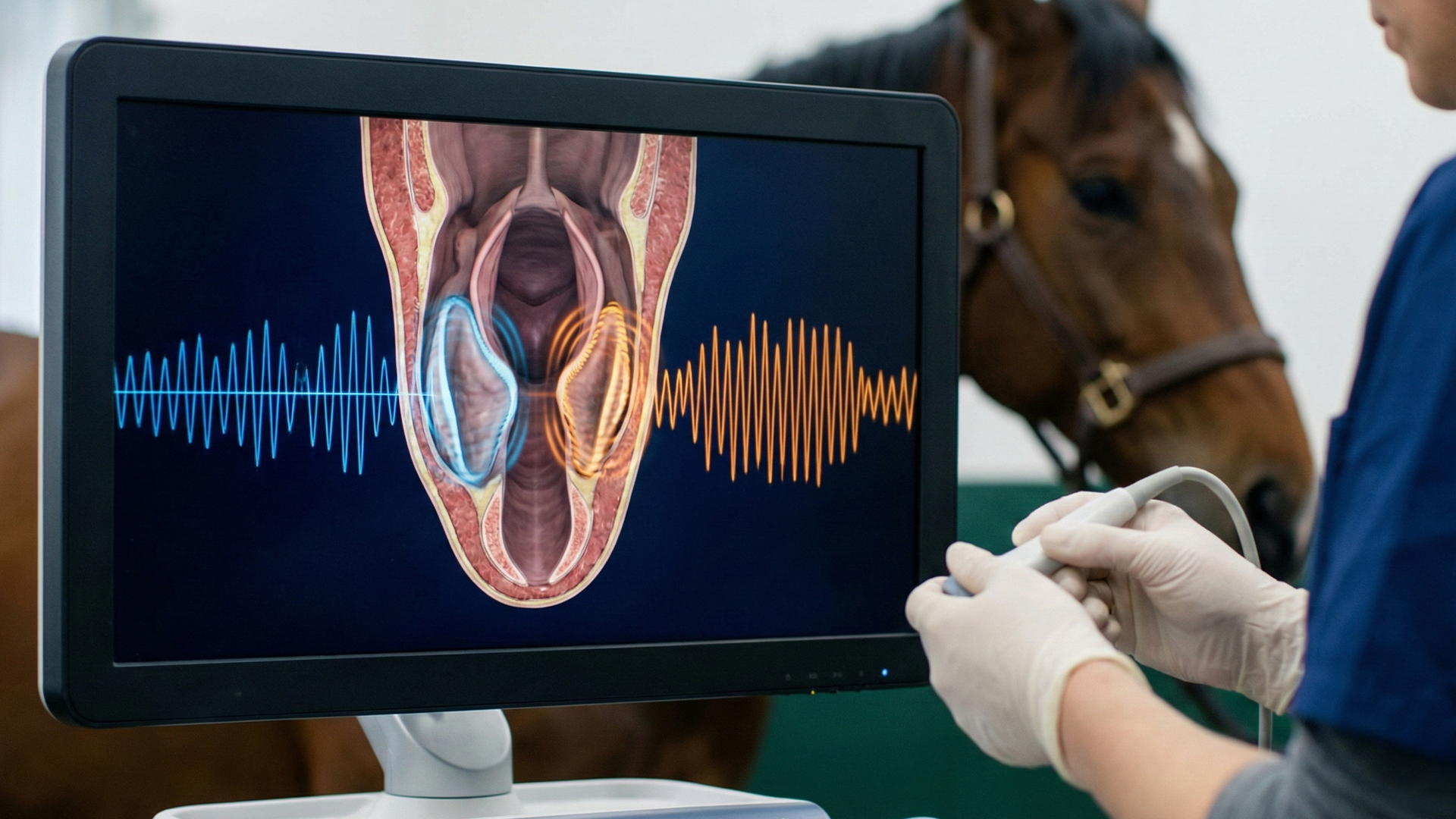
The low rumble comes from the horse’s vocal folds, working much like a human singing voice. Meanwhile, the high-pitched whistle is created in the throat as air passes through a tiny opening in the larynx. Together, these two sounds allow a single whinny to carry multiple messages, from signaling excitement or alerting the herd, to expressing location or mood.
This ability, called biphonation, is rare in large animals. While some small mammals can make multiple frequencies at once, horses are the first large mammals documented doing this. Even wild Przewalski’s horses show this dual-tone ability, while donkeys and zebras do not, hinting that it may be a unique trait in certain horse species.
To understand how it works, researchers studied live horses, recorded their calls, and even experimented with isolated larynxes. Passing helium through the excised vocal organs showed that the high-pitched whistle could change independently of the low rumble, confirming two separate sound mechanisms at work.
Experts say this discovery changes how we think about horse communication. A single whinny can convey more information than previously believed, helping horses stay in touch with each other, maintain herd cohesion, and express themselves in nuanced ways.
Horses are graceful and strong, now we know that they are also clever communicators. Even a sound we’ve heard thousands of times, the familiar ‘neigh’, hides layers of complexity, showing that nature often packs more intelligence into its creatures than we might expect.
For horse lovers and scientists alike, the whinny will never sound quite the same again.
Also Read: Tiny electrical glitch doomed ISRO’s NVS‑02