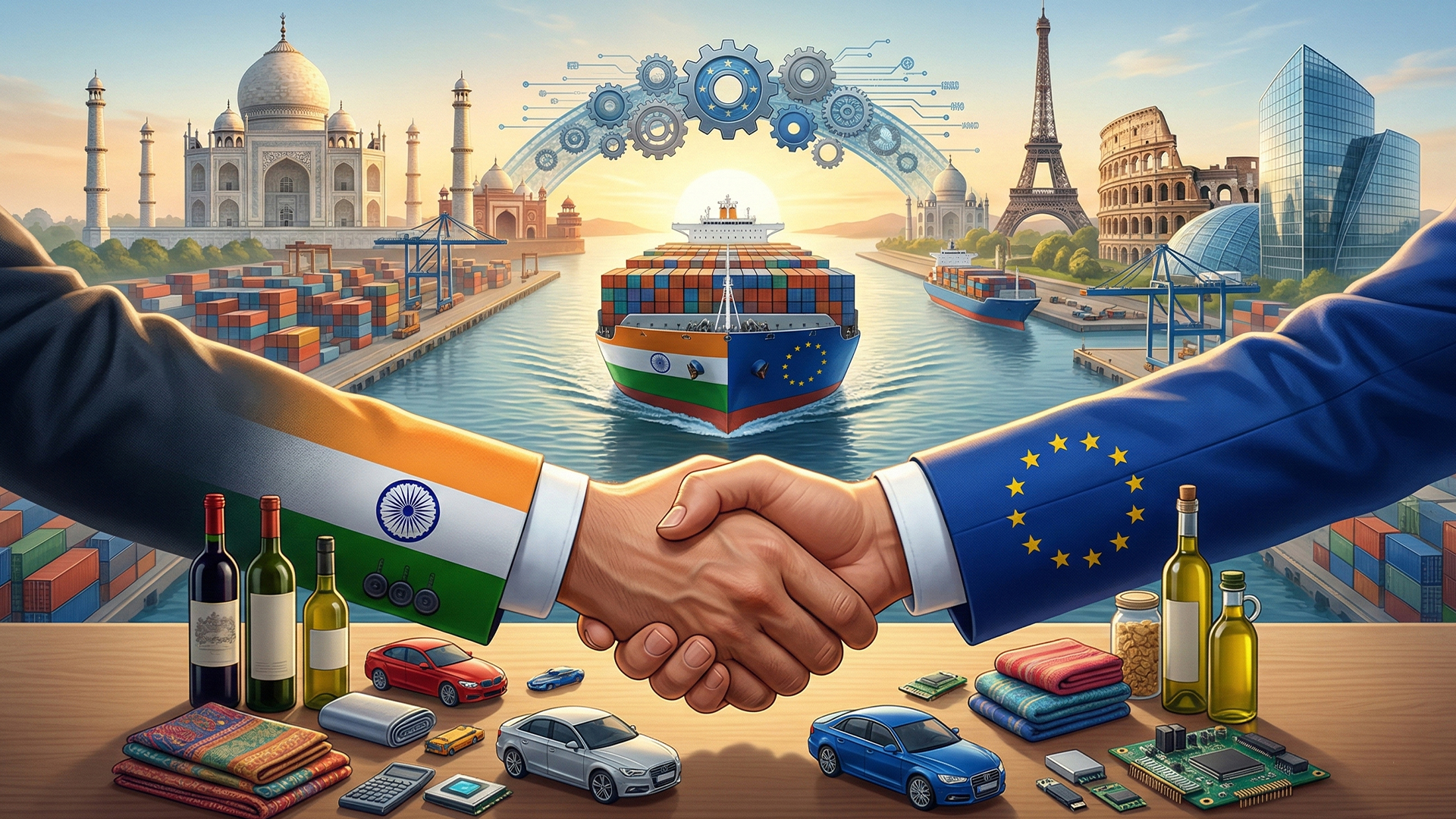
India and the European Union have agreed to grant each other Most Favoured Nation (MFN) status for five years under their newly finalised free trade agreement, marking a significant step in strengthening economic ties between the two sides.
MFN status means that neither partner can offer better trade terms to another country without extending the same benefits to the other. In simple terms, India and the EU have promised to treat each other as preferred trading partners during the five-year period once the agreement takes effect.
The broader Free Trade Agreement (FTA), concluded after years of negotiations, aims to reduce or remove tariffs on the majority of goods traded between the two economies. Officials say nearly all goods by value will see lower duties, making products more competitive in each other’s markets. However, certain sensitive agricultural items such as dairy and sugar will remain protected.
Beyond tariff cuts, the agreement focuses on making trade smoother. Both sides have pledged to simplify customs procedures, improve transparency and align regulations where possible. This could help businesses move goods faster and with fewer bureaucratic hurdles.
The deal also includes commitments in emerging areas such as digital trade. India and the EU plan to support secure online transactions, encourage paperless documentation and cooperate on regulatory standards, while maintaining their respective data protection frameworks.
Together, India and the EU represent a vast consumer base and a significant share of global economic output. Supporters of the agreement say it could boost exports, attract investment and create new opportunities for companies on both sides.
Before the pact becomes operational, it must be ratified by India’s Parliament and the European Parliament. If approved, the five-year MFN arrangement is expected to deepen commercial engagement and provide greater predictability for businesses navigating an increasingly uncertain global trade environment.
Also Read: Astronaut’s health scare ends ISS mission early