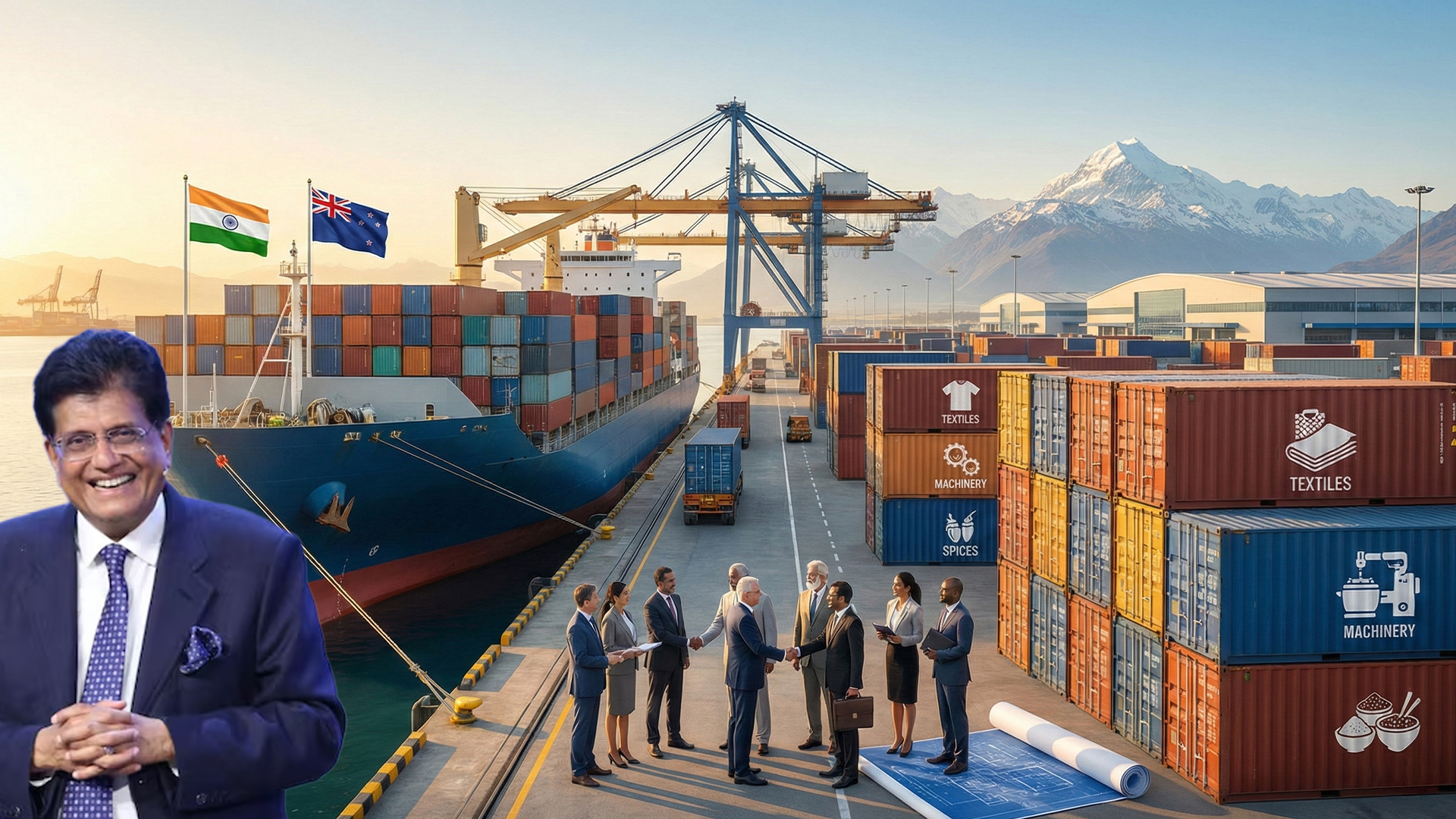
India and New Zealand have concluded a historic Free Trade Agreement (FTA) that is expected to significantly strengthen economic ties, expand market access, and create new opportunities for businesses, professionals and students in both countries. The agreement was finalised after nine months of negotiations and was announced following a telephonic conversation between Prime Minister Narendra Modi and New Zealand Prime Minister Christopher Luxon.
The negotiations were led on the Indian side by Union Commerce and Industry Minister Piyush Goyal, who played a central role in shaping the agreement and safeguarding India’s core economic interests. Goyal described the FTA as a “balanced, forward-looking and people-centric” pact that protects sensitive domestic sectors while opening new global opportunities for Indian exporters, service providers and youth.
Under the agreement, New Zealand will provide zero-duty access on 100 per cent of Indian exports, giving a major boost to sectors such as textiles, apparel, leather, footwear, pharmaceuticals, engineering goods, marine products and agricultural exports. In return, India will gradually reduce tariffs on around 70 per cent of New Zealand’s tariff lines, covering nearly 95 per cent of bilateral trade.
A key feature of the FTA is New Zealand’s commitment to invest USD 20 billion in India over the next 15 years, particularly in manufacturing, infrastructure, clean energy, education and services. The agreement includes a safeguard clause allowing India to rebalance concessions if investment commitments are not met.
The pact also opens 118 services sectors, including information technology, finance, education, healthcare, tourism and construction. It creates new mobility pathways for Indians, allowing STEM graduates to work in New Zealand for up to three years, with longer stays for PhD holders. A special temporary employment visa for skilled Indian professionals and a working holiday visa for 1,000 Indian youth annually are also part of the agreement.
Sensitive sectors such as dairy and select agricultural products have been excluded from tariff concessions, a point emphasised by Piyush Goyal to reassure domestic farmers and producers.
Currently, bilateral trade between India and New Zealand stands at around USD 2.4 billion. Both governments expect the FTA to double trade within five years, marking a major step forward in India’s trade engagement with the Indo-Pacific region.
Also Read: Apple flags travel risks for visa-holding employees