New Delhi on Wednesday (August 20, 2025) dismissed Nepal’s protest against the resumption of India-China border trade through the Lipulekh Pass in Uttarakhand, asserting that Kathmandu’s claims were “neither justified nor based on historical facts.”
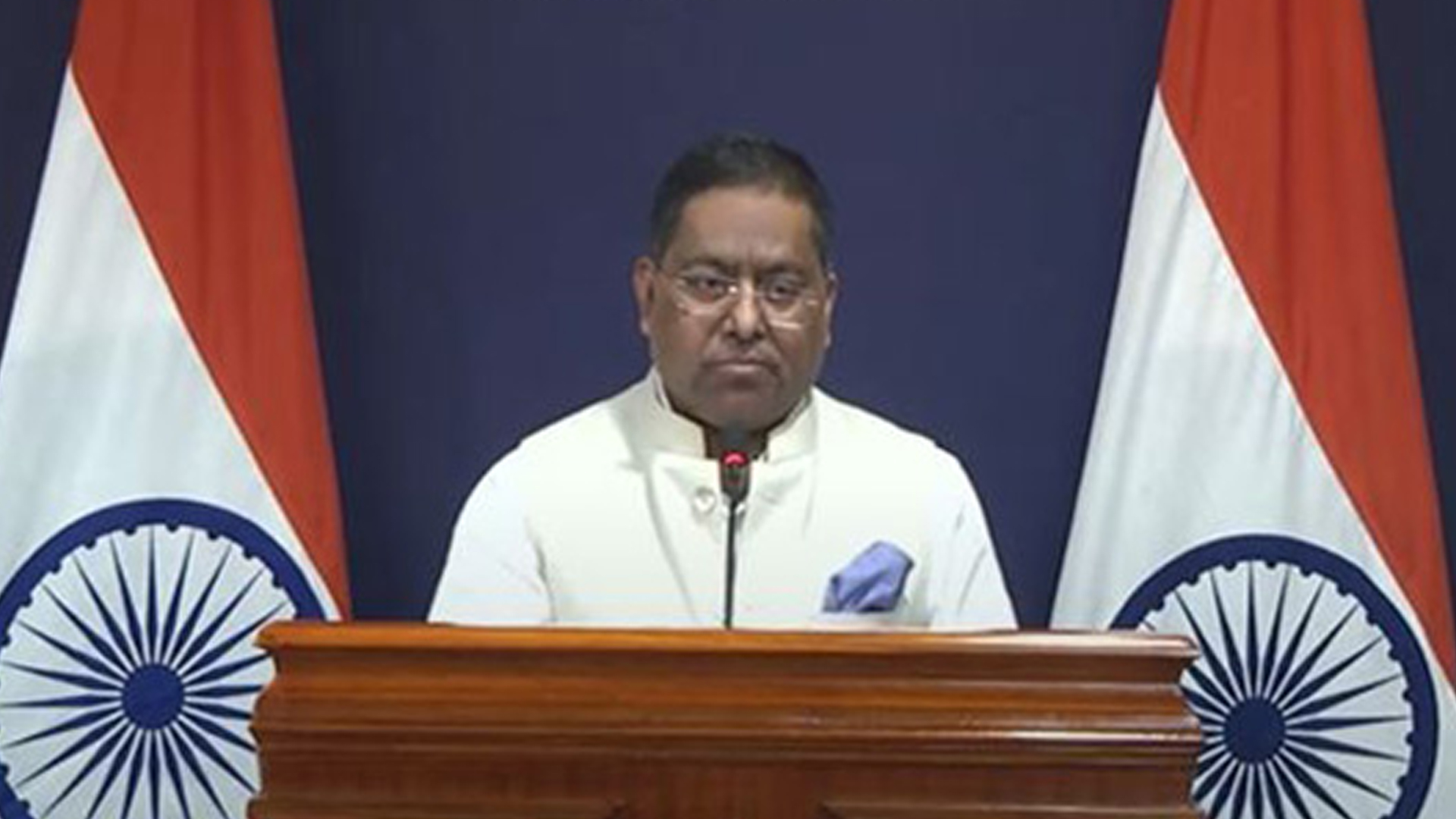
The Ministry of External Affairs (MEA) spokesperson Randhir Jaiswal stated, “Our position in this regard has been consistent and clear. Border trade between India and China through Lipulekh Pass had commenced in 1954 and has been going on for decades. This trade had been disrupted in recent years due to COVID and other developments, and both sides have now agreed to resume it.”
The announcement came after China’s Foreign Minister Wang Yi visited India on August 19, during which both sides agreed to restart trade through three border points: Lipulekh Pass in Uttarakhand, Shipki La Pass in Himachal Pradesh, and Nathu La Pass in Sikkim.
Nepal’s Objection
Soon after the announcement, Nepal’s Ministry of Foreign Affairs (MoFA) issued a statement objecting to the move. “The Nepalese government is clear that the official map of Nepal has been included in the constitution of Nepal and that the map shows Limpiyadhura, Lipulekh and Kalapani east of the Mahakali River as integral parts of Nepal,” it said.
Nepal’s stance is rooted in the 2020 release of its updated political map, which included these disputed territories. The map was passed through Nepal’s parliament and incorporated into its constitution despite objections from India. Kathmandu maintains that Lipulekh, Limpiyadhura, and Kalapani fall east of the Mahakali River, making them part of Nepal’s Dharchula district.
India’s Firm Response
The MEA reiterated India’s rejection of Nepal’s position. “As regards territorial claims, our position remains that such claims are neither justified nor based on historical facts and evidence. Any unilateral artificial enlargement of territorial claims is untenable,” Jaiswal said. He emphasized that India remains open to dialogue with Nepal to resolve “agreed outstanding boundary issues” through diplomacy.
The Lipulekh Pass is strategically significant, lying near the trijunction between India, Nepal, and China. India regards it as part of Uttarakhand’s Pithoragarh district, while Nepal claims it as part of its territory.
Political Overtones in Nepal
The dispute has domestic political resonance in Nepal. Former Prime Minister and main opposition leader K. P. Sharma Oli of the CPN-UML has consistently taken a hard line on the issue. During his tenure in 2020, his government spearheaded the release of Nepal’s new map. In 2021, while inaugurating the 10th general convention of the CPN-UML, Oli vowed to “take back” Kalapani, Lipulekh, and Limpiyadhura from India through dialogue if his party regained power.
Oli repeated similar claims this week, reiterating that the territories would be restored to Nepal if the CPN-UML comes back to power. His comments, analysts suggest, are aimed at consolidating nationalist sentiment amid Nepal’s volatile political climate.
Diplomatic Context
The controversy unfolds just as India and Nepal are attempting to improve bilateral ties. Foreign Secretary Vikram Misri visited Kathmandu on August 17–18, extending an invitation to Prime Minister Oli to visit New Delhi in September. The diplomatic outreach was seen as part of India’s efforts to reset ties after years of strain caused by the border map controversy.
However, the Lipulekh issue threatens to complicate this momentum. For Nepal, the dispute touches upon sovereignty and territorial integrity, while for India, it intersects with its strategic ties with China and its control over Himalayan trade routes.
Observers note that while both countries have managed to keep economic cooperation steady, the territorial disagreement has repeatedly strained political relations. Analysts also caution that Beijing’s role adds another layer of complexity, as China maintains strong ties with Nepal and benefits from the resumption of cross-border trade with India.
Strategic Importance
Lipulekh is not just a commercial route but also a critical military and pilgrimage passage. It is a gateway to Kailash Mansarovar in Tibet, a major pilgrimage site for Indians. The route has been developed by India over the years, including the construction of a road link inaugurated in 2020, which further triggered Nepal’s protests.
While both India and Nepal have expressed willingness to engage diplomatically, their positions on Lipulekh remain deeply divergent. The renewed border trade with China is expected to strengthen India’s connectivity with Tibet but is likely to keep Kathmandu’s concerns alive in regional geopolitics.
Also Read: Online Gaming Ban: Govt Cites ₹20,000 Crore Loss, Industry Warns of 200,000 Job Cuts