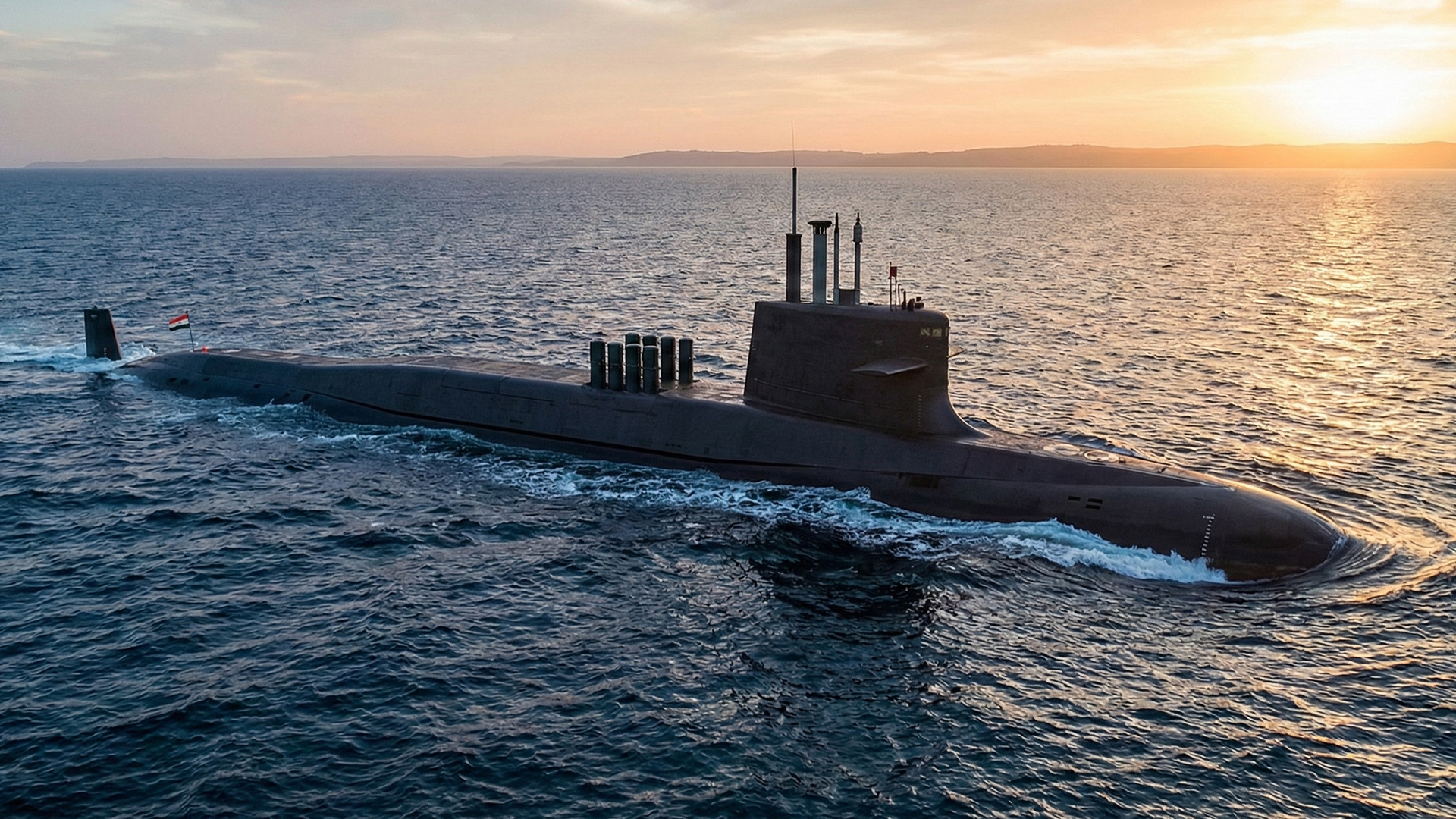
India is preparing to induct its third nuclear-powered ballistic missile submarine, INS Aridhaman, in 2026, marking a major milestone in strengthening the country’s strategic deterrence and indigenous defence capability. The submarine, currently undergoing advanced sea trials, is part of the classified Advanced Technology Vessel (ATV) programme that underpins India’s nuclear submarine fleet.
A successor to INS Arihant and INS Arighaat, the new vessel is larger, quieter and more capable. With a displacement of around 7,000 tonnes, it can carry more nuclear-tipped submarine-launched ballistic missiles than its predecessors, significantly enhancing firepower and operational flexibility. It is expected to be equipped primarily with K-4 missiles, which have a strike range of about 3,500 km, allowing it to target adversaries from safer patrol areas deep in the ocean.
The induction is crucial for completing the sea-based leg of India’s nuclear triad, the ability to launch nuclear weapons from land, air and sea. Submarines are considered the most survivable component of this triad because they remain hidden underwater for long durations, ensuring a credible second-strike capability in line with India’s No-First-Use doctrine.
Strategically, the addition of a third SSBN will allow the Navy to maintain continuous deterrence patrols, with at least one submarine deployed at all times while others undergo maintenance or training cycles. This is seen as a key requirement for a reliable nuclear posture.
Built with a high degree of indigenous technology, the submarine reflects India’s growing expertise in nuclear propulsion, underwater stealth and long-range missile integration. The project has involved close coordination between the Navy, the Defence Research and Development Organisation (DRDO), the Department of Atomic Energy and Indian shipyards.
Also Read: PM Modi pitches India as global AI leader