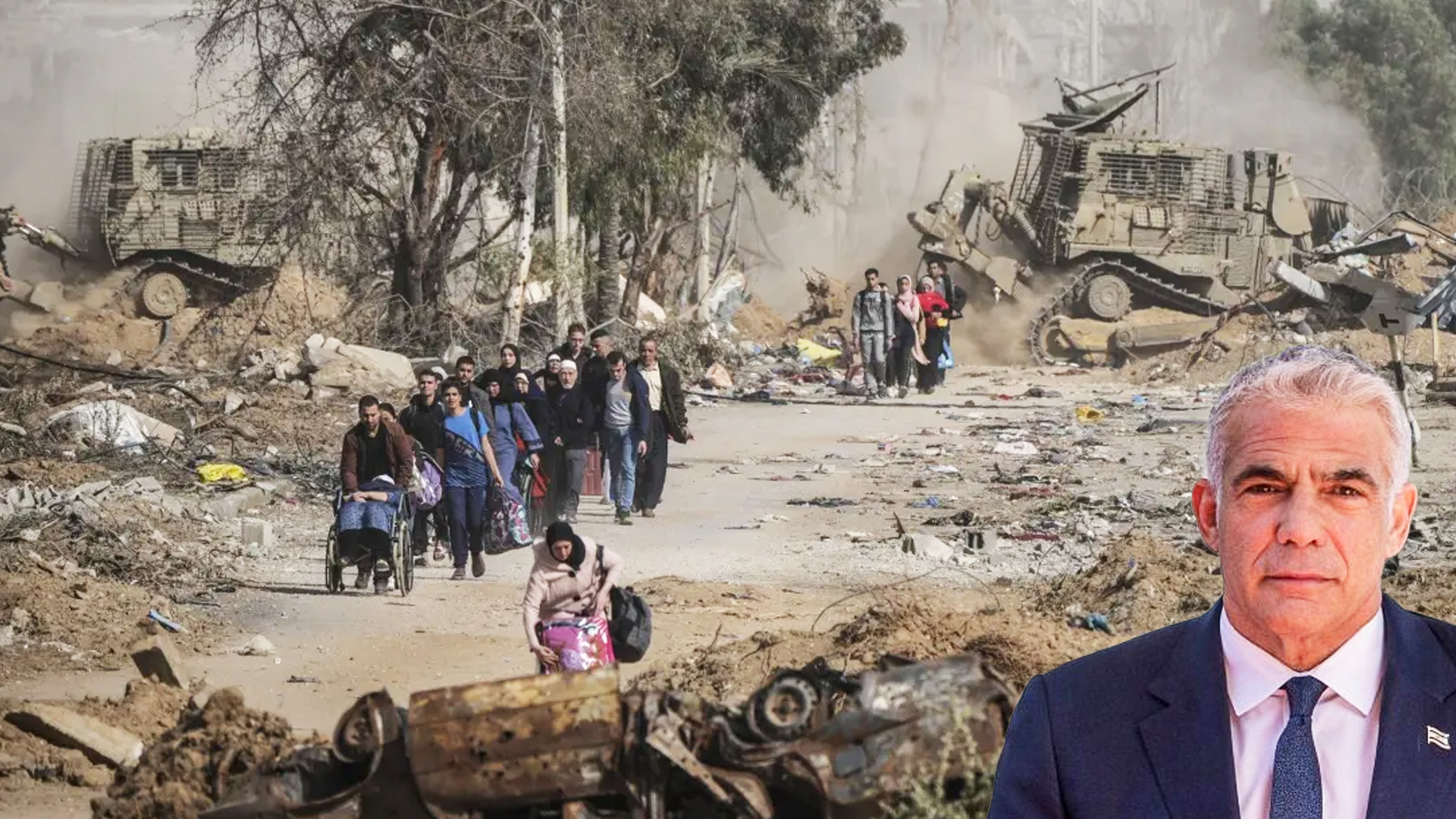
Israeli opposition leader Yair Lapid on Tuesday (August 12, 2025) threw his weight behind calls for a general strike on Sunday, August 17, in solidarity with the families of hostages still held in Gaza. “Strike out of solidarity. Strike because the families have asked, and that’s reason enough,” Lapid wrote on X, Israel’s microblogging platform. He urged all Israelis—“even supporters of the current government”—to participate, emphasising the action is non-partisan and rooted in shared Jewish values and responsibility.
Who is calling for this strike?
This initiative was first proposed by roughly 20 parents of hostages still in Gaza. The Hostages and Missing Families Forum, the primary group representing relatives of those kidnapped during Hamas’s October 7, 2023 attack, also endorsed the strike on Monday. They stressed the strike was a moral imperative: “Allow a citizens’ strike, from the grassroots to the top… The moment has come to act… 675 days of captivity and war must end.”
Government and union response
Despite this, Israel’s main trade union, Histadrut, declined to join in the strike. Instead, it has offered to back “workers’ solidarity demonstrations” and permit employees to attend such protests but stopped short of endorsing a full work stoppage. Histadrut chairman Arnon Bar-David emphasized that striking “would not help the campaign” but committed to facilitating individual participation.
Institutions and local authorities join in
Echoing the strike call, over 70 local authorities and several leading Israeli universities—including Hebrew University of Jerusalem, Technion, and Open University—declared they would allow staff and students to participate in solidarity events on August 17. Tech firms and the Israel Bar Association also pledged support, reinforcing the movement’s broad-based backing.
Why the strike now?
The backdrop to this demand is the Israeli security cabinet’s recent decision to expand military operations into Gaza City—a move many fear could endanger both the remaining hostages and Israeli soldiers. Critics, including military leaders, rights groups, and opposition figures, warned it marked a “dangerous escalation” with significant humanitarian and strategic costs.
Of the 251 people abducted during the October 7 attack, 49 remain in captivity, although the Israeli military reports 27 are believed to be deceased. Hamas recently released videos showing two remaining hostages in severely emaciated condition, heightening public concern.
Opposition’s growing chorus
Lapid and other figures have framed the strike as a moral imperative transcending politics. “Strike so that… being Israeli, first and foremost, means having a heart,” Lapid implored. The initiative echoes earlier protests, including a general strike declared by Histadrut in September 2024, which was halted by court order for being deemed political.
What happens next?
As the strike approaches, attention will center on turnout and broader impact. With increasing public outcry and institutional support, Sunday’s action could mark a pivotal moment in domestic pressure for a ceasefire and hostage deal. Whether the government responds by seeking negotiations remains uncertain.