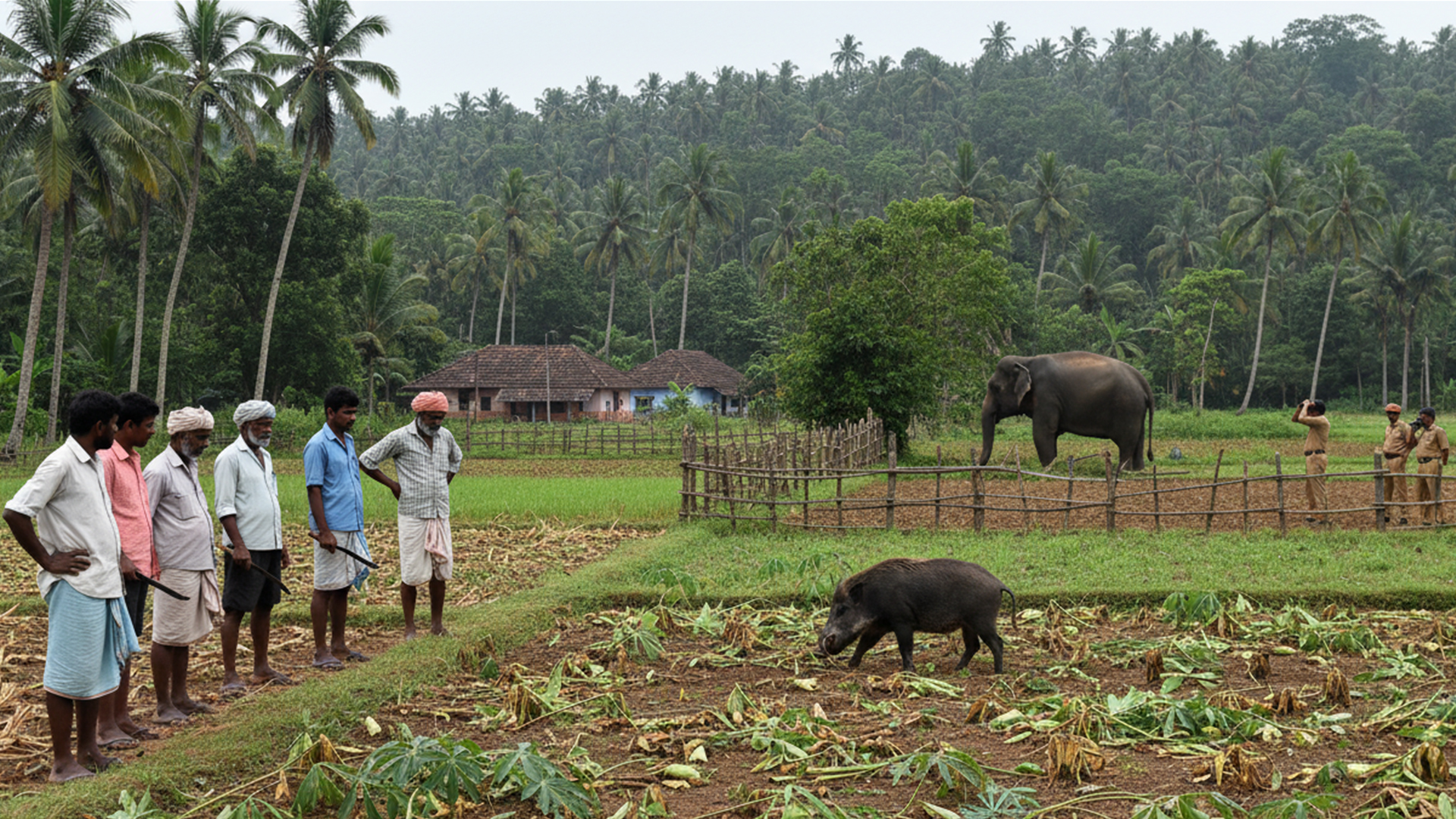
Taking a historic step, Kerala has amended the Central Wildlife Protection Act, 1972, becoming the first Indian state to empower local authorities against rising human-wildlife conflicts. The recently passed Wildlife Protection (Kerala Amendment) Act, 2025, empowers local authorities to respond swiftly and effectively to threats posed by wild animals, aiming to protect both people and nature.
Chief Minister Pinarayi Vijayan described the amendment as a crucial move to balance human safety with wildlife conservation, emphasizing justice for communities living near forest areas who often face daily risks. The new law grants the Chief Wildlife Warden the authority to shoot or tranquilize wild animals that threaten human life or property and allows the state to declare certain species as vermin for quicker action in conflict zones.
Forest Minister A.K. Saseendran explained that repeated appeals to the central government for updates had gone unanswered, prompting Kerala to take independent action. The decision is driven by the reality that nearly one-third of Kerala’s population experiences human-animal conflicts, including crop damage and dangerous encounters.
The law specifically enables the Chief Wildlife Warden, upon receiving reports from district collectors or forest officials, to order immediate actionincluding shooting, tranquilizing, capturing, or relocating wild animals that have caused severe injuries or are found in residential or public spaces. It also authorizes the state government to declare certain Schedule II species as vermin for limited periods, temporarily excluding them from wildlife protection schedules to facilitate control measures.
Supporters see the amendment as a practical tool to safeguard human lives and livelihoods, especially for communities on forest fringes regularly affected by wild boar crop raids, elephant encounters, and other conflicts. However, conservationists have voiced concerns about potential adverse effects on wildlife protection, highlighting risks of unscientific culling and stress on ecosystems.
The bill now awaits the President’s assent before becoming law. Through this amendment, Kerala sets a pioneering example for other states to proactively tackle human-wildlife coexistence challenges through tailored legal reforms.
Also Read: Outcry as Women Journalists Barred from Taliban Press Meet