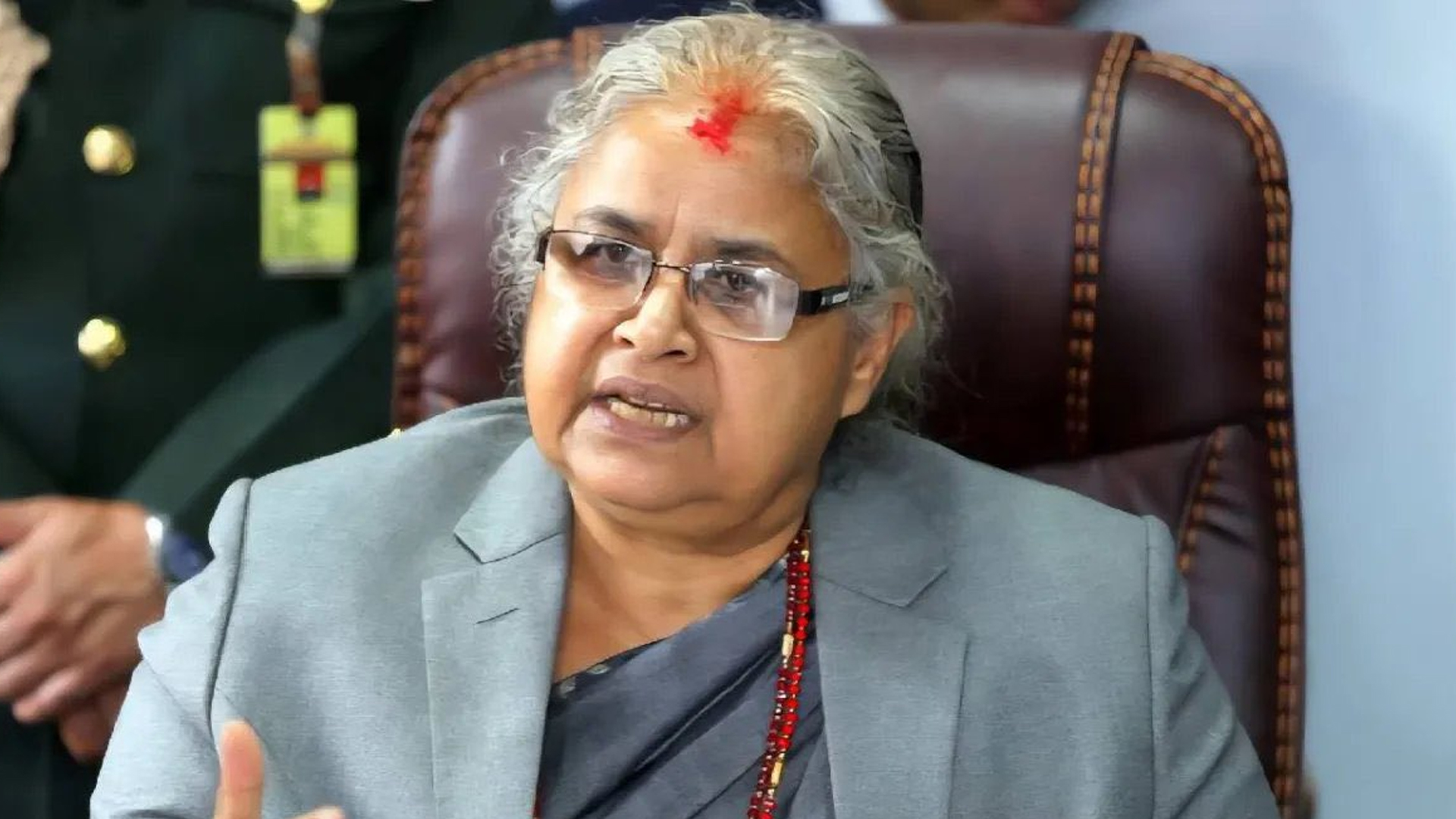
Sushila Karki, a former Chief Justice of Nepal, has been appointed as the country’s interim Prime Minister following unprecedented anti-corruption protests that led to the resignation of Prime Minister K.P. Sharma Oli. At 73, Karki becomes the first woman to hold Nepal’s top political office—a symbolic and historic move driven by youth-led unrest demanding systemic change.
The protests, which began on 8 September 2025, were initially triggered by a short-lived social media ban but quickly escalated into a full-blown political crisis. Long-standing economic woes, rampant corruption, and governance failures fueled public anger. Demonstrators, many from the Gen Z demographic, stormed government buildings, set parts of the Parliament complex ablaze, and clashed with security forces. In the two days of unrest, at least 72 people were killed and 191 injured, marking the worst violence in Nepal since the end of its civil war and the abolition of the monarchy in 2008.
Karki’s appointment was not a conventional political arrangement but the result of intense negotiations between President Ram Chandra Paudel, Army Chief General Ashok Raj Sigdel, and representatives of the youth movement. Thousands of young protesters had used the Discord app—a digital communication platform popular among Gen Z—to nominate Karki as their preferred candidate for interim leadership. Despite not seeking the post herself, Karki accepted the responsibility, remarking, “The situation that I have come into, I have not wished to come here. My name was brought from the streets.”
In her first public address as Prime Minister, Sushila Karki paid tribute to the deceased protesters by declaring them martyrs and pledged compensation of 1 million Nepali rupees for their families. She also promised financial support for those injured during the turmoil. Karki emphasized that her administration would focus on the demands voiced by the younger generation, saying, “We have to work according to the thinking of the Gen Z generation.” Their key demands, she noted, include ending corruption, ensuring good governance, and promoting economic equality.
Nepal’s youth, particularly those aged 15-24, face staggering challenges. According to the World Bank, one-fifth of young people in Nepal are unemployed, and the country’s GDP per capita is just $1,447. These harsh economic realities, combined with political frustration, made the youth movement a powerful force. Karki’s leadership is seen as a response to these underlying issues, as well as a rare instance where a grassroots campaign influenced national decision-making.
Sushila Karki has pledged to serve as interim Prime Minister for no more than six months. Elections are scheduled for 5 March 2026, and she has committed to overseeing the transition to a new, democratically elected government. “We will not stay here more than six months in any situation. We will complete our responsibilities and pledge to hand over to the next Parliament and Ministers,” she stated in a televised speech.
Her rise to power has garnered attention not only within Nepal but also from its regional neighbors. Prime Minister Narendra Modi of India expressed support for “peace, progress and prosperity” in Nepal, while China’s Foreign Ministry highlighted its desire to “push China-Nepal relations steadily forward.” Despite the geopolitical interest, Karki’s focus remains squarely on domestic reform.
The new Prime Minister’s appointment signals a shift in Nepal’s political landscape. Her reputation for independence and integrity, honed during her tenure as Chief Justice, makes her uniquely suited to address public concerns. By aligning her leadership with the aspirations of young citizens, Karki represents a new model of governance—one rooted in accountability, inclusiveness, and economic reform.
For many Nepalese, particularly young women and marginalized communities, Karki’s ascent is a powerful statement that political leadership is no longer confined to traditional elites. Her tenure may be brief, but its implications are profound, as it reflects a generational demand for transparency, justice, and a better future.
As Nepal grapples with reconstruction and reconciliation, all eyes will be on Sushila Karki’s ability to balance reform with stability, compassion with strength, and the hopes of a new generation with the entrenched challenges of governance. In a time of crisis, she stands at the helm—not out of ambition but out of obligation—a leader chosen from the streets to steer a nation toward integrity and renewal.
Also Read: Mizoram’s Rail Revolution: Bairabi–Sairang Line Links State to National Network