Nicolás Maduro, the former president of Venezuela now in US custody, maintained a notable spiritual connection with Indian guru Sri Sathya Sai Baba, a facet of his life that has recently drawn attention.
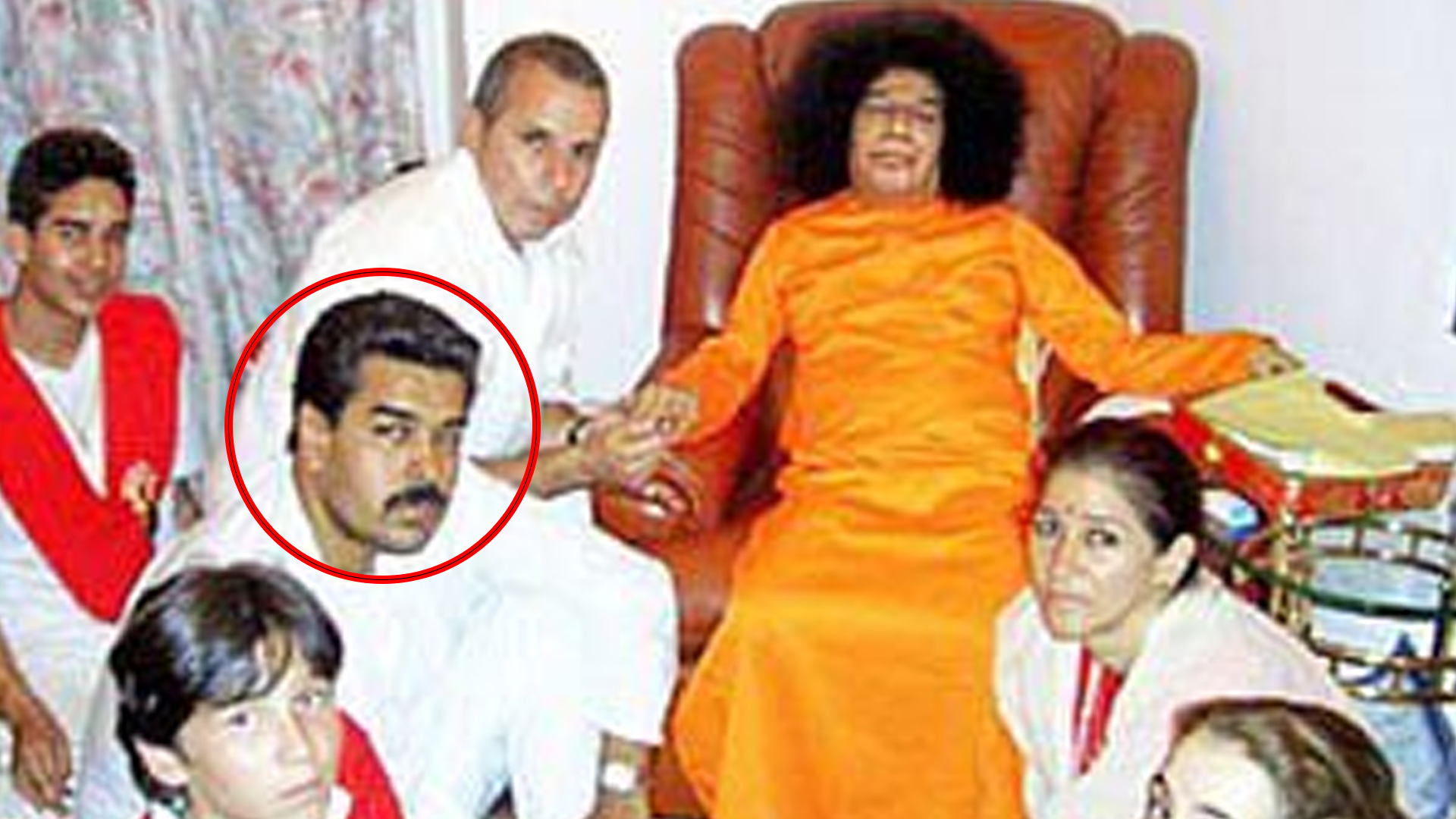
Maduro, born in Caracas in 1962 and raised in a Catholic household, was introduced to Sai Baba’s teachings through his wife, Cilia Flores, who was already a devotee. In 2005, during his tenure as Venezuela’s foreign minister, the couple traveled to Puttaparthi, Andhra Pradesh, to visit Sai Baba’s ashram, Prasanthi Nilayam. Reports and photographs show Maduro sitting close to the guru, reflecting the seriousness of his spiritual interest.
This devotion continued during his political career. Inside the presidential palace in Caracas, a large framed photograph of Sai Baba was placed prominently in Maduro’s private office, alongside portraits of Venezuelan historical figures like Simón Bolívar and Hugo Chávez. During his administration, Sai Baba’s spiritual movement and affiliated organizations operated freely in Venezuela, while many other foreign NGOs faced restrictions.
Following Sai Baba’s death in 2011, Venezuela became one of the few Latin American countries to officially honor him. The National Assembly passed a condolence resolution and declared a day of mourning, citing the guru’s spiritual contributions to humanity. Even in 2025, shortly before Maduro’s government collapsed, he marked Sai Baba’s centenary publicly, calling him a “being of light” and acknowledging the personal guidance he received from him.
Venezuela hosts one of the largest Sai Baba communities in Latin America, with centers established as early as the 1970s, reflecting the global reach of the Indian spiritual movement. Observers note a striking contrast between Sai Baba’s non-violent, truth-focused teachings and the controversies surrounding Maduro’s regime, which faced accusations of repression and corruption.
While critics question how his spiritual beliefs aligned with his political actions, Maduro’s long-standing devotion to Sai Baba remains a distinct and largely private part of his identity, highlighting a human dimension often overshadowed by his turbulent political career.
Also Read: President Maduro captured, faces US court charges