Guwahati: The Himalayas, long regarded as the water tower of Asia and a cradle of diverse cultures, are increasingly becoming the stage for recurring natural disasters. The Integrated Mountain Initiative (IMI), a civil society platform representing communities across the Indian Himalayan Region (IHR), has sounded the alarm over the rising frequency and intensity of such calamities, urging India to adopt a mountain-centric development model.
The 2025 monsoon season laid bare the fragility of the Himalayan ecosystem. Flash floods, landslides, and cloudbursts across eight states left more than 400 people dead, damaged over 35,000 homes, and inflicted economic losses of up to ₹3,500 crore. According to IMI, the disasters are no longer isolated incidents but interconnected crises, fueled by climate change, reckless infrastructure expansion, and inadequate planning.
A Pattern of Destruction
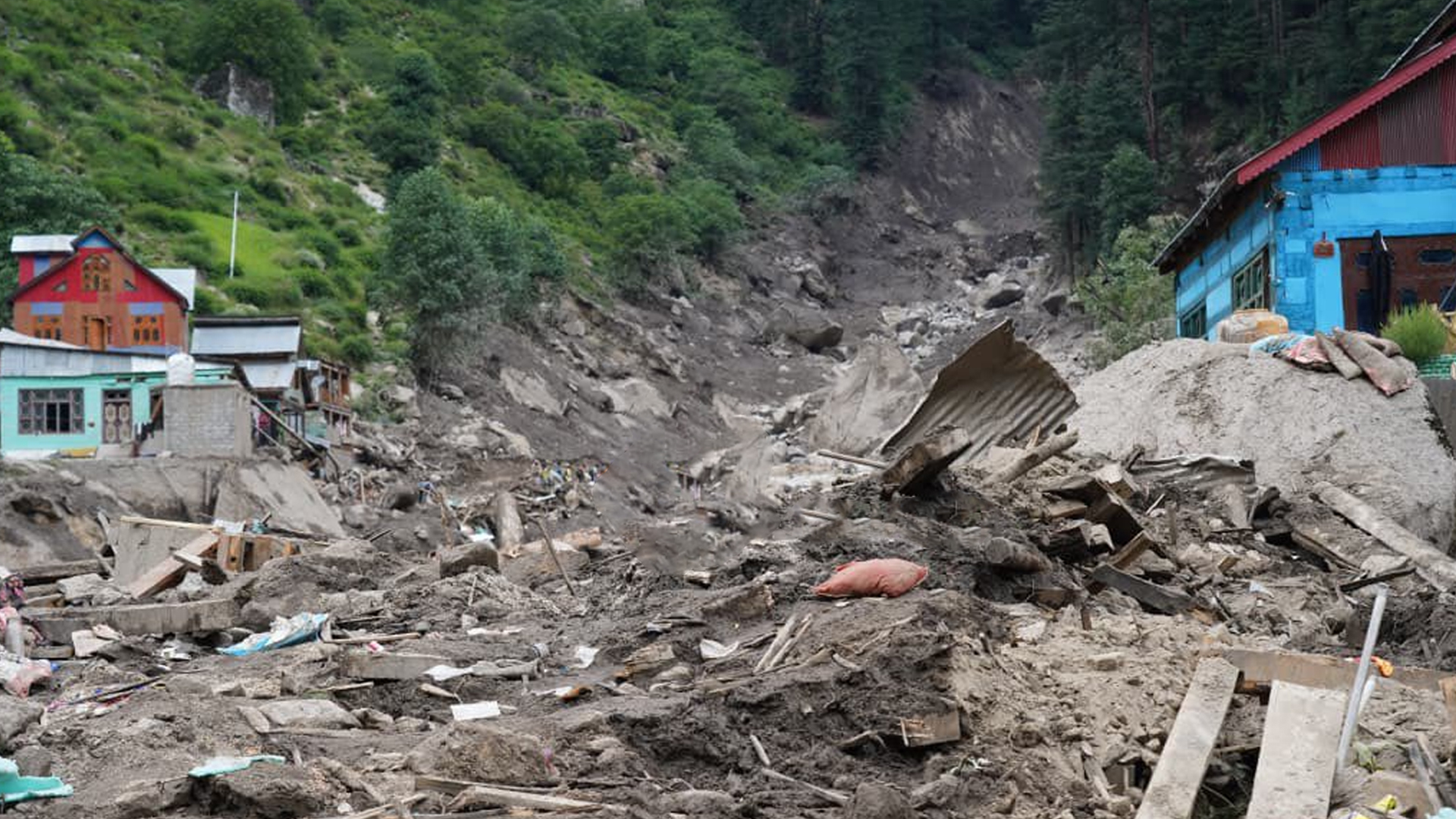
An analysis by IMI shows that since 2022, the Himalayas have endured extreme weather for at least 822 days, leading to 2,683 deaths across 13 states and Union Territories. The 2025 season added another grim chapter. Himachal Pradesh, the hardest hit, recorded 261–263 deaths and damages exceeding ₹2,200 crore as landslides and cloudbursts wiped out villages, blocked over 350 roads, and disrupted power and water supplies.
In Arunachal Pradesh, 44 lives were lost and more than 2,000 people displaced in Changlang district alone. Across the state, 61,000 residents were affected. Jammu & Kashmir saw over 60 deaths and more than 100 people missing after August cloudbursts triggered flash floods. In Mizoram, nearly 600 landslides killed five people and displaced hundreds, while in Assam and Manipur, floods ravaged farmland and homes, impacting nearly 800,000 people.
“Each event is often reported as a separate tragedy, but when seen together, the scale of crisis becomes clearer,” said Roshan Rai, Secretary of IMI. “The Himalayan region has become a multi-hazard landscape where disasters are interlinked. We need to redefine development pathways that respect ecological limits.”
Climate Change and Poor Planning
Scientists have long warned that the Himalayas are among the regions most vulnerable to climate change. Although the mountains contribute little to global greenhouse gas emissions, rising temperatures are destabilizing glaciers, intensifying rainfall, and magnifying disaster risks. These risks are compounded by haphazard construction, unchecked tourism, road cutting, and poorly regulated hydropower projects.
“Improper planning and extractive development have magnified the impacts on the ground,” IMI observed. Fragile slopes stripped of vegetation give way under heavy rain, while encroachments on riverbeds and wetlands worsen flooding.
The implications stretch far beyond the mountains themselves. The Himalayas feed the Ganges and Brahmaputra river basins, sustaining agriculture, drinking water, and livelihoods for millions downstream. Disruption to forests, rivers, and springs in the IHR threatens national water security.
Towards Mountain-Centric Development
IMI’s recommendations combine immediate and long-term measures. In the short term, it has urged the adoption of advanced weather forecasting systems, AI-enabled disaster prediction tools, stricter building codes, and community disaster shelters. It has also called for prohibiting large-scale earthworks during the monsoon season.
For the long run, the group advocates a river basin and landscape approach to development. This includes sustainable land-use planning, eco-sensitive hydropower policies, protection of wetlands and traditional water systems, and investment in green infrastructure such as bioengineered roads and slope stabilization.
Community involvement is seen as central to resilience. IMI emphasizes empowering local people with early-warning tools, conservation knowledge, and livelihood alternatives such as agroforestry and ecotourism. It has also urged greater cooperation between Himalayan states and neighboring countries, arguing that disasters do not respect political boundaries.
A Warning Too Clear to Ignore
The disasters of 2025, IMI said, have delivered a “grave and bitter truth”: that climate-related catastrophes are fast becoming “business as usual” in the Himalayas. Without urgent course correction, the region’s socio-ecological balance will remain under siege, with ripple effects destabilizing communities across India’s heartland.
For mountain communities, the message is urgent: their resilience depends not only on relief after disasters, but on a fundamental rethink of how development in the fragile Himalayas is planned and pursued.
Also Read: Hamas ‘Agrees’ to 60-Day Ceasefire Proposal As Israel Weighs Response