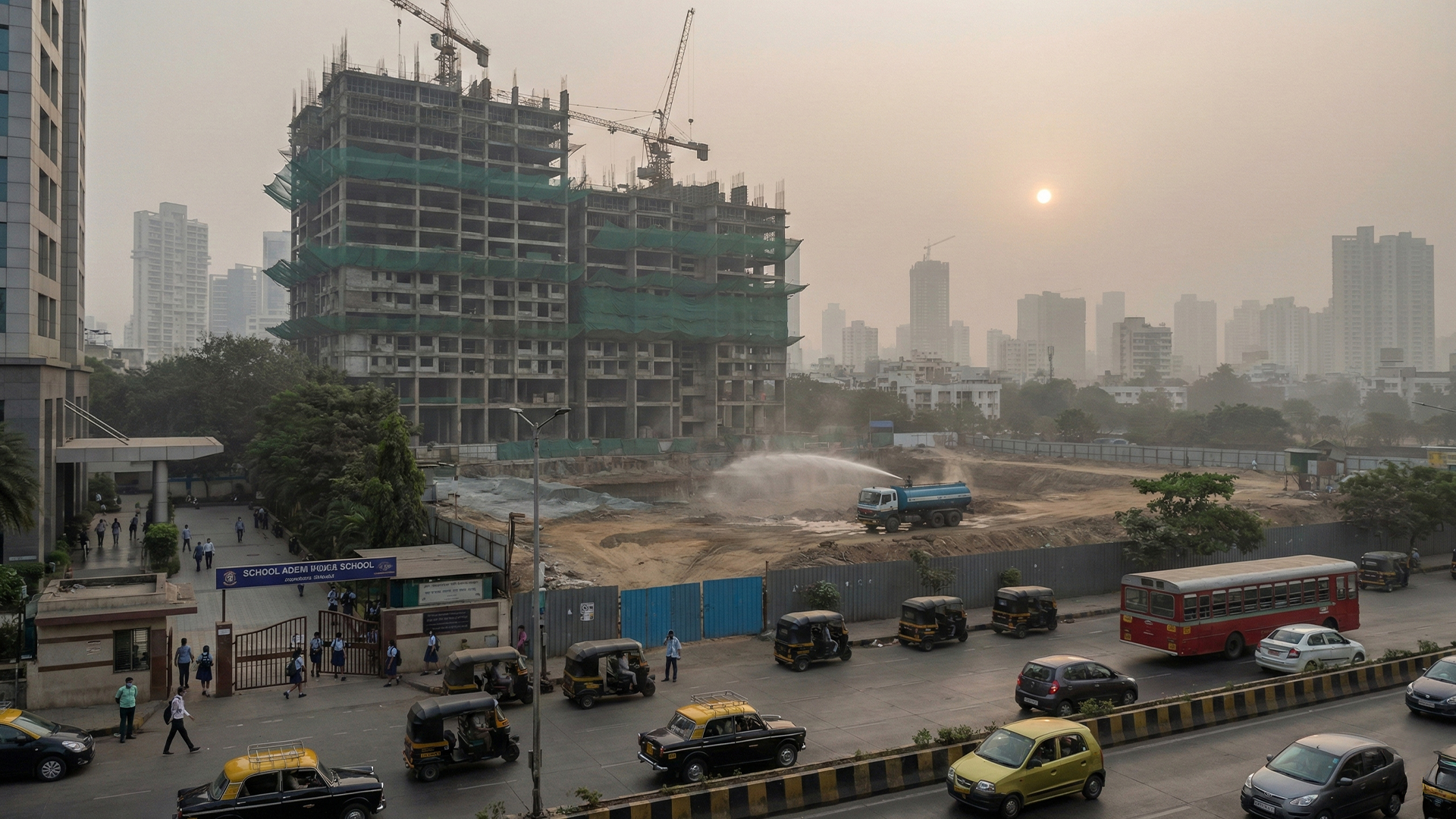
Mumbai has activated GRAP‑4, the strictest stage of pollution control, after the city’s air quality turned severe in several areas. The Brihanmumbai Municipal Corporation (BMC) took action as the Air Quality Index (AQI) in neighborhoods such as Mazgaon, Deonar, Malad, Borivali East, Chakala–Andheri East, Navy Nagar, Powai, and Mulund crossed dangerous levels.
Under GRAP‑4, all construction work and activities that generate dust have been halted in affected zones. Over 50 construction and Ready-Mix Concrete (RMC) sites have received stop-work notices for failing to control dust emissions. Small industrial units, including bakeries, marble-cutting operations, and similar units, are now required to shift to cleaner processes or face penalties.
To ensure compliance, BMC has deployed “flying squads”, teams of engineers, police officers, and GPS-tracked vehicle, across all wards. These squads conduct inspections and enforce regulations. During recent checks, 53 out of 70 sites were found violating dust control rules and were issued notices.
Mumbai’s GRAP‑4 measures differ from Delhi’s approach. While Delhi may implement vehicle restrictions, work-from-home advisories, or school closures under severe pollution, Mumbai’s focus remains on construction, dust control, and small industries. There are currently no city-wide traffic bans or office shutdowns.
Officials have warned that the city’s air has become hazardous, particularly for children, the elderly, and people with respiratory illnesses. High levels of PM2.5 and PM10 particles are contributing to the poor air quality. Authorities have stressed that if pollution levels do not improve, even stricter measures could be introduced.
Residents are advised to limit outdoor activities, use masks in highly polluted areas, and follow BMC guidelines to reduce health risks. The enforcement of GRAP‑4 shows the city’s urgent effort to tackle hazardous air and protect public health.
Also Read: Parliament winter session set for key bills, SIR debate