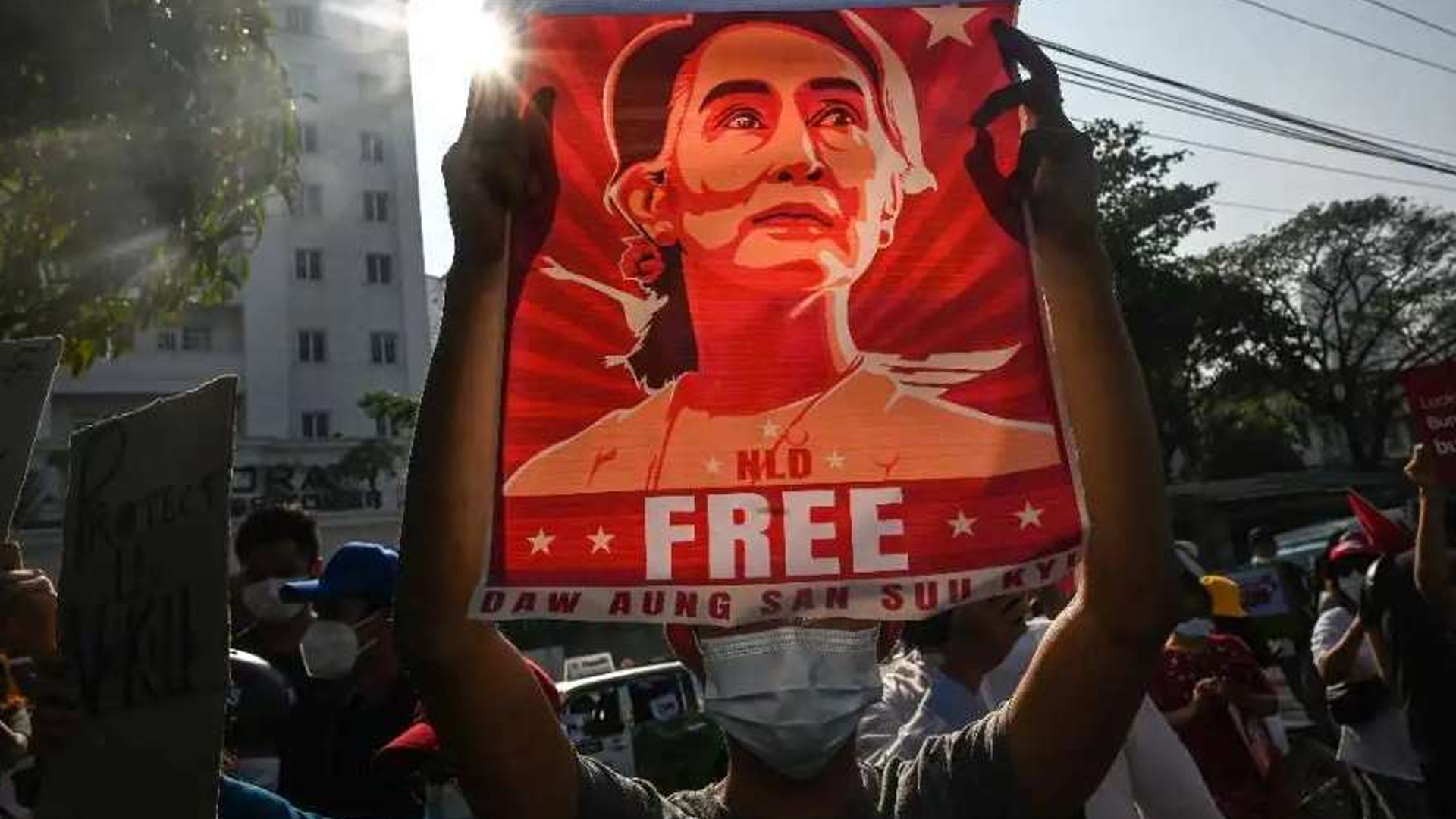
Myanmar’s detained former leader, Aung San Suu Kyi, is experiencing significant health issues while in military custody, according to her son, Kim Aris. The 80-year-old Nobel Peace Prize laureate, who has been imprisoned since the 2021 coup that ousted her government, is reportedly suffering from worsening heart problems and other ailments, including bone and gum issues.
Aris expressed deep concern for his mother’s well-being, stating that without proper medical examinations, it is impossible to assess her condition accurately. He emphasized the lack of updates and the inability to confirm whether she is even alive. Aris further revealed that Suu Kyi had requested to see a cardiologist about a month ago, but it remains unclear whether that request was granted.
In addition to heart complications, Aris noted that Suu Kyi has been dealing with bone and gum problems and may have sustained injuries during the devastating earthquake in March, which killed more than 3,700 people. In a video message on social media, he urged authorities to release all political prisoners, describing their detention as “cruel and life-threatening.”
Military Junta Denies Health Concerns
In response to the reports, a spokesperson for Myanmar’s military-backed interim government dismissed the claims as politically motivated fabrications. The military spokesman, Zaw Min Tun, told state media that concerns about Suu Kyi’s health were being spread to distract from military chief Min Aung Hlaing’s visit to China, where he met with President Xi Jinping and attended a military parade. “Daw Aung San Suu Kyi’s health is good. They are fabricating this information because we are in China and our Myanmar leader is doing so many activities and they want to hide this news,” he asserted.
Suu Kyi has been serving a 27-year prison sentence on charges including incitement, corruption, and election fraud, all of which she denies. Her last public appearance was in court in May 2021, only months after the coup. At that time, state television showed her seated in the dock, wearing a surgical mask.
The military regime justified its takeover by alleging widespread fraud in the November 2020 elections, in which Suu Kyi’s party had secured a landslide victory. However, election monitors found no evidence of electoral malpractice. Since the coup, Myanmar has been engulfed in violence, with mass protests violently suppressed and armed resistance escalating in multiple regions.
The international community, including governments and rights organizations, has repeatedly condemned Suu Kyi’s detention and called for her release. Foreign observers have pointed out that the ongoing political crisis has led to a humanitarian catastrophe, with thousands displaced and livelihoods destroyed.
The military-backed interim government plans to hold elections in multiple phases beginning in late December. Anti-junta groups, including Suu Kyi’s National League for Democracy, have either boycotted or been barred from participating. Western governments have criticized the elections as an effort to consolidate military rule rather than a genuine democratic process.
Legacy and Detention
Born in 1945 to General Aung San, the architect of Myanmar’s independence, Suu Kyi became a symbol of resistance against authoritarianism. Following her mother’s illness in 1988, she returned to Myanmar from Oxford University and joined nationwide protests against military rule, eventually forming the National League for Democracy. Over the years, she became the country’s most prominent pro-democracy leader.
Suu Kyi has spent nearly two decades in detention, including around 15 years under house arrest. In September 2023, her party alleged that Myanmar’s military was endangering her life by depriving her of medical care and food. Recent reports indicate she has suffered dizzy spells, vomiting, and inability to eat due to dental infections.
Educated at Oxford, Suu Kyi married British scholar Michael Aris in 1972, with whom she had two sons. She later emerged as a global advocate for nonviolent resistance and democracy, receiving international accolades for her leadership.
Also Read: Tamil Nadu Secures ₹15,516 Crore in Investments During CM Stalin’s Europe Visit