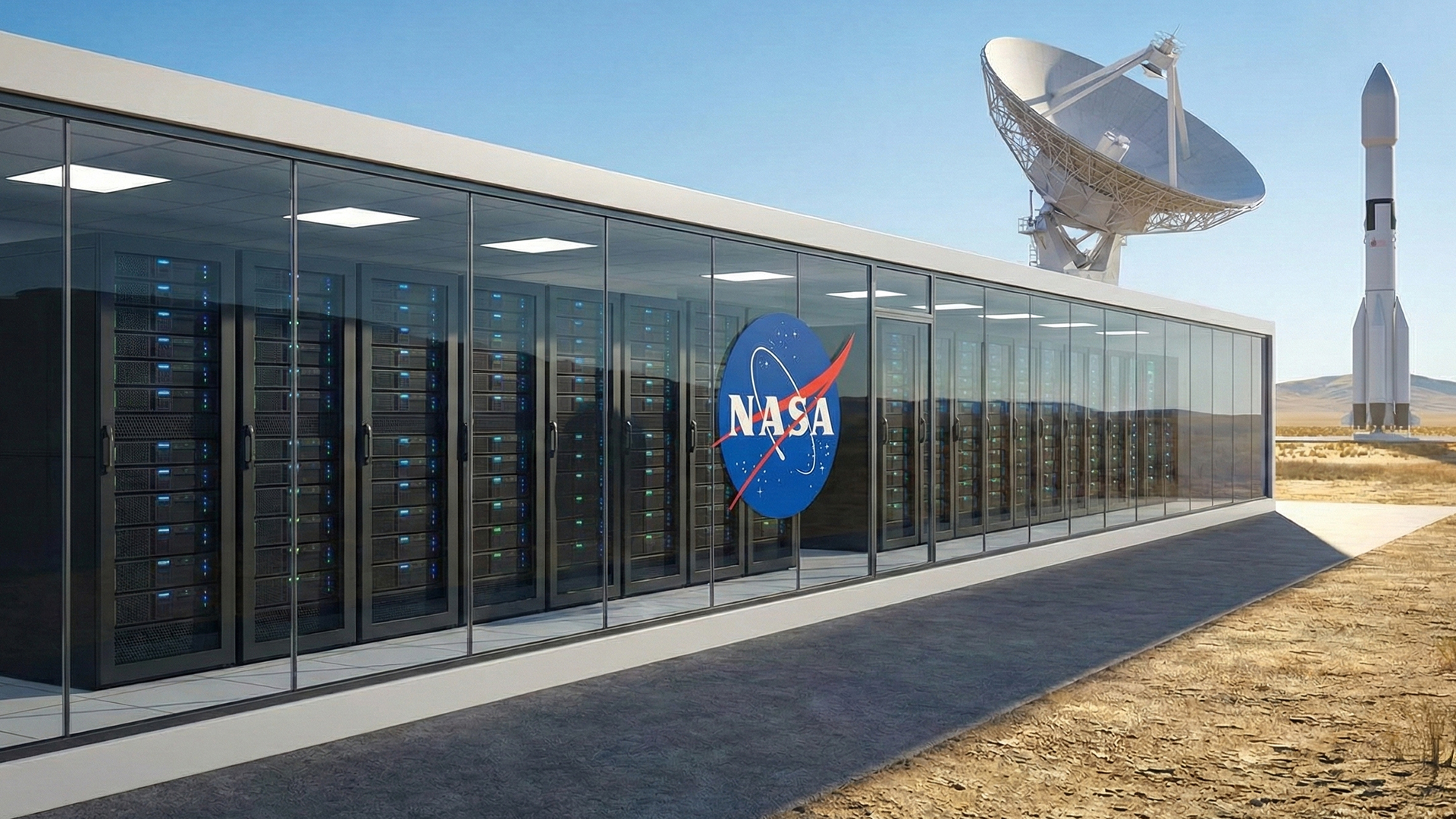
NASA has launched its most powerful and energy-efficient supercomputer yet, called Athena. It can perform more than 20 quadrillion calculations every second, making it faster and smarter than any NASA computer before. Athena will help researchers run complex simulations, process huge amounts of data, and develop advanced artificial intelligence models.
The supercomputer is installed at NASA’s Ames Research Center in California, a hub for high-tech computing. It will support a wide range of NASA missions, including designing new spacecraft, simulating rocket launches, and studying our planet’s climate. By handling these tasks faster and more efficiently, Athena will save time and reduce costs for the agency.
NASA says Athena is not just for its internal projects. Scientists from outside the agency can also apply to use the system for projects connected to NASA’s work. This makes it a shared resource for research across space and Earth sciences.
The name Athena comes from the Greek goddess of wisdom and strategy, reflecting the computer’s role in supporting smart decisions and innovation. The name also connects symbolically to NASA’s Artemis program, which is focused on returning humans to the Moon.
Athena is part of NASA’s High-End Computing Capability, which combines supercomputers with cloud services. This setup lets scientists pick the best tools for different tasks, whether it’s AI, simulations, or analyzing scientific data.
NASA officials say Athena is an important step toward future discoveries. With this new computing power, the agency can tackle bigger challenges in space exploration, Earth observation, and science research. Athena will help NASA researchers turn complex ideas into real solutions faster than ever before.