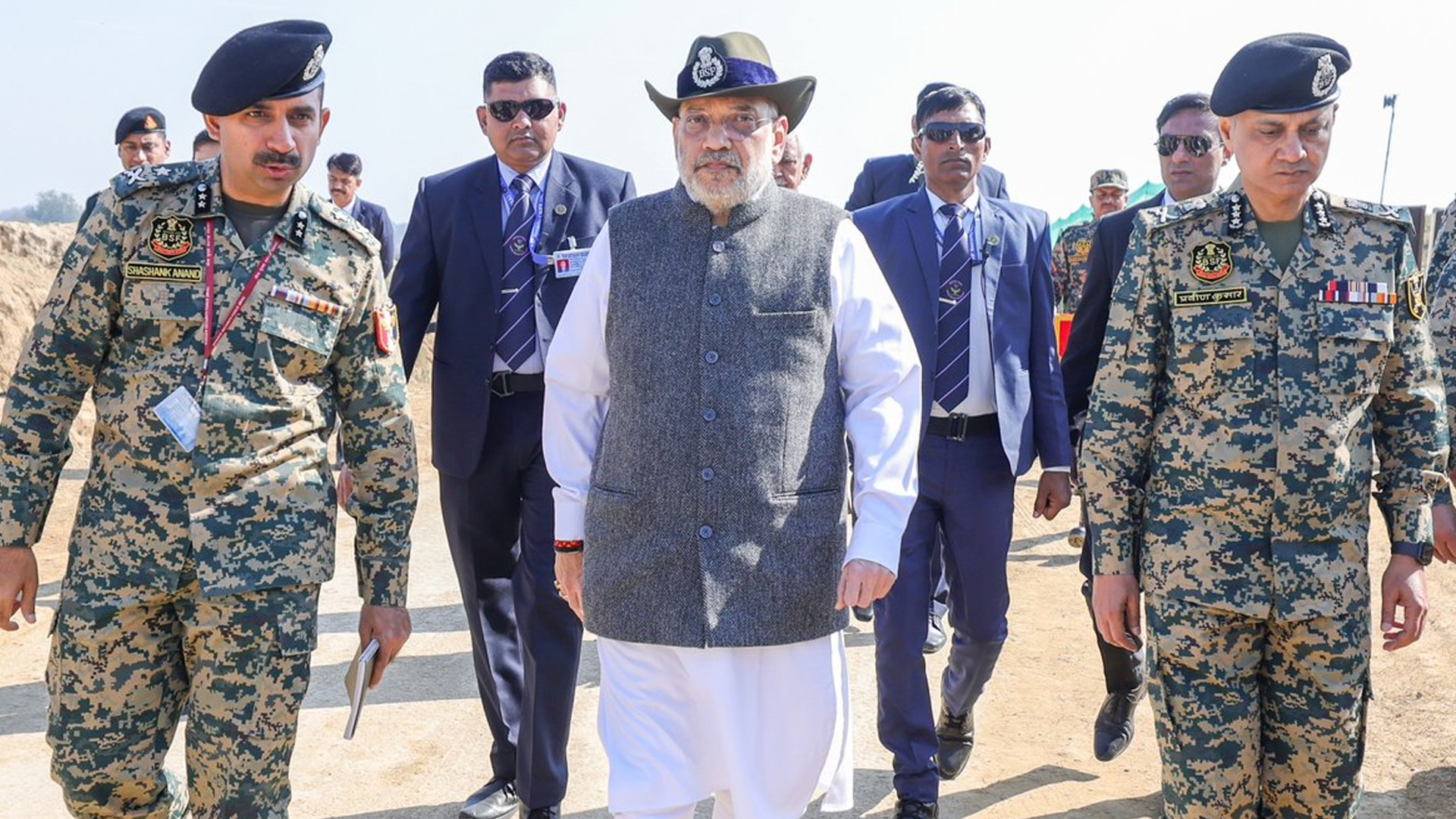
Union Home and Cooperation Minister Amit Shah on 8 February 2026 visited Raipur, Chhattisgarh, to review the government’s fight against Naxalism. Speaking at a high‑level security meeting with state and central officials, Shah said the Left‑Wing Extremist (LWE) threat in the country is “close to its end” and the government aims to completely eliminate it by 31 March 2026.
During the meeting, attended by Chhattisgarh Chief Minister Vishnu Deo Sai and Deputy CM Vijay Sharma, Shah highlighted the progress made in curbing Maoist activity through security operations, improved infrastructure, development initiatives, and surrender policies for extremist cadres. He said these measures have restored normalcy in previously conflict‑prone areas and helped communities regain confidence.
Shah emphasised that both development and security are key to eradicating Naxalism. Improved roads, better connectivity, and civic projects in affected regions have weakened Maoist influence, allowing people to live safely and pursue livelihoods without fear. He urged states to maintain tight coordination, especially along borders, so the remaining extremist groups cannot regroup or shift to neighbouring regions.
He also stressed that tackling the ideological roots of extremism is as important as operational success. Security forces were asked to continue pressuring residual Naxal elements while ensuring that local populations benefit from development and peace.
The visit is part of a three-day trip, which included attending cultural events like the closing ceremony of the Bastar Pandum Festival in Jagdalpur. Shah’s presence symbolises both a security push and the return of normal civic life in areas once dominated by Naxal activity.
Officials described the Raipur meeting as a “final strategic push” to dismantle remaining Maoist networks and move closer to a Naxal-free India, reflecting the central government’s focus on internal security and development in affected states.
Also Read: India, Canada reset ties after Ajit Doval’s Ottawa visit