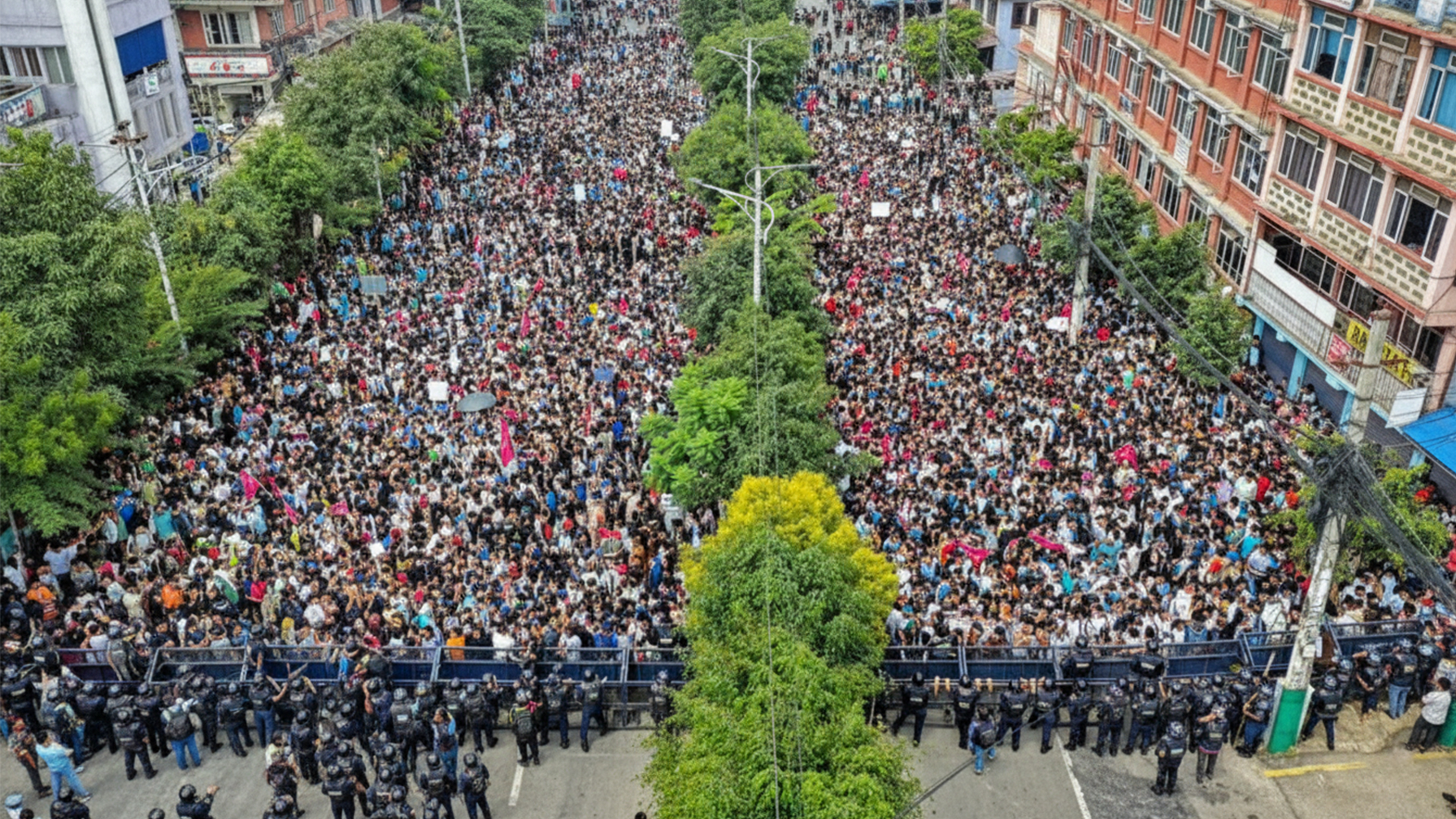
All government offices and educational institutions remained closed across Nepal on Wednesday (September 17, 2025) as the country observes a “national day of mourning” in honour of those killed during Gen Z protests.
“In memory of those who died during the protests organised by the Gen Z generation on September 8 and 9, the Government of Nepal has decided to observe a national day of mourning on Wednesday, September 17,” said a statement issued by the Home Ministry on Tuesday.
The tragic protests, which shook the nation, saw 72 people—including three policemen—lose their lives, while hundreds of others sustained injuries. The violence prompted Prime Minister K.P. Sharma Oli to resign on September 9, shortly after hundreds of protesters entered his office demanding accountability for police actions that resulted in at least 19 deaths during the initial demonstrations. On Sunday (September 14), Prime Minister Sushila Karki declared those killed during the protests as “martyrs,” a move that underscores the government’s recognition of the scale and impact of the uprising.
Nepal’s embassies and missions abroad also observed the day of mourning, closing their offices and flying the national flag at half-mast. The protests, organised primarily by the Gen Z generation, were rooted in a combination of political frustration, economic instability, and youth disenchantment with traditional governance structures. Analysts suggest that young Nepalis have grown increasingly frustrated with stagnant economic opportunities, corruption, and repeated political instability, which culminated in the mass mobilisations of early September.
The demonstrations, initially intended as peaceful rallies, quickly turned violent. Houses of political leaders, government offices, business establishments, and shopping complexes were set on fire. The Department of Police has reported that at least 121 four-wheelers and 158 two-wheelers were destroyed during the unrest. Ministries across Nepal have now begun assessing the damage, both in terms of property and public infrastructure, as the government looks to restore order and rebuild.
Despite the chaos of the past week, life in Kathmandu returned to normal on Wednesday. Pedestrians and vehicles were seen moving freely across the streets, while markets buzzed with activity in anticipation of the upcoming Vijaya Dashami and Deepawali festivals. Departmental stores, shopping malls, and local grocers reported heavy footfall, reflecting a public desire to resume everyday routines even amid the lingering grief and political uncertainty.
The Gen Z protests mark a turning point in Nepal’s political landscape. Observers note that the uprising has forced policymakers to confront the demands and grievances of the younger generation more directly. From calls for government accountability to structural reforms in governance and policing, the impact of these protests is expected to shape Nepalese politics in the months and years ahead.
While the country mourns its dead, the recent unrest also serves as a stark reminder of the growing influence of youth movements in shaping national discourse. The government’s challenge now is to address the underlying causes of dissent, rebuild public trust, and ensure that the aspirations of Nepal’s younger generation translate into constructive reforms rather than further unrest.