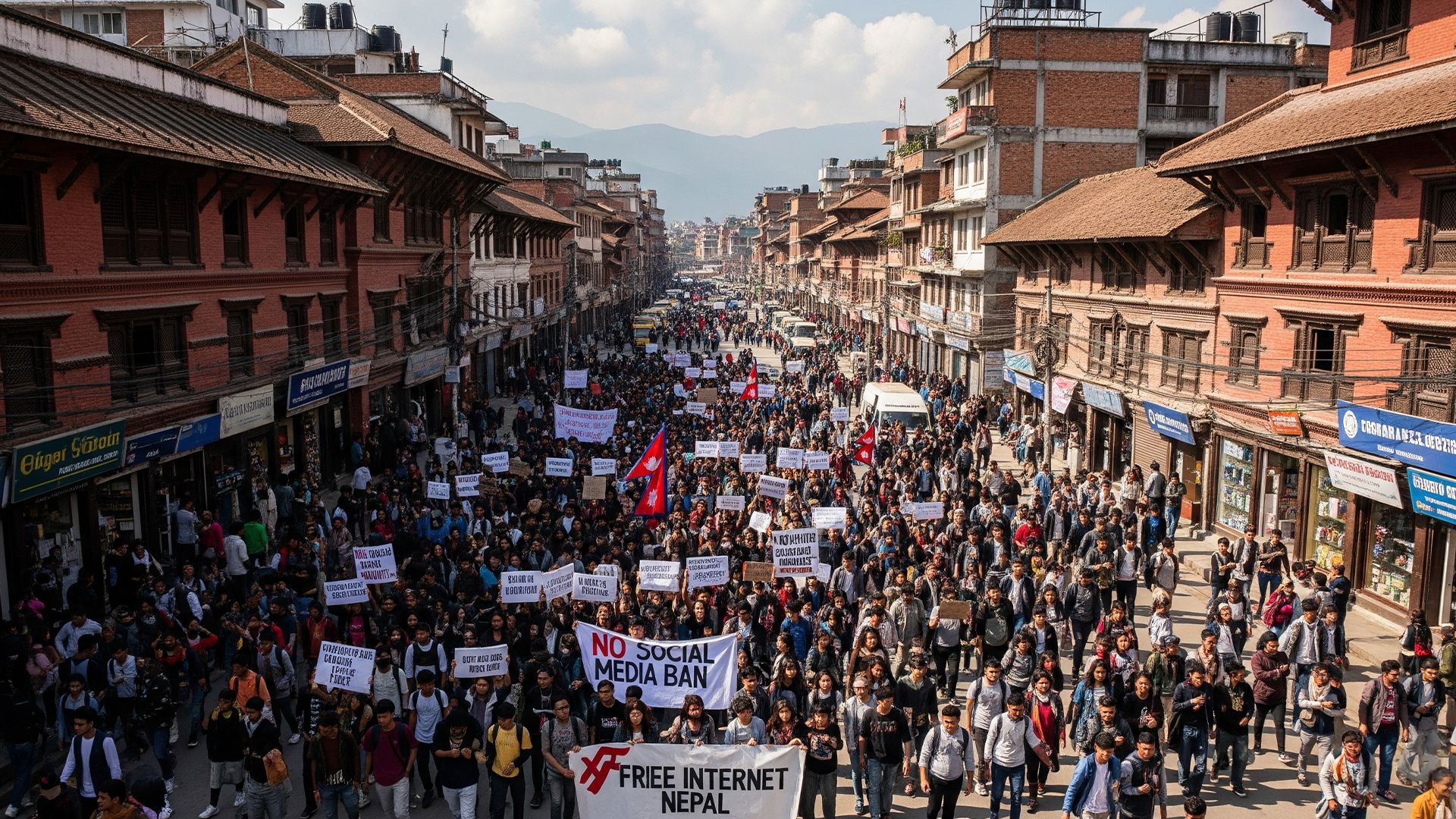
Nepal is witnessing unprecedented youth-led protests as thousands of young demonstrators take to the streets against the government’s ban on 26 major social media platforms and alleged deep-rooted corruption.
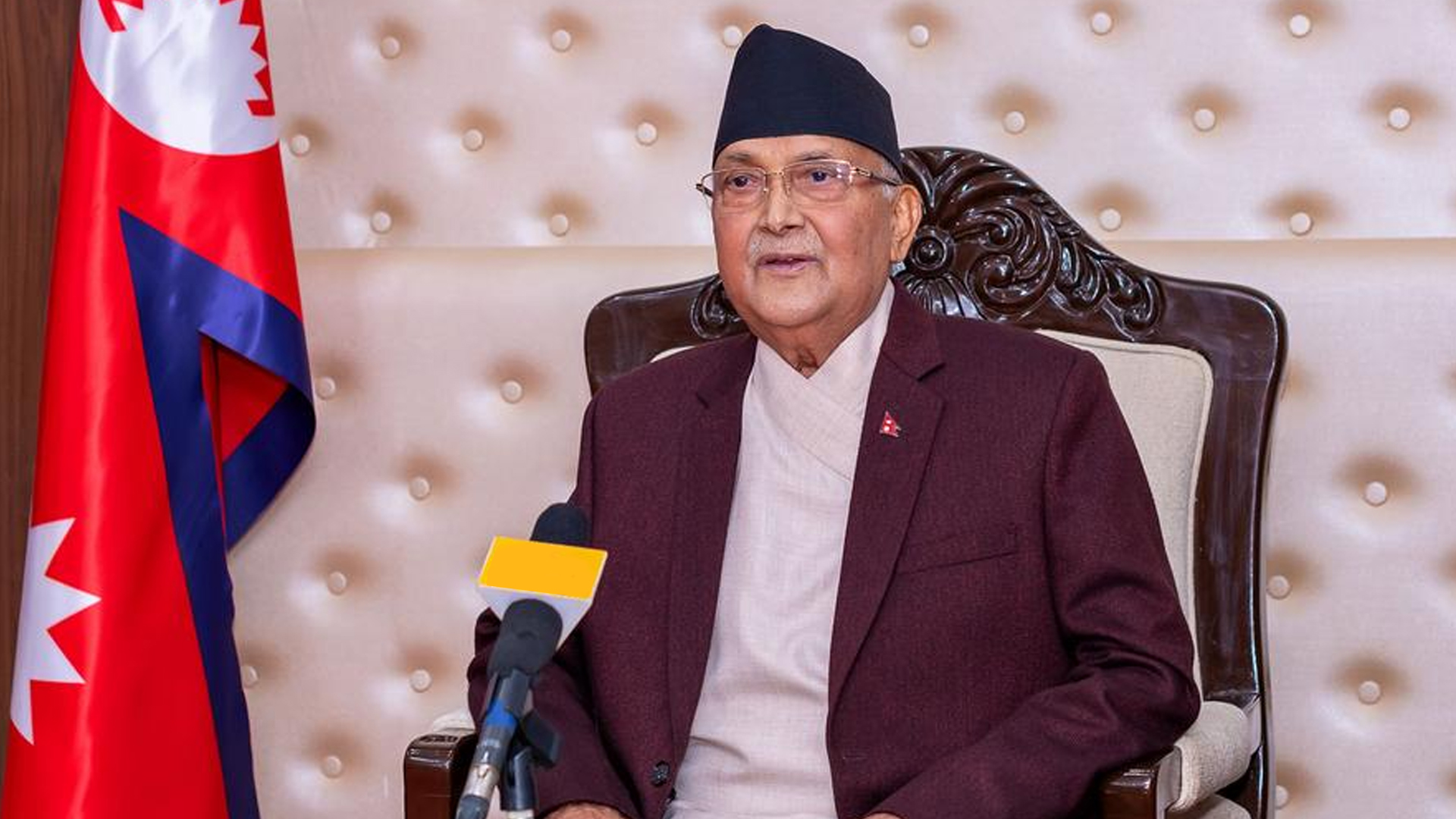
The ban, enacted by Prime Minister KP Sharma Oli’s administration, blocks platforms including Facebook, X (formerly Twitter), YouTube, WhatsApp, LinkedIn, Reddit, and Signal after the companies failed to register under new government regulations. Authorities cite concerns over misinformation and fake accounts as justification, but critics decry it as political censorship.
Protests erupted on September 4 and escalated rapidly, and reports state that young demonstrators, mostly Gen Z, clashed violently with police outside the Parliament in Kathmandu. Riot forces deployed tear gas, rubber bullets, and water cannons to disperse crowds, resulting in a few deaths, leaving more than 80 injured so far. A curfew has been imposed in the capital’s government district.
The protests have gained support from key figures, including Kathmandu Mayor Balen Shah, who called for political restraint, and former Nepal Electricity Authority chief Kulman Ghising, who stressed demands for good governance. The movement is also fueling the viral “Nepo Kid” campaign, spotlighting privileges enjoyed by politicians’ children amid widespread corruption.
With nationwide demonstrations spreading, Nepal faces mounting pressure as its youth demand restoration of digital freedoms and government transparency. The government’s next steps will be critical in determining whether the unrest escalates further or leads to meaningful reform.