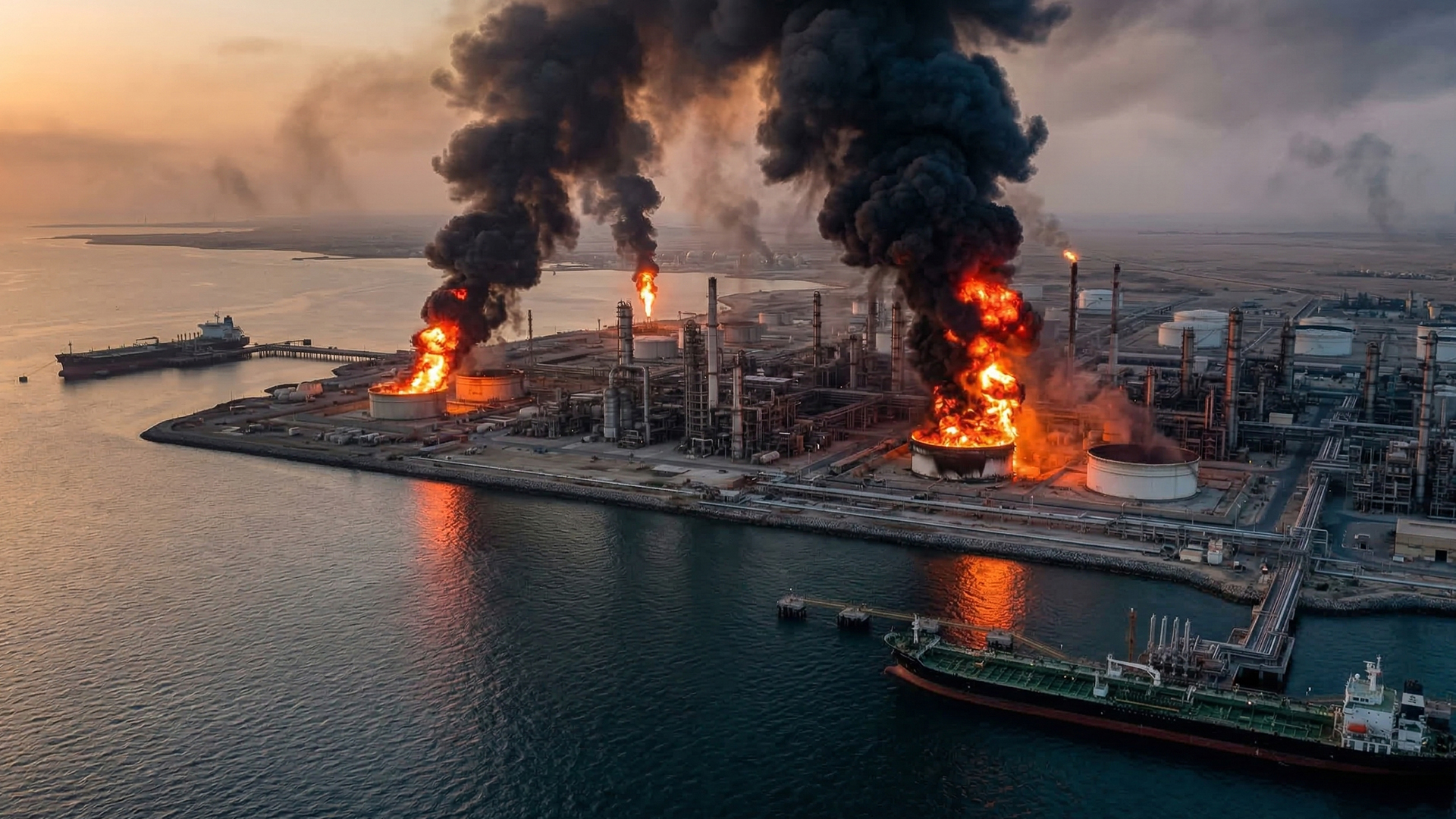
Global oil prices have risen sharply, crossing $110 per barrel, as tensions grow in the Middle East. The increase comes after fresh conflict involving Iran, Israel, and the United States, which has raised concerns about oil supply disruptions.
The latest rise in prices follows attacks by Iran on important energy facilities in the Gulf region. These attacks were reportedly in response to earlier strikes on Iran’s gas infrastructure. Some of the targeted areas include major oil and gas sites in countries like Saudi Arabia, the United Arab Emirates, and Qatar. Damage to these facilities has increased fears that global energy supplies could be affected.
Brent crude oil, which is the global benchmark, climbed close to $115 per barrel. US crude oil prices also went up significantly. Experts say that prices could rise further if the situation worsens or continues for a long time.
One of the biggest concerns is the Strait of Hormuz, a narrow but very important route through which a large portion of the world’s oil is transported. If this route is disrupted due to conflict, it could lead to serious supply shortages and even higher prices globally.
The impact is not limited to oil. Natural gas prices have also increased, especially in Europe. At the same time, stock markets around the world have shown weakness, as investors worry about rising costs and economic uncertainty.
For countries like India, which import most of their oil, this situation is worrying. Higher oil prices can lead to increased fuel costs, higher inflation, and pressure on the economy. Everyday expenses for people may also rise as transportation and production costs go up.
Also Read: Mystery drones spotted over US military base