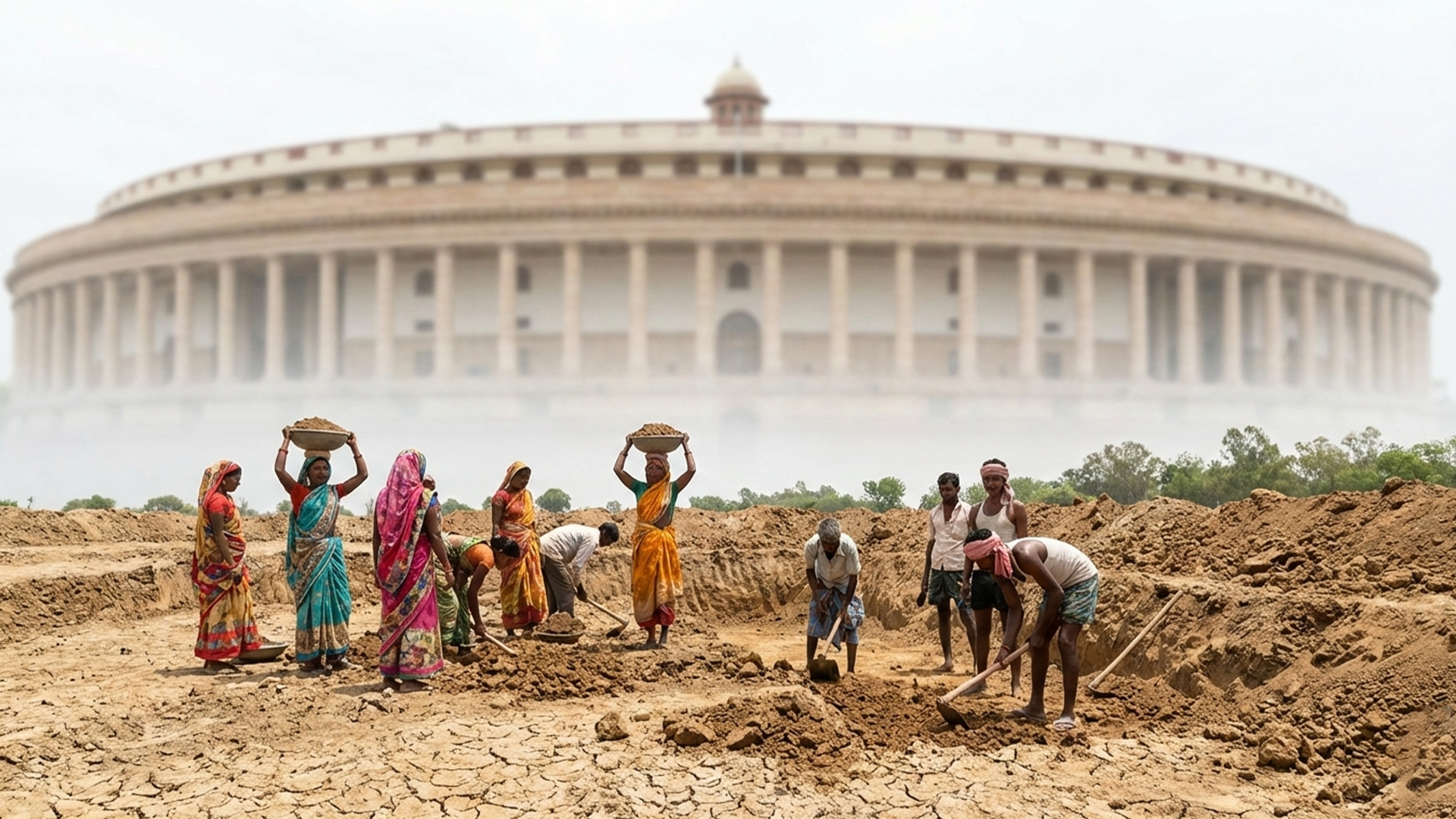
Parliament has passed the Viksit Bharat Guarantee for Rozgar and Ajeevika Mission (Gramin) Bill, 2025 (VB‑G RAM G Bill), replacing the Mahatma Gandhi National Rural Employment Guarantee Act (MNREGA), 2005. The Lok Sabha approved it on December 18, 2025, and the Rajya Sabha passed it after midnight on December 19 amid strong opposition protests. Critics argued the repeal weakens rural job security.
The bill guarantees 125 days of work per year for rural households, up from 100 under MNREGA. Workers will be paid weekly, and delayed payments beyond 15 days will incur 0.05% daily compensation. States can designate up to 60 days when work is not provided, especially during peak agricultural periods.
Funding now follows a centrally sponsored model: the Centre covers 60% and states 40%. Hilly and northeastern states get 90% central funding, and Union Territories without legislatures are fully funded by the Centre. Any cost beyond allocated funds must be borne by the states.
Work allocation is determined by the Centre based on state-wise requirements. The bill retains unemployment allowances if work is not provided within the stipulated period. It also allows states to adjust operations during natural calamities or other emergencies.
Implementation structures have been updated. National and State Steering Committees will oversee planning, funding, and operations, while Panchayats continue to execute projects locally. The bill aims to improve transparency, resource allocation, and local planning.
Supporters say the reforms strengthen rural development, while opponents warn of reduced job security and potential challenges for rural households. The VB‑G RAM G Bill marks a significant shift in India’s rural employment framework.