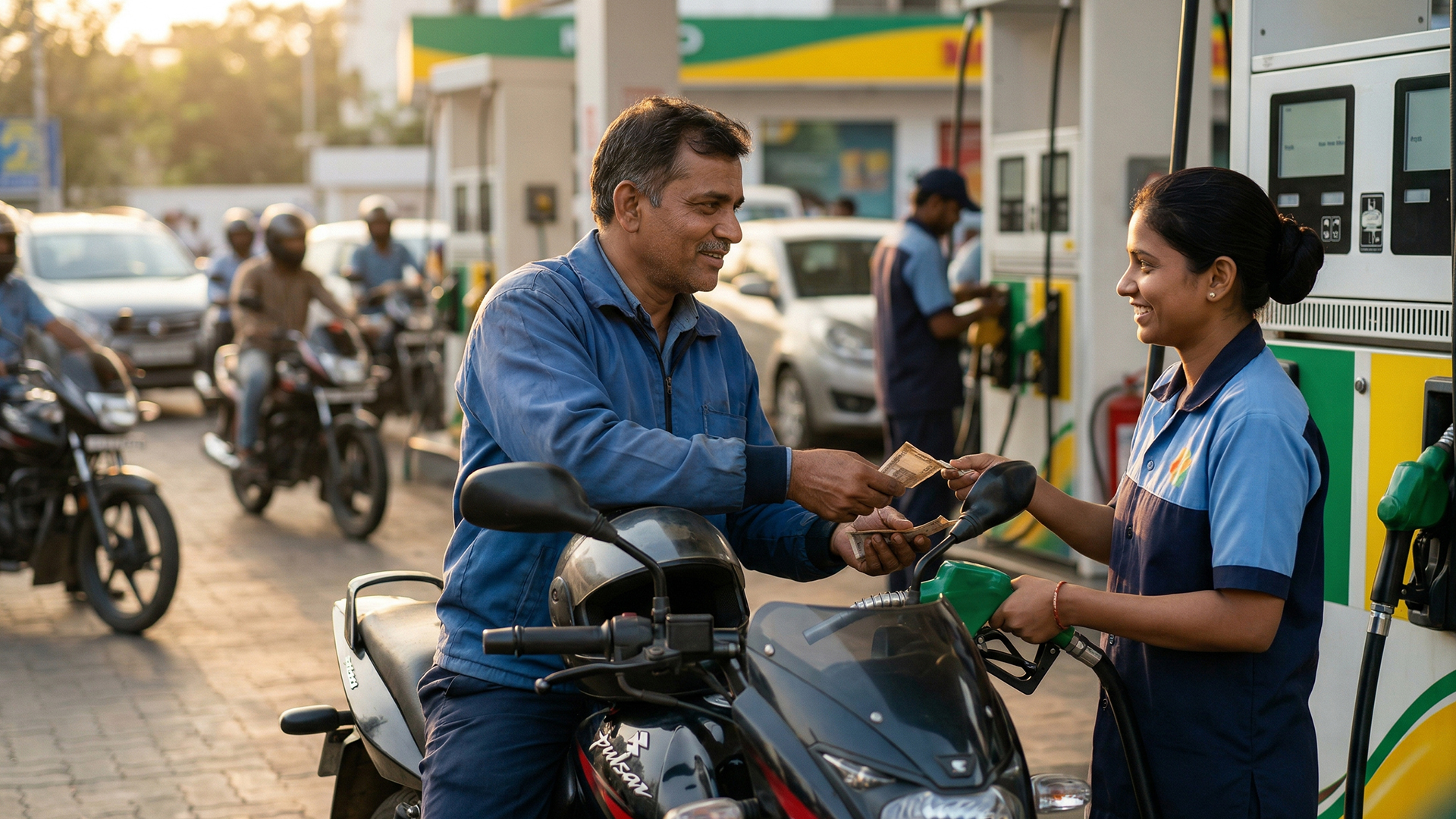
In a big relief measure, the central government on 27 March 2026 reduced excise duty on fuel to help manage rising global oil prices. The duty on petrol has been cut from ₹13 to ₹3 per litre, while diesel duty has been reduced from ₹10 to zero. This means a total tax reduction of ₹10 per litre on both fuels.
The decision comes as crude oil prices have risen sharply due to tensions in the Middle East. Concerns over supply disruptions, especially through key routes like the Strait of Hormuz, have pushed global oil prices higher. Since India imports most of its crude oil, this increase directly affects fuel costs in the country.
The government said the tax cut is meant to reduce the burden on consumers and control inflation. Instead of passing the full impact of rising crude prices to the public, the Centre has chosen to absorb part of the cost by lowering taxes.
However, people may not see an immediate drop in petrol and diesel prices at fuel stations. Oil marketing companies (OMCs) such as Indian Oil, BPCL, and HPCL have been facing losses because they are selling fuel at lower prices than the actual cost. Experts say these companies may first use the tax cut to recover their losses rather than reduce retail prices right away.
In recent weeks, crude oil prices have jumped significantly—from around $70 per barrel to over $100–$120 per barrel. This sharp rise has increased the financial pressure on fuel retailers and the government.
To manage the situation better, the government has also taken steps like imposing export duties on petroleum products. This is aimed at ensuring enough fuel is available within the country and to prevent further price spikes.
Also Read: Iran rejects US peace proposal, sets 5 conditions