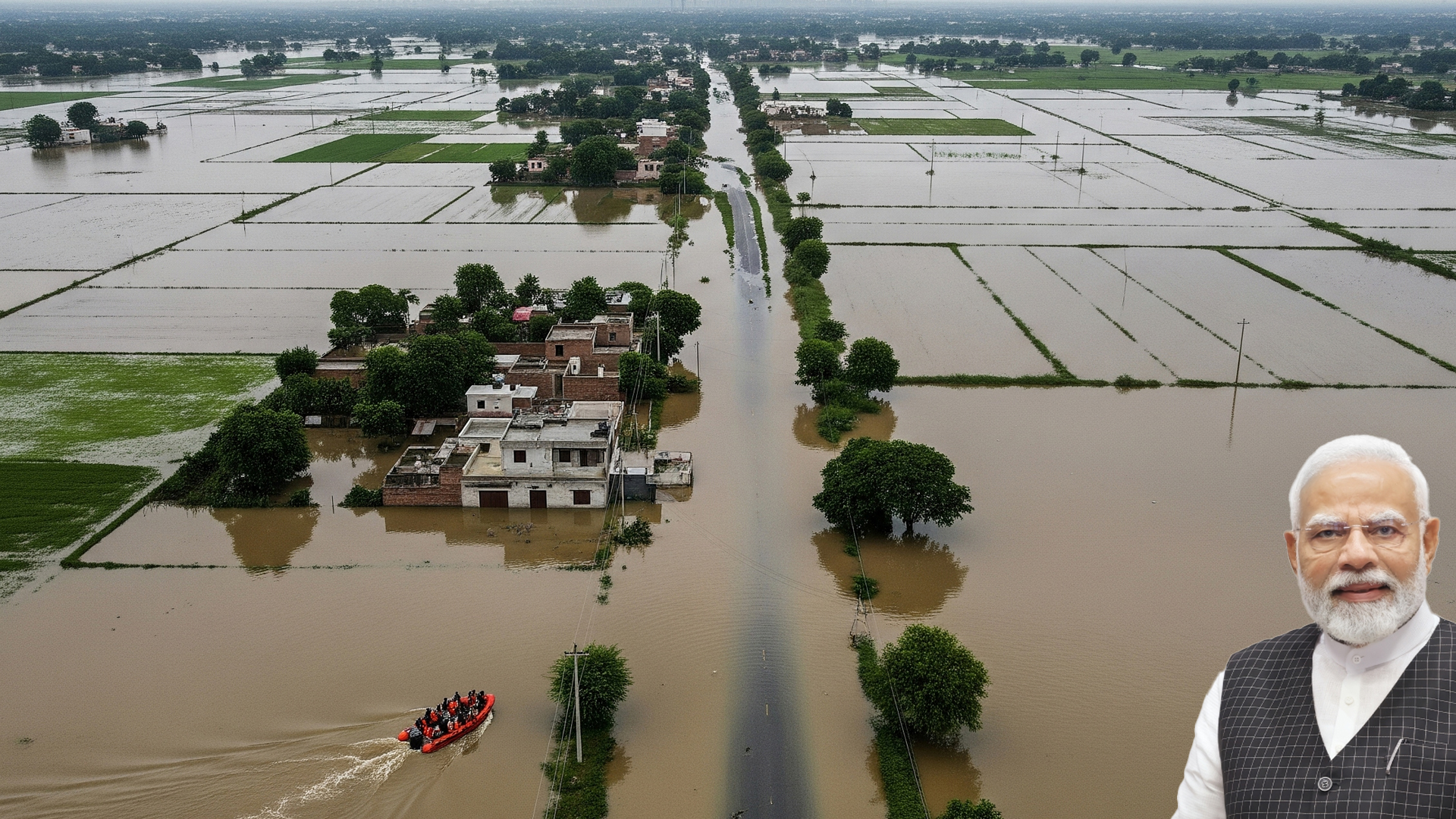
Prime Minister Narendra Modi on Tuesdayvisited Himachal Pradesh and Punjab to assess the devastating impact of monsoon floods that have ravaged the northern states. The visit comes as the affected regions face one of the worst natural disasters in recent memory, with widespread damage to life, property, and agriculture.
The Prime Minister began his day in Himachal Pradesh, conducting an aerial survey of areas hit by landslides and flash floods. The state has reported over 370 deaths and severe infrastructure damage, with roads, bridges, and homes washed away. Rescue operations led by the National Disaster Response Force (NDRF) and State Disaster Response Force (SDRF) are ongoing in coordination with local authorities.
Following his visit to Himachal, PM Modi flew to Punjab, where floods caused by the swelling of the Sutlej, Beas, and Ravi rivers have submerged more than 1,400 villages and affected over 3.5 million people. The state government confirmed 48 deaths and damage to around 1.84 lakh hectares of farmland, resulting in economic losses exceeding ₹13,000 crore. In Gurdaspur, the Prime Minister interacted with flood victims, rescue teams, and state officials, reviewing relief measures and ensuring coordination between central and state agencies.
Speaking on social media before his visit, PM Modi expressed solidarity with those affected, stating, “The Government of India stands shoulder to shoulder with those affected in this tragic hour.” Punjab BJP chief Sunil Jakhar noted that the Prime Minister has been closely monitoring the situation and expressed concern over the scale of the disaster.
Security arrangements were tightened in Gurdaspur to ensure smooth functioning during the visit. Discussions with state officials focused on relief distribution, infrastructure repair, and long-term rehabilitation. The central government has announced financial aid and additional resources to support recovery efforts.
Political reactions have intensified, with opposition parties calling for increased support and transparency in relief distribution. The visit also highlighted the need for greater cooperation between state and central governments in managing climate-induced disasters.
As PM Modi wrapped up his visit on Tuesday evening, officials confirmed that immediate relief efforts would be expanded and that long-term reconstruction plans would be initiated in coordination with local authorities. The affected communities continue to receive support as the states brace for further challenges in the aftermath of the floods.
Also Read: China Criticizes U.S. 50% Tariffs on India, Urges Strengthened Bilateral Economic Ties