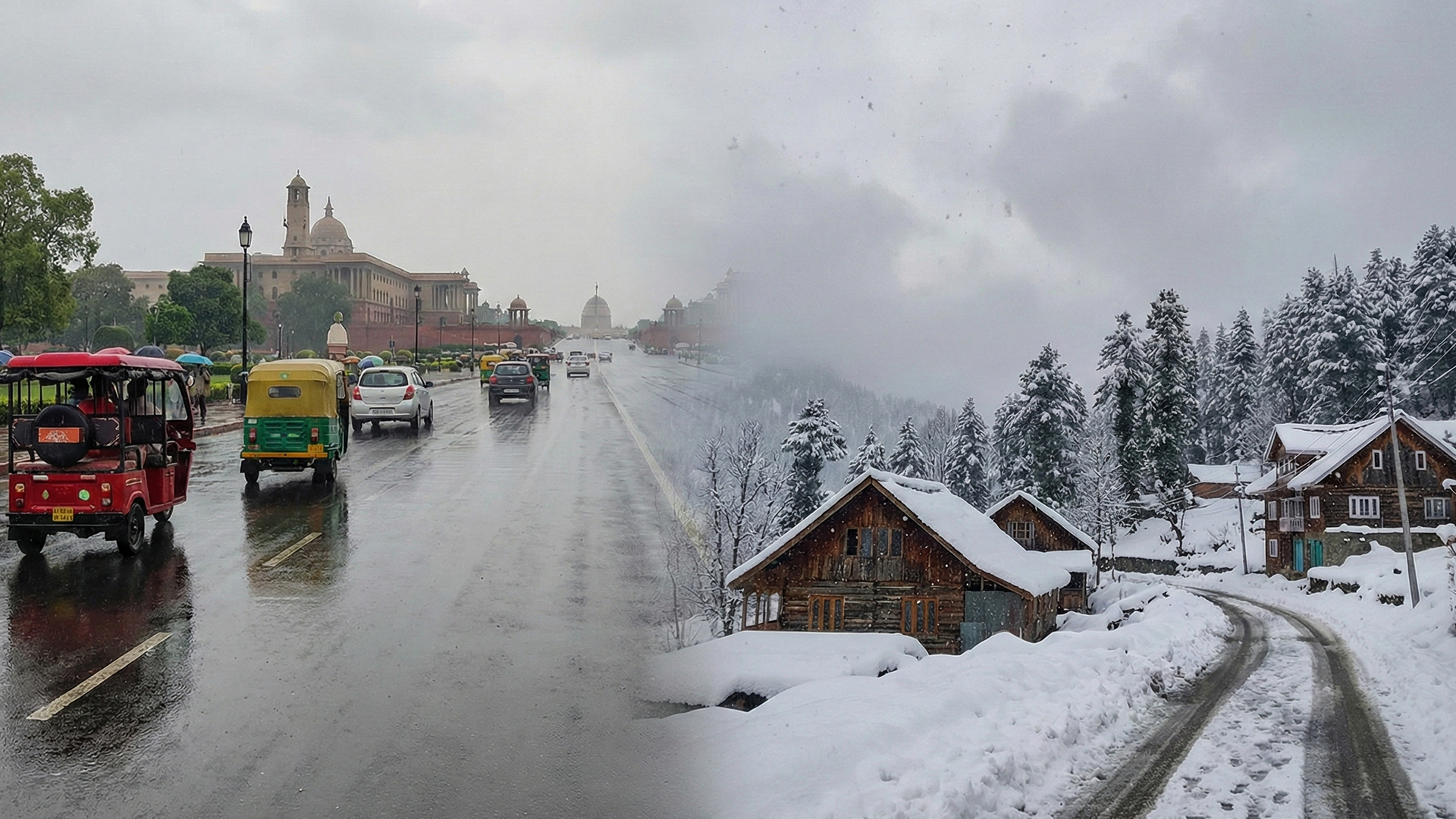
North India’s weather shifted sharply this week as western disturbances and accompanying moisture brought widespread rain, thunder and gusty winds across several states. The change has affected daily life, disrupted travel and eased the deep winter chill in many areas.
In the National Capital Region, including Delhi, Noida and Ghaziabad, residents experienced rainfall over consecutive days. Heavy showers late Tuesday and Wednesday led to waterlogging in some localities, slowing traffic on major roads and forcing commuters to change plans. Thunderstorms and lightning were reported, prompting meteorologists to issue advisories for possible isolated heavy rainfall.
The cooler, wetter conditions have provided temporary relief from the region’s characteristic winter fog and smog. Weather officials say the rainfall, though moderate, helped improve air quality levels in Delhi compared with the past week’s readings. Associated thunderstorms, however, also brought sudden gusts of wind, raising the risk of tree falls and minor damage in some neighbourhoods.
Across the higher reaches of Jammu & Kashmir, the weather system intensified snowfall in the hills. Ski resorts and popular tourist spots received fresh snow, delighting visitors and local residents. However, the wintry conditions disrupted flight operations at several regional airports, including Srinagar and Jammu. Airlines reported delays and cancellations as pilots negotiated low visibility and snow‑covered runways. Ground staff worked through the night to de‑ice aircraft and clear taxiways.
Travel advisories have urged passengers to check flight statuses before heading to airports, as further unsettled weather is expected over the coming days. Road travel in hilly areas also remains challenging, with authorities cautioning motorists about slippery surfaces and reduced sight distance in snow‑affected zones.
According to India Meteorological Department (IMD) updates, the prevailing system is likely to persist through the weekend, bringing more scattered rain and thunderstorms across plains and fresh snow in mountains. While not indicative of a long‑term weather pattern change, the current spell reflects the influence of western disturbances typical of this time of year.
Residents in affected regions are urged to stay updated with local forecasts and prepare for travel disruptions, especially in the higher altitude zones where snowfall may continue.
Also Read: Blue Origin’s NS-38 takes six passengers to space