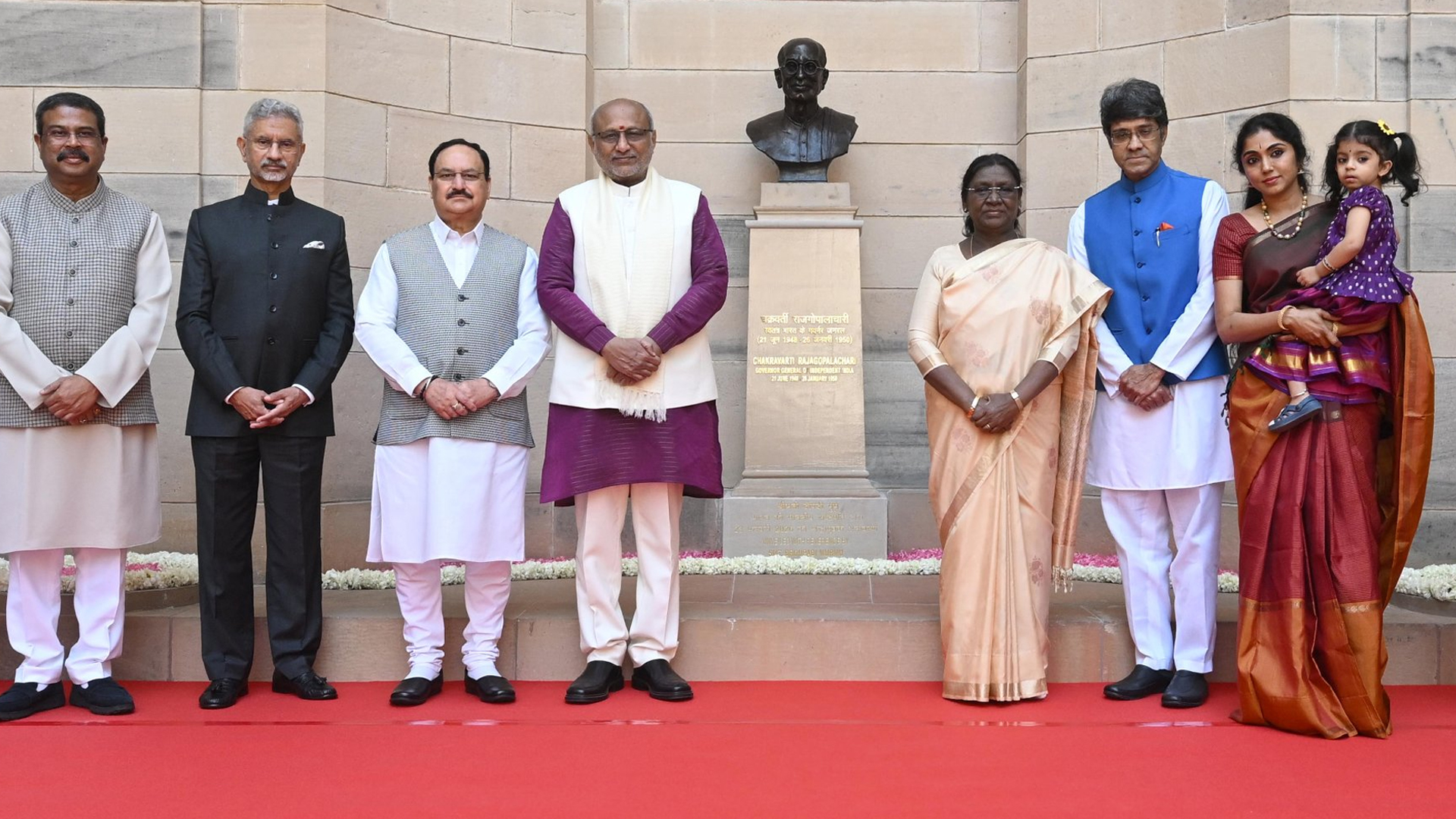
In a symbolic change at the heart of India’s presidential estate, a bust of C. Rajagopalachari has been installed at Rashtrapati Bhavan, replacing that of British architect Edwin Lutyens. The change is being seen as part of the government’s wider effort to highlight Indian icons in places that were once dominated by colonial-era figures.
Rajagopalachari, fondly known as Rajaji, was a key figure in the freedom movement and independent India’s last Governor-General. By placing his bust in the presidential complex, officials say the intention is to give greater prominence to Indian leaders who shaped the nation’s political and intellectual journey.
The change has drawn mixed but largely strong reactions. Congress leader Shashi Tharoor welcomed the decision, saying it was fitting to honour a national figure of Rajaji’s stature at the country’s most important constitutional residence. Many have echoed this view, calling the move a meaningful step in reclaiming national spaces.
At the same time, the development has also started a conversation among historians and heritage experts. Some point out that while replacing colonial symbols is understandable, Lutyens’ role in designing New Delhi, including Rashtrapati Bhavan, remains an important part of India’s architectural history and should not be forgotten.
The decision also drew a response from a descendant of Lutyens, who expressed disappointment but acknowledged that India has the right to reinterpret its public spaces and historical narrative.
Rajagopalachari’s long public life included roles as a close associate of Mahatma Gandhi, Premier of the Madras Presidency, Union minister and founder of the Swatantra Party. His installation at Rashtrapati Bhavan is therefore being seen not just as a change of a statue, but as a shift in the story India chooses to tell about itself.
Also Read: India launches first anti-terror policy ‘PRAHAAR’