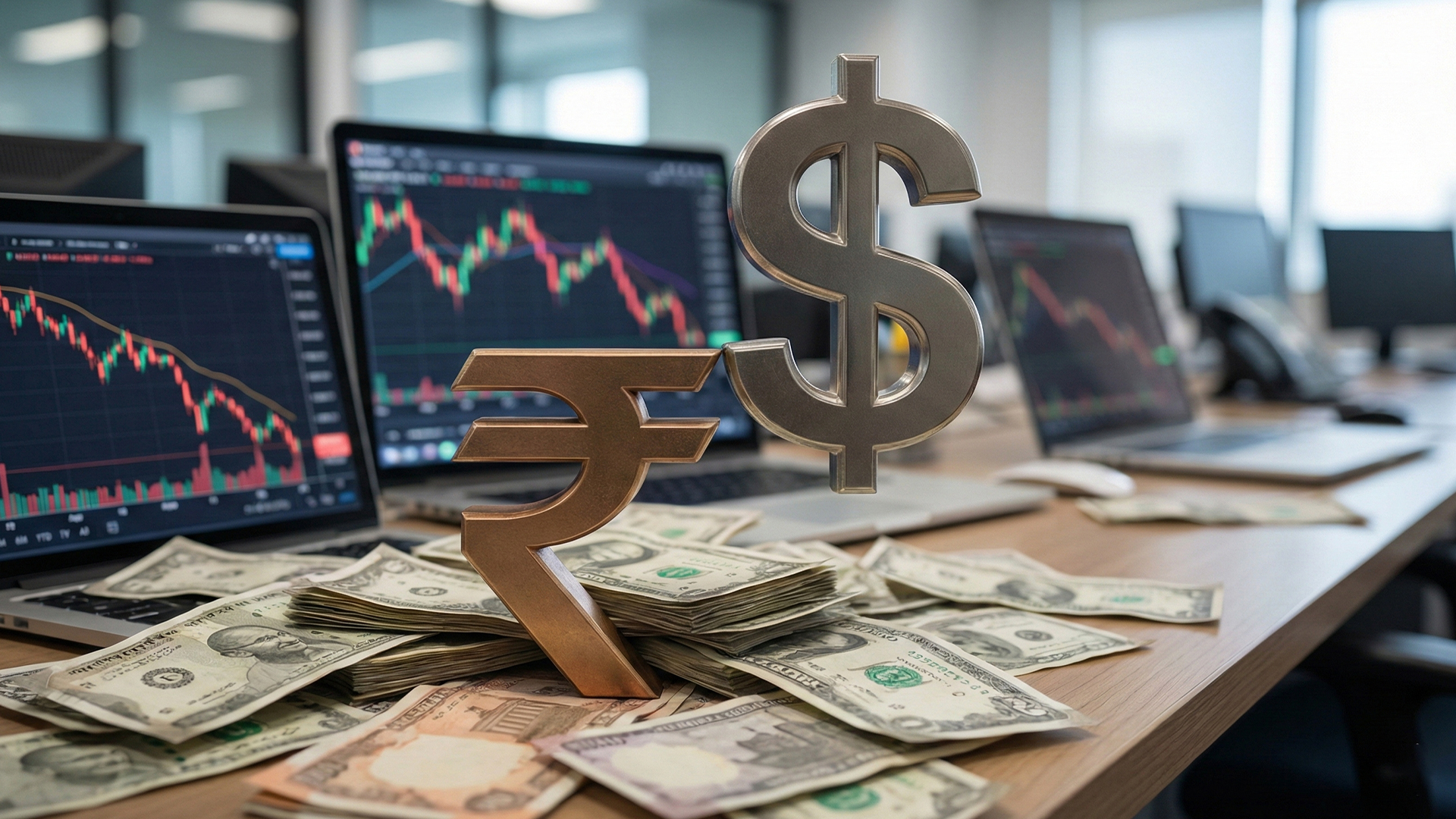
The Indian rupee faced a turbulent session on Wednesday, opening at a record low of ₹91.07 per US dollar before rebounding later in the day. Early trading saw the currency slip further to around ₹91.08, reflecting sustained foreign fund outflows and repatriation of corporate earnings from overseas.
Market participants said the rupee’s weakness mirrors a wider trend in emerging market currencies. Uncertainties in global markets, combined with ongoing trade negotiations with the United States, have kept investors cautious. “Every piece of news on capital flows or global developments is now moving the rupee sharply,” said a senior forex dealer in Mumbai.
The Reserve Bank of India (RBI) acted swiftly to stabilise the currency. State-run banks, following RBI guidance, sold dollars in both spot and forward markets, helping the rupee recover some of its losses. The currency strengthened to around ₹90.25 intraday and eventually settled near ₹90.28.
Analysts noted that the intervention is part of RBI’s strategy to prevent a prolonged slide, which could increase import costs and strain corporate finances. “The central bank’s decisive action reassures markets that extreme volatility won’t be allowed to persist,” said a currency strategist.
Despite the recovery, traders remain cautious. The rupee is likely to remain sensitive to foreign investment flows, global market movements, and domestic economic developments. Short-term volatility is expected to continue, especially as inflation and interest rate expectations shape investor sentiment.
The rupee’s swings underline the challenges faced by India’s currency in a complex global environment. For businesses and investors, the message is clear: while short-term fluctuations are inevitable, timely RBI interventions can provide much-needed stability.
Also Read: Elon Musk tops $600 billion fortune record