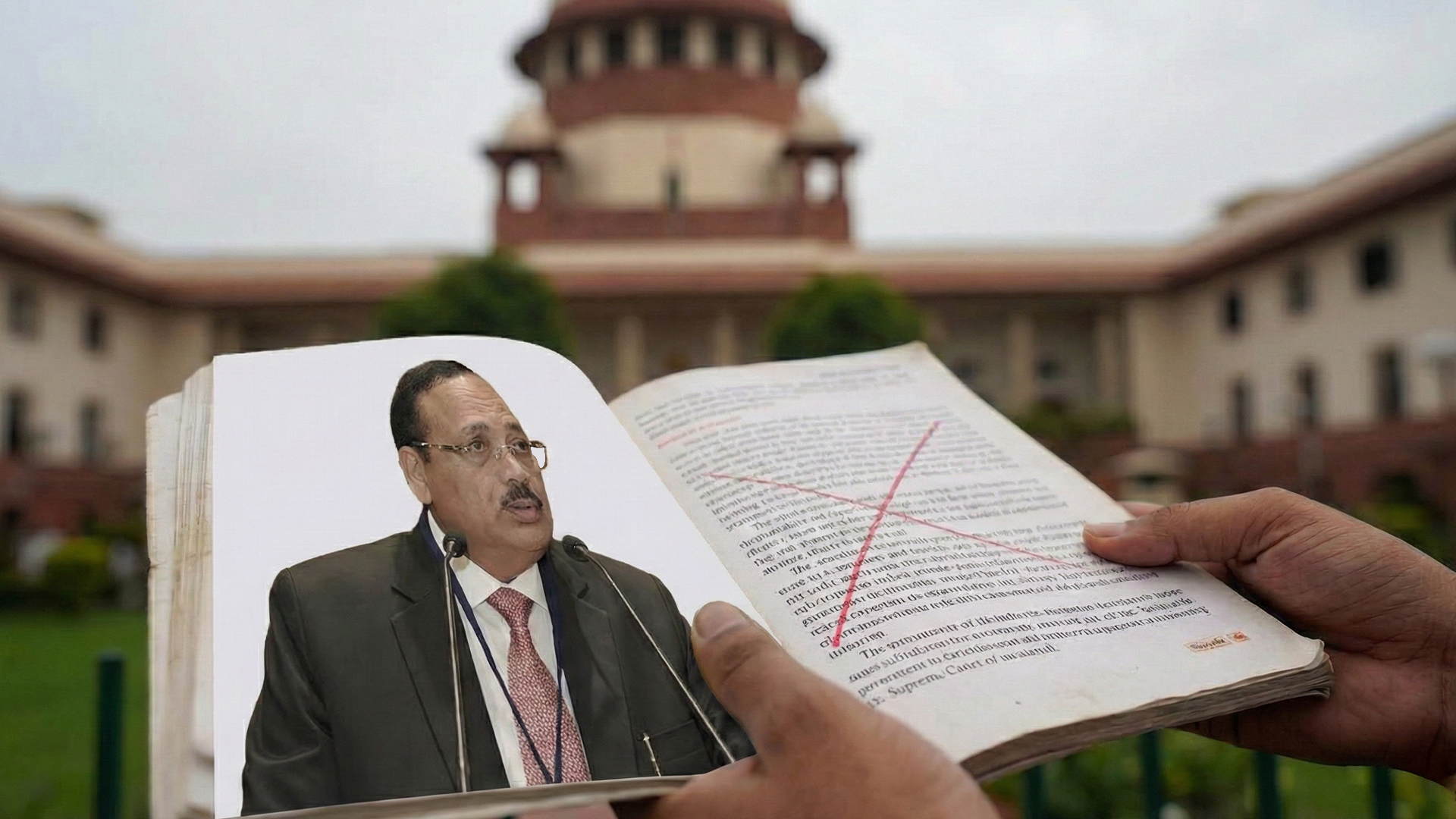
The Supreme Court of India has raised serious concerns about a section in the new Class 8 Social Science textbook from NCERT that discusses “corruption in the judiciary.” Chief Justice of India Surya Kant said such content should not be taught to young students, stressing that the judiciary as an institution must be respected.
The chapter, part of a unit on the role of the judiciary, described issues like case backlogs, shortage of judges, and instances of corruption in courts. While intended to explain challenges faced by the legal system, the Supreme Court felt the content went too far and could create a negative impression of the judiciary among students.
During a hearing on February 25, 2026, the CJI said he was “disturbed” by the material and noted that several judges had expressed concern. He emphasized that the court “will not allow anyone to defame the institution,” and the matter was taken seriously at the highest level. Senior lawyers also weighed in, saying that highlighting only judicial corruption, without mentioning challenges in other branches of government, could be misleading for students.
In response, government sources confirmed that the controversial portions would be removed from the textbook before the start of the 2026–27 academic year. NCERT acknowledged the issue and said the chapter would be revised, noting there was no intention to undermine any constitutional institution.
The controversy has sparked wider debate on how schools should present sensitive topics about democratic institutions. While it is important for students to understand real-world challenges, experts say textbooks must strike a balance so young learners can learn without forming a distorted view of vital national institutions.