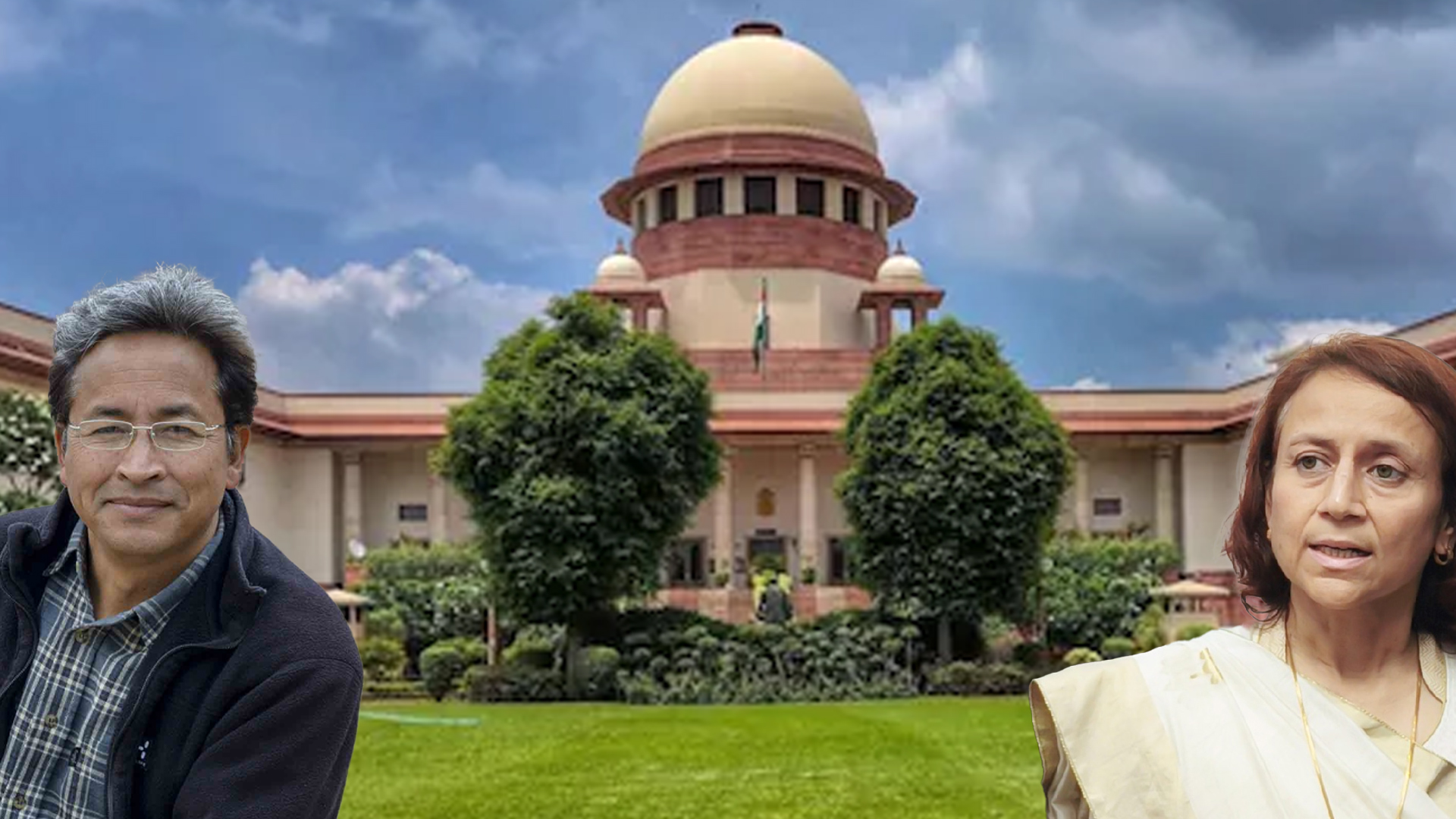
The SC on Monday expressed strong concern over what it called an inaccurate translation of activist Sonam Wangchuk’s speech, which forms a key basis for his detention under the National Security Act (NSA). The court made it clear that when personal liberty is at stake, the material placed before judges must be reliable and precise.
Hearing a habeas corpus plea filed by Wangchuk’s wife challenging his detention, a bench of Supreme Court of India justices pointed to a striking inconsistency. A speech that originally lasted about three minutes had been presented in translation as a much longer address. The judges said that in today’s technology-driven world, where tools for accurate transcription and translation are easily available, even small errors can have serious consequences.
“The least we expect is a correct translation,” the bench observed, underlining that the accuracy of evidence becomes even more critical in preventive detention cases.
Senior advocate Kapil Sibal, appearing for Wangchuk, argued that the translated version attributed several statements to the activist that he had never made. According to the defence, Wangchuk’s speech called for peace and non-violence, but the version submitted by the authorities projected it as provocative. Sibal said such discrepancies go to the root of the detention order.
The Centre, however, maintained that the translation had been prepared by a competent department and said that in the age of artificial intelligence, such processes are generally dependable. The court responded that technology cannot be a substitute for accuracy and accountability.
The bench also took note of the allegation that some of the videos cited in the detention order were missing from a pen drive provided to Wangchuk in jail. It directed authorities to secure and produce the device to ensure that all material relied upon by the government is available for scrutiny.
While the Centre has described Wangchuk as a key instigator in the Leh unrest last year, the petitioner has insisted that he has consistently advocated peaceful protest.
Also Read: AI for all, PM Modi maps India’s plan