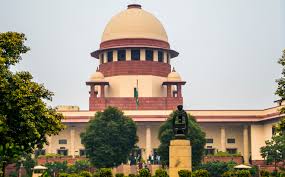
The Supreme Court on Thursday reserved its interim order on the contentious issue of managing the stray dog population in the National Capital Region (NCR). The three-judge bench, headed by Justice Vikram Nath and comprising Justices Sandeep Mehta and N V Anjaria, heard extensive arguments from the government, animal rights organisations, and senior advocates representing both sides of the debate.
Justice Nath, making an oral observation during the proceedings, said, “Everyone who has come to intervene must take responsibility.” The bench directed all intervenors to file affidavits with supporting evidence before the court finalises its decision.
The case stems from an August 11 order by a two-judge bench that directed the relocation of stray dogs from public streets to dedicated shelters. That order also stated that sterilised dogs should not be brought back to their original locations — a direction challenged by multiple animal welfare groups. The matter was reassigned to the three-judge bench by Chief Justice of India BR Gavai after a suo motu case initiated by another bench, led by Justice JB Pardiwala, created overlapping proceedings.
Government’s Argument: Relocation Over Sterilisation
Solicitor General Tushar Mehta, representing the government, argued strongly for removing strays from the streets, citing rising incidents of dog attacks. “Sterilisation does not stop rabies. Even if you immunise, that does not stop mutilation of children,” Mehta said, describing what he called a “vocal minority view against a silent majority view” favouring relocation. He also said existing rules were inadequate to address the dangers posed by aggressive strays.
Animal Rights Groups Push Back
On the other hand, senior advocates Kapil Sibal, Abhishek Manu Singhvi, and Sidharth Luthra appeared for various animal rights groups and individuals. They sought a stay on the August 11 order, contending it violated the 2023 Animal Birth Control (ABC) Rules. These rules classify stray dogs as “community animals,” protect them from displacement after sterilisation, and allow for community feeding in designated areas. The lawyers stressed that relocation without rehabilitation could result in cruelty and logistical failures.
Background
India’s stray dog population has long been a flashpoint for urban policy. While animal welfare laws prohibit indiscriminate culling, periodic public outrage over dog bites — especially involving children — has driven calls for stricter control measures. In Delhi and NCR, municipal bodies have relied largely on sterilisation drives and vaccinations under the ABC programme, though their effectiveness has been questioned. The August 11 Supreme Court order marked a shift by calling for permanent relocation instead of release-back-to-territory after sterilisation.
The bench has reserved its interim order, with all intervenors now required to submit affidavits backed by factual data. Until the order is issued, the August 11 directions remain in force, keeping the debate alive between public safety advocates and animal rights defenders.