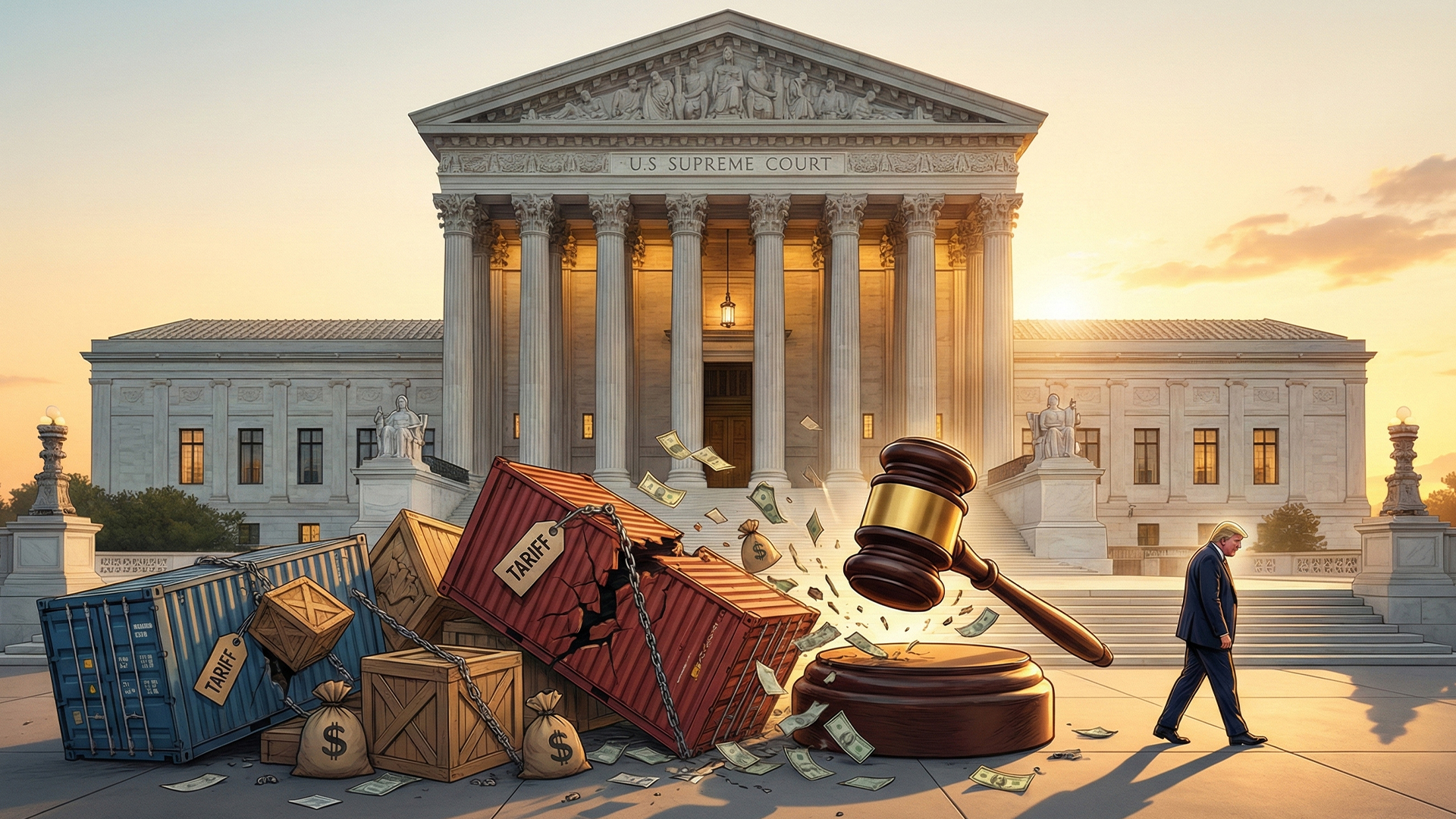
The US Supreme Court has delivered a major blow to former President Donald Trump’s trade policies, ruling that most of his sweeping global tariffs were unlawful. In a 6–3 decision on February 20, 2026, the court concluded that Trump exceeded his authority under the International Emergency Economic Powers Act (IEEPA), which was intended to give presidents emergency powers, not to impose broad import taxes.
The tariffs, often called “reciprocal tariffs,” affected goods from nearly all US trading partners, including China, Mexico, Canada, and India. The Trump administration had argued they were necessary to protect American industries and address trade imbalances, but critics claimed the measures were unauthorised and disruptive to global trade.
Chief Justice John Roberts, writing for the majority, emphasised that tariff powers belong to Congress, not the president, citing the Constitution and the “major questions doctrine”, which requires clear legislative authorisation for major economic actions. Justices Thomas, Alito, and Kavanaugh dissented, arguing the tariffs fell within presidential powers.
The ruling invalidates billions of dollars in import duties collected under these tariffs and could allow companies to seek refunds, though the Supreme Court left the refund process to lower courts, meaning it may take time to resolve. Sector-specific tariffs, such as those on steel and aluminum imposed for national security reasons, are not affected.
The decision has significant political and economic implications. Supporters say it restores Congressional authority over taxation, while critics argue it limits the president’s ability to respond quickly to trade challenges. The White House has indicated it may explore alternative legal routes to maintain aspects of its trade agenda.
For businesses and exporters, the ruling brings clarity after years of uncertainty and reinforces the principle that sweeping economic measures require clear legislative backing, not just executive action.